Support our educational content for free when you purchase through links on our site. Learn more
15 Zero-Waste Makeup Companies to Know 🌿


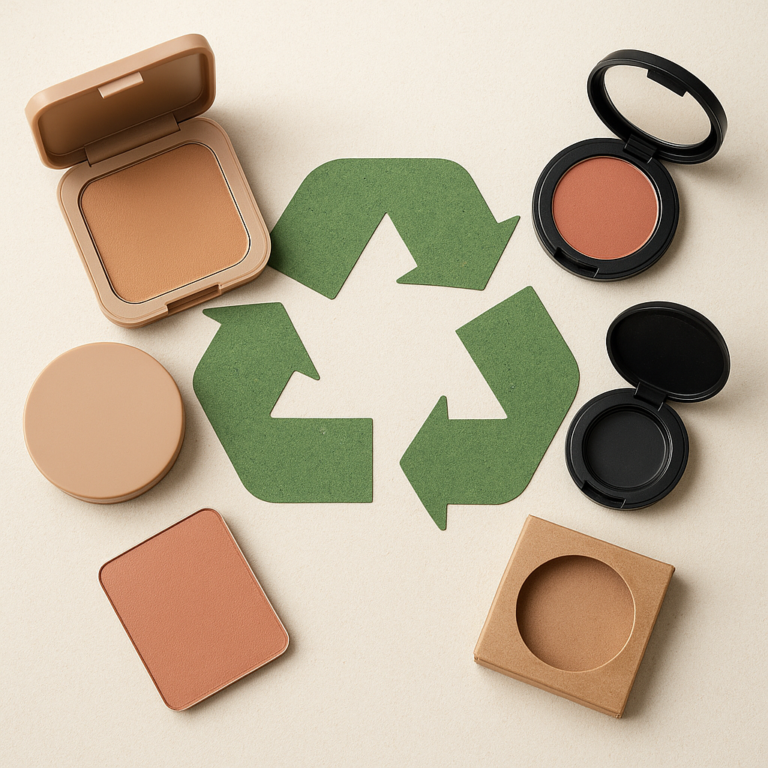
The best zero-waste makeup companies make it easy to refill, reuse, or avoid excess packaging without asking you to compromise on a formula you’ll actually enjoy. Start with one product you already need, then compare brands such as Axiology, Elate Beauty, Kjaer Weis, and MOB Beauty for packaging that suits your routine.
“Zero waste” isn’t a guarantee that a product creates no waste at all. Refills, paper tubes, tins, and reusable compacts can all help—but the details matter: Is the refill available where you live? Can the package be recycled locally? And do you like wearing the makeup enough to finish it?
That last question is more than a beauty-editor nitpick. A paper-wrapped blush left untouched in a drawer is still a wasted product; a compact you refill again and again may be a more practical win. We’ve rounded up 15 companies and explain what to check before you buy.
Key Takeaways
- Choose the format you’ll use: Refillable compacts, paper packaging, tins, and multipurpose makeup can reduce disposable packaging, but no format is automatically impact-free.
- Check the details: Verify product-specific refills, ingredient lists, disposal instructions, and current brand claims before ordering.
- Start small: Finish what you own and replace one makeup staple at a time to avoid creating unnecessary waste.
- Match products to your routine: Axiology is known for multipurpose color sticks; Elate Beauty, Kjaer Weis, Zao Makeup, and MOB Beauty offer refill-oriented options to investigate.
- Prioritize performance and safety: Shade, skin compatibility, hygiene, and shelf life matter just as much as packaging.
👉 Shop brands mentioned:
- Axiology: Amazon | Official website
- Elate Beauty: Amazon | Official website
- Kjaer Weis: Amazon | Official website
- MOB Beauty: Amazon | Official website
- Zao Makeup: Amazon | Official website
Table of Contents
- ⚡️ Quick Tips and Facts
- 🌿 What “Zero-Waste Makeup” Really Means
- Zero-waste, plastic-free, refillable, and low-waste: key differences
- Can makeup ever be completely zero-waste?
- 📜 How Sustainable Makeup Packaging Has Evolved
- 💄 15 Zero-Waste Makeup Companies Worth Knowing
- 1. Axiology: multi-use color in paper packaging
- 2. Elate Beauty: refillable makeup essentials
- 3. Kjaer Weis: luxury refillable cosmetics
- 4. River Organics: plastic-free makeup and skincare
- 5. Dab Herb: low-waste color cosmetics
- 6. Fat and the Moon: plant-based color and care
- 7. Plant Makeup: botanical, low-waste beauty
- 8. Bee You Organics: small-batch natural makeup
- 9. Eco Minerals: mineral makeup with refill options
- 10. Zera & Co.: reusable and refillable beauty
- 11. Terra Stoma: exploring low-waste makeup options
- 12. Zao Makeup: bamboo-packaged and refillable cosmetics
- 13. MOB Beauty: refillable makeup and circular design
- 14. ĀTHR Beauty: palettes designed for reuse
- 15. Kjaer Weis alternatives: other refill-first makeup brands
- 🔍 How to Choose the Best Plastic-Free Makeup for Your Routine
- Compare packaging, refills, ingredients, and end-of-life options
- Match products to your skin type, tone, and makeup style
- Check certifications and avoid greenwashing
- ♻️ Makeup Packaging Explained: Refillable, Recyclable, Compostable, or Reusable?
- What can actually go in household recycling?
- How to clean and reuse makeup containers safely
- 🧴 A Low-Waste Makeup Kit, From Base to Lips
- Foundation, concealer, and complexion products
- Blush, bronzer, and highlighter
- Eyeshadow, mascara, and eyeliner
- Lipstick, balm, and multipurpose color
- Brushes, tools, and reusable makeup remover pads
- 🛒 Where to Buy Zero-Waste Makeup
- Buying direct from brands versus clean beauty retailers
- How to assess shipping materials and return programs
- 💸 Cost, Performance, and Convenience: What to Expect
- 🧪 Ingredients, Safety, and Shelf Life in Low-Waste Cosmetics
- Natural does not automatically mean safer
- How to spot changes in a product and when to replace it
- 🌎 Our Approach to Sustainable Makeup
- How we evaluate environmental claims
- What we look for in ethical sourcing and manufacturing
- ✨ Simple Ways to Make Your Makeup Routine Lower-Waste
- Use what you own before replacing it
- Buy fewer, more versatile products
- Refill, repair, recycle, or responsibly dispose of empties
- 💬 What Makeup Users Say About Zero-Waste Beauty
- ✅ Conclusion
- 🔗 Recommended Links
- ❓ FAQ
- What is the most sustainable makeup packaging?
- Are zero-waste makeup brands really plastic-free?
- Which makeup brands offer refillable products?
- Is mineral makeup better for the environment?
- How do I recycle empty makeup containers?
- Does zero-waste makeup work for sensitive skin?
- How can I make my existing makeup routine more sustainable?
- 📚 Reference Links
Table of Contents
- ⚡️ Quick Tips and Facts
- 🌿 What “Zero-Waste Makeup” Really Means
- Zero-waste, plastic-free, refillable, and low-waste: key differences
- Can makeup ever be completely zero-waste?
- 📜 How Sustainable Makeup Packaging Has Evolved
- 💄 15 Zero-Waste Makeup Companies Worth Knowing
- 1. Axiology: multi-use color in paper packaging
- 2. Elate Beauty: refillable makeup essentials
- 3. Kjaer Weis: luxury refillable cosmetics
- 4. River Organics: plastic-free makeup and skincare
- 5. Dab Herb: low-waste color cosmetics
- 6. Fat and the Moon: plant-based color and care
- 7. Plant Makeup: botanical, low-waste beauty
- 8. Bee You Organics: small-batch natural makeup
- 9. Eco Minerals: mineral makeup with refill options
- 10. Zera & Co.: reusable and refillable beauty
- 11. Terra Stoma: exploring low-waste makeup options
- 12. Zao Makeup: bamboo-packaged and refillable cosmetics
- 13. MOB Beauty: refillable makeup and circular design
- 14. ĀTHR Beauty: palettes designed for reuse
- 15. Kjaer Weis alternatives: other refill-first makeup brands
- 🔍 How to Choose the Best Plastic-Free Makeup for Your Routine
- Compare packaging, refills, ingredients, and end-of-life options
- Match products to your skin type, tone, and makeup style
- Check certifications and avoid greenwashing
- ♻️ Makeup Packaging Explained: Refillable, Recyclable, Compostable, or Reusable?
- What can actually go in household recycling?
- How to clean and reuse makeup containers safely
- 🧴 A Low-Waste Makeup Kit, From Base to Lips
- Foundation, concealer, and complexion products
- Blush, bronzer, and highlighter
- Eyeshadow, mascara, and eyeliner
- Lipstick, balm, and multipurpose color
- Brushes, tools, and reusable makeup remover pads
- 🛒 Where to Buy Zero-Waste Makeup
- Buying direct from brands versus clean beauty retailers
- How to assess shipping materials and return programs
- 💸 Cost, Performance, and Convenience: What to Expect
- 🧪 Ingredients, Safety, and Shelf Life in Low-Waste Cosmetics
- Natural does not automatically mean safer
- How to spot changes in a product and when to replace it
- 🌎 Our Approach to Sustainable Makeup
- How we evaluate environmental claims
- What we look for in ethical sourcing and manufacturing
- ✨ Simple Ways to Make Your Makeup Routine Lower-Waste
- Use what you own before replacing it
- Buy fewer, more versatile products
- Refill, repair, recycle, or responsibly dispose of empties
- 💬 What Makeup Users Say About Zero-Waste Beauty
⚡️ Quick Tips and Facts
The most useful low-waste makeup switch is often not replacing your whole vanity. It’s choosing one product you already need in refillable, reusable, or easier-to-recycle packaging—and using it all the way up. Sustainability should fit your routine, not become a second job with a tiny compost bin.
For more guides to makeup brands, you can also browse our Beauty Brands and Beauty Tips coverage.
| Quick fact | What it means for your makeup bag |
|---|---|
| “Zero waste” is a goal, not a guarantee. | Look for specific evidence: refill availability, package materials, take-back instructions, and transparent sourcing. |
| Refillable can be more practical than compostable. | A durable compact used repeatedly may avoid more single-use packaging than a compostable package you replace each time. |
| Small, mixed-material packaging is tricky to recycle. | A compact may combine a mirror, magnet, plastic pan, and metal casing. Your local recycling rules matter. |
| Multi-use products can reduce clutter. | A lip-and-chek stick can replace two products, if you like the formula and use it consistently. |
| “Natural” isn’t a safety certification. | Botanical ingredients can still irritate or trigger allergies; check the full ingredient list and patch-test new products. |
| Use-first beats toss-and-replace. | Don’t discard usable products just to start a “perfect” sustainable routine. |
| Your best brand depends on the product. | One company may excel at refillable powders, another at plastic-free lip color, and another at small-batch cream makeup. |
A frequently repeated industry estimate says beauty produced about 120 billion packaging units annually; the exact figure and scope vary by source and year. The broader point is less controversial: beauty packaging is a major waste challenge, especially when small components and mixed materials are involved. See the UN Environment Programme’s plastics resources and the U.S. Environmental Protection Agency’s recycling guidance.
Our quick buying checklist:
- ✅ Does the brand explain how the package is disposed of—or how to refill it?
- ✅ Can you buy a refill for the exact item you want, where you live?
- ✅ Is the formula right for your skin, shade, and preferred finish?
- ✅ Does the brand substantiate claims such as “compostable,” “recyclable,” or “plastic-free”?
- ❌ Don’t assume “clean,” “green,” “natural,” or “eco” automatically means low-impact.
- ❌ Don’t buy a product you won’t use simply because its container looks compost-bin friendly.
🌿 What “Zero-Waste Makeup” Really Means
“Zero-waste makeup” describes a design intention: reduce disposable packaging and leftover product waste through refills, durable containers, recyclable materials, compostable components, or concentrated and multipurpose formulas. It isn’t a single regulated product category, and brands can use the phrase in different ways.
Sustainable Jungle’s guide to zero-waste makeup frames zero waste as an ethos of using items that can be reused or composted, while recognizing that progress often happens in small steps. We agree with the spirit—but we also advise checking the details. A paper carton around a product that arrives in plastic sleeves and a bubble mailer is not the whole story.
Zero-waste, plastic-free, refillable, and low-waste: key differences
| Label | Usually means | The question to ask |
|---|---|---|
| Zero-waste | A broad aim to minimize waste across products and operations | What specific waste is avoided, and what happens to the packaging after use? |
| Plastic-free | The product or packaging claims to avoid plastic | Does this include seals, labels, caps, applicators, and shipping materials? |
| Refillable | The outer case is designed to be kept and used with replacement product | Can you easily buy the refill, and does it use less packaging overall? |
| Recyclable | A material may be recyclable in certain systems | Is it accepted by your local program, clean, and separable from other materials? |
| Compostable | A material can break down under specified composting conditions | Is it home-compostable, industrialy compostable, or simply marketed as compostable? |
| Low-waste | A relative reduction in materials or disposal compared with a conventional option | What is the comparison, and is it backed by clear information? |
A refill isn’t automatically the greener option in every case: it has to be available, used more than once, and packaged in a way that makes sense. Likewise, paper packaging is not automatically compostable if it has a plastic lining or heavy coating. The Federal Trade Commission’s Green Guides explain why environmental claims should be specific and substantiated.
Can makeup ever be completely zero-waste?
For most consumers, not literally. Ingredients need containers during manufacturing and shipping; products have a shelf life; and no package system has zero environmental footprint. “Zero-waste” is best treated as a direction rather than a promise that no waste exists anywhere in the supply chain.
We recommend judging a product by its real-world use cycle:
- You buy a formula you will actually use.
- The container protects the formula and is not needlessly overbuilt.
- You can refill, reuse, or correctly dispose of the packaging.
- The brand gives clear, checkable information about materials and sourcing.
- You replace the item only when it is finished, expired, or no longer safe to use.
That last step is not glamorous, but it’s powerful. A half-used lipstick thrown away to make room for a “better” lipstick is still waste.
📜 How Sustainable Makeup Packaging Has Evolved
Makeup packaging has traditionally been designed to protect formulas, look attractive on a shelf, and make products convenient to apply. Those aims are real—powders need protection from breakage, creams need clean packaging, and mascara needs a hygienic applicator—but the result can be a maze of small pieces that are hard to separate.
The shift toward lower-waste cosmetics has brought several approaches into wider use:
- Refill systems: keep a compact or palette, replace the pan or cartridge.
- Paper-based tubes: used for some balms, sticks, and solid products.
- Glass and metal: durable materials that may be reusable or recyclable where accepted.
- Bamboo and wood: used for cases and tools, sometimes alongside refill pans.
- Take-back programs: brands collect empties for reuse, material recovery, or specialist recycling.
- Concentrated and multipurpose makeup: fewer containers for a smaller set of functions.
It’s worth separating better package design from a blanket claim that a product is sustainable. A refillable compact still needs to be durable, and a paper tube still needs to work with the formula. The Ellen MacArthur Foundation’s circular economy resources offer useful context on designing products and packaging to circulate rather than become waste.
Our artists have seen this change at the makeup station: refill pans can make kit organization easier, while paper tubes can be wonderfully simple for balm and blush. But some tubes are less precise to apply, and some powder refills require careful handling. The right format depends on the formula—not just the label.
💄 15 Zero-Waste Makeup Companies Worth Knowing
There is no single winner for every face, budget, or country. The following brands have been discussed in low-waste beauty guides or offer packaging approaches worth investigating. Availability, formulas, certifications, and packaging can change, so check the product page before ordering.
| Brand | Often noted for | Packaging approach to verify | Best for |
|---|---|---|---|
| Axiology | Multipurpose color sticks and balms | Paper-based, plastic-free formats on selected products | Minimalist cream color |
| Elate Beauty | Refillable makeup range | Refill palettes and reusable components | Building a coordinated kit |
| Kjaer Weis | Premium refillable cosmetics | Refillable cases and pans on selected products Refill-first compact makeup | |
| River Organics | Small-batch face, lip, and eye products | Paper packaging and plastic-reduction claims | Simple, botanical formulas |
| Dab Herb | Handmade color cosmetics | Glass, tins, paper, and refill inquiries | Small-batch makeup |
| Fat and the Moon | Handmade botanical color and care | Glass, tins, and reusable containers | Pot makeup and multipurpose products |
| Plant Makeup | Small-batch makeup | Tins, glass, and paper formats | Independent maker products |
| Bee You Organics | Organic-leaning handmade makeup | Tin, glass, and cardboard formats | Mineral and botanical makeup |
| Eco Minerals | Mineral makeup | Refill options on selected products | Powder formulas |
| Zera & Co. | Refillable and handmade makeup | Refillable cases and return options to confirm | Compact and mascara formats |
| Tera Stoma | Gender-inclusive color cosmetics | Aluminum, glass, and paper formats described in brand coverage | Expressive color |
| Zao Makeup | Bamboo cases and refillable products | Bamboo packaging and selected refills | Refillable pressed makeup |
| MOB Beauty | Refillable makeup and circular design | Reusable packaging and refill pans | Customizable palettes |
| ĀTHR Beauty | Palettes and mindful packaging design | Check current product and packaging details | Palette lovers |
| RMS Beauty | Face, eye, and lip makeup | Refillable options on select products | Cream makeup and complexion |
A note on brand names: The supplied competitor summaries refer to “Tera Stoma,” while some listings may use “Tera Stoma.” Confirm the official spelling and current brand status before purchasing. Similarly, company names, ranges, and refill programs can change; the official brand site is the best place to verify current availability.
1. Axiology: multi-use color in paper packaging
Axiology is frequently highlighted for Balmies, compact multipurpose color sticks designed for lips, cheeks, and eyes. A paper-wrapped format can reduce reliance on conventional plastic components, while a three-in-one product may simplify a makeup bag.
What we like:
- Multipurpose sticks can cut down on separate product packaging.
- Creamy color is easy to apply with fingers, then soften with a sponge or brush.
- Several products are positioned as vegan and cruelty-free; verify the specific formula and current certification.
- The small format suits touch-ups and travel.
Potential drawbacks:
- One shade does not necessarily perform equally well on lips, cheeks, and eyelids.
- Paper packaging can become soft or messy if stored damp or carried without a cap.
- Cream products may move more on oily eyelids; set with a compatible powder if needed.
- The shade range and undertones may not work equally across all skin tones.
The competitor reviews we assessed praise the Balmies’ simplicity and versatility. One account describes a small, straightforward ingredient list and an easy-to-carry format; that’s useful user feedback, not a guarantee that every wearer will have the same result. For more cruelty-free brand coverage, see our related category.
👉 Shop Axiology:
- Axiology: Amazon search | Axiology Official Website
2. Elate Beauty: refillable makeup essentials
Elate Beauty is known for refillable palettes and makeup components spanning face, eye, and lip products. Guides have described the company as a Certified B Corporation and pointed to reusable or refillable packaging options. Certification status and program details can change, so check the current B Corp directory and the brand’s own sustainability pages.
Why it may suit you:
- Refillable palettes can be tailored to products you regularly use.
- A case designed to last may reduce repeat packaging when you keep buying compatible refills.
- The range can help consolidate a routine under one brand.
Trade-offs to consider:
- Refills only lower waste if they are easy to source and you continue using the case.
- Not every item in a brand’s range is necessarily refillable.
- “Reusable, recyclable, or compostable” describes different outcomes; it does not mean every component can go in your home compost or curbside bin.
- Check shades in person or through swatches when possible.
👉 Shop Elate Beauty:
- Elate Beauty: Amazon search | Elate Beauty Official Website
3. Kjaer Weis: luxury refillable cosmetics
Kjaer Weis is a prominent refill-focused makeup brand, with refill options for selected products and durable cases. Several guides describe the brand as offering refillable packaging for much of its range, but the exact proportion can vary by product assortment and market. Check the item itself before assuming it has a refill.
Strengths:
- Elegant, durable compacts can be kept and refilled.
- A broad range of complexion and color products can suit shoppers wanting a coordinated makeup wardrobe.
- Refill systems are appealing if you repeatedly repurchase the same shade.
Limitations:
- The initial case is an additional component to manufacture; the sustainability advantage depends on reuse.
- Refills may not be available for every shade or product in every region.
- Some formulas may include beeswax, so not every product is vegan.
- Premium design can be less appealing if you prefer very minimal packaging or low-cost experimentation.
👉 Shop Kjaer Weis:
- Kjaer Weis: Amazon search | Kjaer Weis Official Website
4. River Organics: plastic-free makeup and skincare
River Organics is often described in sustainable beauty coverage as a small-batch maker with paper-based packaging and makeup across lips, eyes, and face. Third-party guides have reported that the brand uses a high proportion of organic ingredients and offers vegan and cruelty-free products. Treat those as reported brand details to verify against current product labels and certification listings.
Potential benefits:
- Paper packaging can be a good fit for balm or stick formats.
- Small-batch production may appeal to shoppers looking for independent makers.
- Multipurpose products can reduce the number of separate items you buy.
Potential drawbacks:
- Paper tubes may apply differently from standard plastic twist-up tubes.
- “Compostable” depends on the package components and composting conditions.
- Natural-looking finishes may not provide the full coverage some users expect.
- Check current shade options, product availability, and packaging instructions.
👉 Shop River Organics:
- River Organics: Amazon search | River Organics Official Website
5. Dab Herb: low-waste color cosmetics
Dab Herb is described by sustainable beauty guides as a California-based small-batch company with face, eye, and lip products. Reported packaging includes glass, tins, and compostable tubes, with refill pouches sometimes available by request. Since refill offerings can be product-specific, ask the brand before placing an order.
A product such as a creamy concealer can be useful for targeted spot coverage, especially if you prefer a moisturizing texture. From an artist’s perspective, cream concealers tend to blend best when warmed between clean fingers or picked up with a small brush and applied only where needed. If you have acne-prone skin, keep fingers and tools clean and avoid repeatedly dipping into a jar.
Consider Dab Herb if:
- You like small-batch, cream-based products.
- You’re willing to check refill availability directly.
- You prefer a compact, targeted makeup routine.
Consider another format if:
- You need a wide range of undertones or full-coverage foundation.
- You want a standardized refill system with clear instructions at checkout.
- You prefer twist-up sticks or pump packaging for hygiene.
👉 Shop Dab Herb:
- Dab Herb: Amazon search | Dab Herb Official Website
6. Fat and the Moon: plant-based color and care
Fat and the Moon makes handmade botanical products, including makeup and skin-care items. Sustainable beauty guides mention its use of tins and glass and products such as lip-and-chek tints, highlighters, and eye color. The brand has been described as not entirely vegan, because some products contain beeswax; inspect each product’s ingredient list if you avoid animal-derived ingredients.
Artist’s note: Pot products can feel lovely and intuitive, but they are easy to overapply. Tap a clean fingertip or brush into the product, warm it between fingers, and build in thin layers. For a fresh cheek, press rather than rub; rubbing can disturb base makeup underneath.
Pros: reusable-feling containers, multipurpose color, and handcrafted appeal.
Cons: pots require clean fingers or tools, and some formulas may not suit those who prefer fragrance-free products.
👉 Shop Fat and the Moon:
- Fat and the Moon: Amazon search | Fat and the Moon Official Website
7. Plant Makeup: botanical, low-waste beauty
Plant Makeup has been featured as a small-batch maker with products packaged in formats such as glass, metal tins, and paper tubes. Its range has been described as including makeup from lip balm and eyeshadow to mascara and complexion products. Check current stock and ingredient disclosures, because small independent brands may change their offerings over time.
Why it catches our eye:
- A varied range can make it easier to explore lower-waste makeup without replacing every category at once.
- Tins and glass can be reused for small storage after thorough cleaning, if the material and prior product allow.
- Small-batch products can offer a more personal, maker-led experience.
What to check first:
- Does the specific product have an adequate shelf-life and storage guidance?
- Is the package compostable at home or only in an industrial facility?
- Are shades and textures suitable for your routine?
- Are ingredient and allergen details easy to find?
8. Bee You Organics: small-batch natural makeup
Bee You Organics is reported to offer handmade makeup such as mineral powders, eyeliner, mascara, and complexion products. Third-party guides describe packaging in tins, glass, and cardboard, and mention container reuse or return options. Confirm the current return process and eligible containers with the brand before sending empties.
A practical perspective: powder makeup can be a good low-waste option when packaged in refillable or reusable containers, but loose powders require careful handling. Use a small amount, tap excess back into the sifter, and keep the lid closed. If you have asthma or are sensitive to airborne particles, pressed formulas may be more comfortable than loose powders.
Pros: multiple product categories, small-batch positioning, and reported lower-waste packaging.
Cons: water-free or preservative-free claims are not a substitute for hygienic use; keep containers clean and follow the product’s use-by guidance.
9. Eco Minerals: mineral makeup with refill options
Eco Minerals is an Australian mineral makeup brand. Sustainable beauty listings have described products including foundation, concealer, blush, bronzer, eyeshadow, mascara, and lipstick, with refill formats available for some products.
Mineral makeup may appeal to you if you prefer lightweight powders and a more natural-looking finish. But “mineral” says something about the ingredients, not whether the entire product is sustainable or suitable for every skin type. Powder can emphasize dry patches if you apply too much or skip moisturizer.
For a smoother result:
- Moisturize and let skin settle.
- Use a small amount of powder on a dense, soft brush.
- Tap off excess.
- Press or buff lightly where you need coverage.
- Add another thin layer only where needed.
👉 Shop Eco Minerals:
- Eco Minerals: Amazon search | Eco Minerals Official Website
10. Zera & Co.: reusable and refillable beauty
Zera & Co. has been described in sustainable beauty coverage as a Baltimore-made brand with vegan products and refillable or compostable packaging. Reports have mentioned refillable mascara packaging and refillable pressed blush. Because brand operations and refill programs can change, confirm product availability and return terms directly.
Refillable mascara is an especially interesting format—but it comes with a hygiene question. Mascara is used around the eyes, and the wand contacts lashes and can pick up microbes. Follow the manufacturer’s refill and cleaning instructions, never share mascara, and replace it according to product guidance. The U.S. Food and Drug Administration’s eye cosmetic safety advice is a helpful baseline.
👉 Shop Zera & Co.:
- Zera & Co.: Amazon search | Zera & Co. Official Website
11. Terra Stoma: exploring low-waste makeup options
Sustainable beauty reporting has described Tera Stoma as a woman- and Latina-owned, Texas-based company offering gender-inclusive makeup and packaging in materials such as aluminum, glass, and paper. Because brand spelling and current availability can be difficult to verify across third-party lists, we recommend confirming the company’s official identity, active product range, and claims before purchase.
If you find a product you love, look for specifics:
- Is the package material listed by component?
- Does the brand explain the “plastic tax” or donation mechanism it has been reported to use?
- Are ingredients and allergen information accessible?
- Are shade descriptions and swatches useful for your skin tone?
Clear answers matter more than a compelling sustainability tagline.
12. Zao Makeup: bamboo-packaged and refillable cosmetics
Zao Makeup is associated with bamboo cases and refillable products across some makeup categories. Bamboo can be attractive and durable, but the environmental case depends on sourcing, manufacturing, coatings, and whether you actually reuse the case. A bamboo exterior does not automatically make every interior component recyclable or compostable.
Good fit for: shoppers who like pressed powders and want a case they can keep.
Check before buying: refill compatibility, shipping region, current certification claims, and the disposal route for the used pan.
👉 Shop Zao Makeup:
- Zao Makeup: Amazon search | Zao Makeup Official Website
13. MOB Beauty: refillable makeup and circular design
MOB Beauty focuses on refillable makeup and palette components designed to be combined and replaced. This can be especially useful for artists or makeup enthusiasts who finish certain shades but rarely use others.
The artist’s advantage: customize a palette around your actual face and work—rather than buying a large pre-made palette and abandoning the four shades you never touch.
The practical caveat: before buying, confirm that you can purchase compatible replacement pans in your region and that the case fits the specific products you want. Refill systems are most useful when replacement components remain available.
14. ĀTHR Beauty: palettes designed for reuse
ĀTHR Beauty has been included in sustainable makeup discussions for palette-focused products and packaging considerations. As with any brand, check the current catalog and product-level information rather than assuming every item shares the same materials or end-of-life route.
Palette packaging is only a meaningful waste reduction when you use the shades. If half the palette stays untouched, a smaller refillable palette may be a better fit. We recommend choosing colors based on your everyday makeup, not on the fantasy version of you who suddenly wears lime green shadow every Tuesday.
15. Kjaer Weis alternatives: other refill-first makeup brands
If Kjaer Weis is not the right match, consider other brands with refillable or lower-waste options, such as Elate Beauty, Zao Makeup, MOB Beauty, RMS Beauty, and Scoop Whole Beauty. Their offerings differ by product and location.
| If you want… | Explore… | Verify before ordering |
|---|---|---|
| A build-your-own palette | Elate Beauty, MOB Beauty | Pan compatibility and refills in your country |
| Bamboo cases | Zao Makeup, Scoop Whole Beauty | Which products are refillable and how refills ship |
| Cream color in a compact | Kjaer Weis, RMS Beauty | Formula ingredients and refill availability |
| Paper-based multipurpose sticks | Axiology | Product-specific packaging and shade suitability |
| Powder makeup | Eco Minerals, Elate Beauty | Refill format and disposal instructions |
🔍 How to Choose the Best Plastic-Free Makeup for Your Routine
A low-waste product is only a good purchase if you’ll enjoy using it. We recommend choosing by formula first, package second, and brand story third—not because packaging is unimportant, but because an unused product is a poor outcome for both your wallet and the planet.
Compare packaging, refills, ingredients, and end-of-life options
| Check | Strong signal | Red flag |
|---|---|---|
| Refill system | Refill is sold for the exact product and shade | “Refillable” with no clear refill listing or instructions |
| Material details | Brand lists materials by component | Vague claims such as “eco packaging” with no specifics |
| Compostability | Conditions are stated: home or industrial | “Compostable” with no instructions or certification context |
| Recycling | Local disposal guidance is clear | “Recyclable” with no acknowledgement that facilities differ |
| Ingredients | Full ingredient list is easy to find | Broad “chemical-free” claims or incomplete ingredient details |
| Product performance | Shade, finish, and wear details are available | Claims promise every finish for every skin type |
| Shipping | Materials and packaging practices are explained | A plastic-free product shipped in excessive mixed packaging |
Match products to your skin type, tone, and makeup style
Use the following as a starting point—not a rulebook:
- Dry or mature skin: Cream blushes and balms may look fresh; prep with moisturizer and apply in thin layers.
- Oily skin: Powder blush, bronzer, or eyeshadow may wear better; use a light hand to avoid a heavy finish.
- Sensitive skin: Fragrance-free formulas can be easier to assess, but botanical extracts may still irritate. Patch-test.
- Acne-prone skin: Choose textures you tolerate, keep fingers and tools clean, and avoid sharing products.
- Deep skin tones: Check swatches on a range of skin tones; sheer “universal” shades may not show up as intended.
- Minimal routine: Look at multipurpose sticks and refillable palettes.
- Full-glam routine: Prioritize products you finish regularly; low-waste options exist, but you may need to mix brands.
For more on finding products for your needs, explore our Beauty Tips and Beauty Brands sections.
Check certifications and avoid greenwashing
A logo is a starting point, not the entire investigation. Check what the certification covers and whether the certificate is current. For example:
- Leaping Bunny verifies cruelty-free commitments through its program; see the official program.
- Certified B Corporation assesses a company’s broader social and environmental performance; search the B Corp directory.
- EWG Verified has its own ingredient and transparency standards; learn about the EWG Verified program.
- FSC concerns responsible forestry and forest-based products; see FSC certification information.
Be skeptical of claims that sound scientific but are undefined: “chemical-free,” “toxin-free,” or “100% sustainable.” Everything made of matter contains chemicals; a useful brand gives you specific ingredients, measurable packaging information, and clear disposal instructions.
♻️ Makeup Packaging Explained: Refillable, Recyclable, Compostable, or Reusable?
| Format | Potential advantage | Common catch |
|---|---|---|
| Refillable compact | Keep the durable outer case | Refills may be hard to find or contain their own packaging |
| Glass jar | Durable, reusable, and accepted in some recycling systems | Caps, pumps, mirrors, and residues complicate disposal |
| Aluminum tin or tube | Durable and widely recyclable where accepted | Product residue and mixed parts may need separation |
| Paper tube | Can reduce conventional plastic in some products | Lings, adhesives, and moisture resistance affect end-of-life |
| Bamboo case | Durable, reusable exterior | May include mixed materials, coatings, magnets, or plastic inserts |
| Compostable package | May break down under the right conditions | “Compostable” may mean industrial compost only |
| Take-back program | Gives a route for hard-to-recycle items | Check collection locations, eligibility, and what happens afterward |
What can actually go in household recycling?
The local rules decide. A material marked recyclable may not be accepted by your municipal program, and small components can fall through sorting equipment. Check your local waste authority or the EPA’s recycling guidance.
A practical sorting sequence:
- Read the brand’s instructions for the exact product.
- Separate components where possible: cardboard sleeve, metal pan, plastic insert, mirror, and cap.
- Empty and clean containers as your local program requires.
- Check minimum size rules for small caps and pans.
- Use a specialist collection scheme if the brand or retailer provides one.
- Do not put compostable packaging in the recycling bin unless the material is accepted there.
Avoid wish-cycling—puting an item in recycling because you hope it belongs there. Contamination can make sorting harder. For additional sustainability reporting, see our Cosmetics Industry coverage.
How to clean and reuse makeup containers safely
Reuse is best for clean, non-food storage organization, not necessarily for refilling cosmetics at home. Do not transfer an eye product or cream into a container that has not been safely cleaned and fully dried.
- Remove remaining product with a disposable spatula or paper towel.
- Wash the container with warm water and dish soap if the material allows.
- Rinse thoroughly, then dry completely.
- For products used around the eyes, follow the brand’s hygiene instructions; do not improvise a refill.
- Avoid reusing cracked glass, rusty metal, or containers with damaged seals.
- Keep the original ingredient list and product details if you store non-cosmetic items in the container.
The FDA’s cosmetic safety guidance advises consumers to use cosmetics safely and avoid practices that can contaminate products. A cute old balm tin can hold hairpins; it should not automatically become your DIY mascara pot.
🧴 A Low-Waste Makeup Kit, From Base to Lips
You do not need a separate “sustainable” item for every step. Build a kit around what you actually wear, then prioritize your most frequently used products.
Foundation, concealer, and complexion products
For complexion, packaging is only half the decision. Shade match, coverage, comfort, and oxidation matter. Try samples when available, and check return policies before buying a full-size product online.
- Powder foundation: can come in refillable pans or paper refill envelopes; choose it if you like buildable, lightweight coverage.
- Cream foundation or tint: may come in a jar, tin, or refillable compact; use a clean sponge or brush.
- Concealer: a small pot can last a long time when applied precisely, but needs hygienic handling.
- Tinted moisturizer: a good option if you prefer sheer coverage; check the full ingredient list and container components.
Application steps for a natural base:
- Start with clean, moisturized skin.
- Let skin care settle before applying makeup.
- Apply a small amount to the center of the face or areas needing coverage.
- Blend outward with clean fingers, a sponge, or a brush.
- Add concealer only where you need it.
- Set selectively, rather than powdering the entire face by habit.
Blush, bronzer, and highlighter
Blush, bronzer, and highlighter are excellent categories for trying multipurpose sticks or refillable powders. A cream stick can be tapped onto cheeks and lips; avoid using a lip product around the eyes unless the product is labeled for eye-area use.
| Product format | Best for | Application tip |
|---|---|---|
| Cream stick | Quick, natural color and travel | Apply to the back of your hand first, then tap onto cheeks |
| Balm in a tin | Sher, dewy color | Use a clean fingertip or brush; build gradually |
| Pressed powder refill | Longer wear and oily skin | Tap off excess and use a fluffy brush |
| Loose mineral powder | Light layers and customizable coverage | Work carefully to avoid airborne powder and spills |
The first YouTube video featured in this article takes a practical product-format approach: it highlights mascara in a paper tube used with a separate spoolie, refillable mascara in a metal tube, compostable paper tubes for blush and bronzer, a paper-tube tinted balm, and a returnable lip-gloss tube. The useful takeaway is that lower-waste formats are not one-size-fits-all—an applicator that works beautifully for balm may be inconvenient for mascara.
Eyeshadow, mascara, and eyeliner
Eye products deserve extra attention to hygiene because they’re used close to the eye.
- Prefer palettes with refill pans if you regularly finish certain shades.
- Clean brushes regularly, and never share mascara.
- Replace eye products according to the manufacturer’s instructions and the product’s condition.
- Do not use a product that has changed in smell, color, or texture.
- Check whether a mascara refill includes a new wand, whether the wand is reusable, and how the brand instructs you to clean the case.
The FDA shares practical advice on eye cosmetic safety. A paper mascara tube may reduce plastic, but it may require a separate spoolie. A refillable tube may cut packaging if used correctly, but safe cleaning and product freshness still come first.
Lipstick, balm, and multipurpose color
Lip products are among the easiest places to test low-waste packaging: paper tubes, metal cases, tins, and refillable lipsticks are all possible formats.
Before you buy:
- Confirm the product is intended for lips and check for allergens or fragrance.
- If you want a multipurpose stick, ensure the label says it is suitable for the areas you plan to use it on.
- Store balm away from heat; soft formulas can melt or become messy.
- Use a clean brush or wash hands before applying from a pot.
- If a product develops a strange odor or texture, stop using it.
Brushes, tools, and reusable makeup remover pads
Reusable tools can reduce single-use cotton rounds and disposable applicators, but they need care.
- Choose durable brushes with handles you’ll keep.
- Wash brushes with a gentle cleanser and let them dry fully.
- Reusable makeup-remover pads work well with a cleanser or remover you already use.
- Wash cloths and pads regularly according to the maker’s instructions.
- Replace tools that are fraying, shedding, or difficult to clean.
A soft cloth and a gentle cleanser can remove makeup without relying on a fresh disposable wipe every evening. For eye makeup, use a remover appropriate for the product and your eye area—then cleanse gently rather than scrubbing until your lashes file a complaint.
🛒 Where to Buy Zero-Waste Makeup
Buying direct from brands versus clean beauty retailers
| Shopping route | Advantages | Things to check |
|---|---|---|
| Brand’s official site | Usually the clearest product and refill details | Shipping distance, packaging, and return policy |
| Beauty retailer | Easier comparison and sometimes in-person swatching | Retailer stock may not include refills |
| Specialty zero-waste shop | Curated selection and sustainability context | Verify brand claims independently |
| Marketplace | Convenient and broad selection | Confirm seller authenticity, product age, and current packaging |
| Local store | No shipping and easier shade testing | Ask whether refills or take-back options are available |
We recommend buying direct when you need brand-specific refill instructions or want to verify a current sustainability program. For broader brand coverage, visit Beauty Brands and our Beauty News section.
How to assess shipping materials and return programs
Before ordering, look for:
- Whether the company ships in paper, recycled, or reusable mailers.
- Whether it uses protective plastic to prevent breakage.
- Whether the brand consolidates orders or offers local stockists.
- Whether container returns are accepted by mail or only in-store.
- Whether a take-back program explains what happens to collected materials.
One reviewer may describe a brand’s shipping as plastic-free, while another shopper may receive a different package because of product type, warehouse, or region. That’s not necessarily a contradiction; packaging can vary by order and fulfillment location. Ask the brand if the delivery format matters to you.
💸 Cost, Performance, and Convenience: What to Expect
We’re not listing prices because they change frequently and vary by retailer. Instead, think about cost per use, refill access, and whether you’ll finish the product.
| Factor | What can help | Possible trade-off |
|---|---|---|
| Refillable compact | The case is reused across purchases | Higher initial commitment; refill may be hard to find |
| Multi-use stick | One product covers several steps | Shade or texture may not work for every area |
| Small-batch product | Distinctive formula and maker-led production | Smaller shade range or fluctuating stock |
| Paper tube | Less conventional plastic in some formats | Less precise application; can soften if damp |
| Glass jar | Durable and reusable | Heavier to ship; can break |
| Powder refill | Lightweight, long-lasting format | Can spill or create airborne dust |
Performance is product-specific. A cream blush can be flattering on dry skin and too slippery on oily skin. A refillable powder can be excellent but not useful if you never finish powder. Read reviews for details about wear, texture, scent, and shade—not just star ratings.
Anecdotally, we’ve seen clients love the idea of a single multipurpose stick, then discover they only use it on cheeks. That’s still useful if it replaces a blush you would have bought anyway. The more important question is not “Can this replace three products?” but “Will it reliably replace at least one?”
🧪 Ingredients, Safety, and Shelf Life in Low-Waste Cosmetics
Low-waste packaging does not guarantee a formula is suitable for your skin, and “natural” is not a synonym for hypoallergenic. Check the ingredient list, especially if you have eczema, rosacea, allergies, or sensitive eyes. For general ingredient safety information, consult the FDA’s cosmetics resources and consider speaking with a dermatologist if you have persistent reactions.
Natural does not automatically mean safer
Plant oils, essential oils, waxes, and botanical extracts can be useful ingredients—but they can also irritate or trigger allergic contact dermatitis in some people. Synthetic ingredients are not automatically harmful, either. The full formulation, concentration, use area, and your personal sensitivity all matter.
A practical approach:
- Read the full ingredient list, not only the highlighted “hero” ingredients.
- Test a small amount on a discreet area before regular use.
- Avoid introducing several new products at once.
- Stop using the product if you develop burning, swelling, rash, or persistent irritation.
- Seek medical advice for serious or ongoing symptoms.
For ingredient screening, resources such as EWG Skin Deep can help you investigate ingredients, but database ratings are not a substitute for individualized medical advice or a complete risk assessment.
How to spot changes in a product and when to replace it
Check the product’s label for a period-after-opening symbol, expiration date, or brand guidance. Also pay attention to:
- Odor: rancid, sour, or otherwise unusual smells.
- Texture: separation, hardening, unusual clumps, or a major change in consistency.
- Color: unexpected discoloration.
- Packaging: cracked seals, rust, contamination, or a damaged applicator.
- Use pattern: products used around the eyes need especially careful hygiene.
Do not extend a product’s life simply because its packaging is reusable. A reusable compact is valuable; an expired eye product is not.
🌎 Our Approach to Sustainable Makeup
At Makeup Brands™, we treat sustainable makeup as a whole-product question: formula, packaging, sourcing, manufacturing claims, shipping, and how the item is used and disposed of. We don’t assume that “clean beauty” and “zero waste” mean the same thing.
How we evaluate environmental claims
We look for concrete answers:
- What material is each package component made from?
- Are refills available for the exact products customers buy?
- Does the brand explain whether composting is home or industrial?
- Are recycling and take-back instructions specific?
- Are environmental claims supported by certifications or transparent documentation?
- Does the product still perform well enough that customers will finish it?
We also distinguish brand-reported statements from independently verified facts. Sustainable Jungle, for example, says it evaluates brands against multiple sustainability criteria and combines research with brand disclosures and, in some cases, product testing. That is a useful framework, but any specific claim should still be checked against the brand’s current information.
What we look for in ethical sourcing and manufacturing
Packaging is visible; supply chains are less so. We look for information on ingredient sourcing, labor practices, cruelty-free policies, and third-party standards. Mica is one example where sourcing transparency matters. The Responsible Mica Initiative works on issues in mica supply chains, while certification and membership should be checked directly rather than inferred from a brand’s general “ethical” language.
We also weigh trade-offs. A glass container may be easy to reuse but heavier to transport; paper may be lighter but include coatings; bamboo may be renewable but contain mixed-material components. There is no magic material that wins every comparison. The strongest choices are specific, durable, and used repeatedly.
✨ Simple Ways to Make Your Makeup Routine Lower-Waste
Use what you own before replacing it
- Finish products that are still safe and comfortable to use.
- Donate unopened products only where local rules and organizations allow.
- Sort old or unusable packaging according to local guidance.
- Make a list of what you genuinely need before shopping.
- Replace one category at a time.
The most sustainable product may already be in your drawer. A new lipstick does not become lower-waste just because it arrives in a charming paper box.
Buy fewer, more versatile products
- Choose shades that suit your everyday routine.
- Consider multi-use color if the product is labeled for those areas.
- Pick a palette you can customize or refill.
- Avoid buying backups unless the product is a reliable staple.
- Sample or swatch where possible to reduce shade-mismatch waste.
Refill, repair, recycle, or responsibly dispose of empties
- Clean the outer case according to brand instructions.
- Order the compatible refill—not a similar-looking pan that may not fit.
- Keep refill packaging separate where the brand provides instructions.
- Use take-back schemes for mixed-material products when available.
- Check local recycling rules before placing anything in the household bin.
- If no suitable route exists, avoid pretending it is recyclable; ask the brand what it recommends.
Our Cosmetics Industry coverage explores how brands approach packaging and product design. Small actions add up, but the aim is a routine that stays practical enough to keep.
💬 What Makeup Users Say About Zero-Waste Beauty
Consumer feedback on low-waste makeup tends to cluster around three themes:
- “I love the packaging, but application takes getting used to.” Paper tubes and pot products can feel different from conventional twist-up sticks and squeeze tubes.
- “The refill works—when I can find it.” Availability and shipping region can determine whether a refill system is genuinely convenient.
- “The product has to perform first.” A lovely sustainability story cannot rescue a shade that doesn’t match or a formula that irritates.
Third-party reviewers have praised Axiology’s multipurpose Balmies, River Organics’ simple-feling formulas, and Fat and the Moon’s reusable tin and glass packaging. Those are individual experiences, not universal outcomes. Skin type, climate, shade, application technique, and personal preference all affect results.
We hear a familiar story at the makeup chair: someone buys a paper-tube blush, expects it to glide like a plastic twist-up, and presses too hard. The fix is usually simple—warm the product on the back of the hand, then tap it onto the skin. But there’s a bigger lesson: format changes can require a tiny technique change, not necessarily a different product.
So, which company is “best”? For a refillable compact, start with a brand that sells compatible refills in your region. For multipurpose color, compare Axiology and other stick formats. For handmade pot products, investigate Dab Herb and Fat and the Moon. For mineral powders, compare Eco Minerals and other refill-friendly powder ranges. The winner is the product you’ll use, repurchase thoughtfully, and dispose of correctly—not the one with the prettiest sustainability slogan.