Support our educational content for free when you purchase through links on our site. Learn more
🌈 15 Inclusive Makeup Brands for Every Skin Tone

Yes—you can find makeup brands in the USA with wide shade ranges for diverse skin tones. Start with brands such as Fenty Beauty, MAC Cosmetics, NARS, and Fashion Fair, then check the exact foundation’s depth and undertone options: a big shade count doesn’t guarantee your perfect match.
We’ve watched shoppers test a foundation on their hand, love it under store lights, and wonder why it looks different on their face at home. A jawline swatch in natural light is a much better matchmaker—and checking undertone can matter just as much as checking whether a shade is light, medium, or deep.
This guide covers 15 brands, where to shop, how to compare formulas, and practical ways to find your shade without relying on a screen or a hopeful guess.
Key Takeaways
- Yes, inclusive makeup options are available in the USA, but shade range and stock vary by brand, product, and retailer.
- Look beyond shade count: compare skin depth, undertone, formula, and availability in the exact product you want.
- Try 15 brands, including Fenty Beauty, MAC Cosmetics, NARS, and Fashion Fair.
- Swatch along your jawline and blend toward your neck. Check the result in natural light and give the formula time to settle.
- Don’t rely on makeup SPF alone. The American Academy of Dermatology recommends broad-spectrum, water-resistant SPF 30 or higher.
- 👉 Shop the exact formula and shade—not just the brand name. Shade options, undertones, and availability can differ across a brand’s products.
Table of Contents
- ⚡️ Quick Tips and Facts
- 🌈 What “Inclusive Shade Range” Really Means
- How many foundation shades are enough?
- Undertones, depth, and skin-tone diversity
- 🕰️ The Evolution of Inclusive Makeup Shades in the USA
- 🏆 15 Makeup Brands with Wide Shade Ranges for Diverse Skin Tones
- 1. Fenty Beauty
- 2. MAC Cosmetics
- 3. NARS Cosmetics
- 4. Estée Lauder
- 5. Lancôme
- 6. Rare Beauty
- 7. Haus Labs by Lady Gaga
- 8. Sephora Collection
- 9. Maybelline New York
- 10. L’Oréal Paris
- 11. NYX Professional Makeup
- 12. ILIA Beauty
- 13. Danessa Myricks Beauty
- 14. Pat McGrath Labs
- 15. Fashion Fair
- 💄 Beyond Foundation: Inclusive Concealer, Powder, Blush, and More
- Concealer and color corrector shades
- Setting powders that won’t leave a cast
- Blush, bronzer, contour, and highlighter for every complexion
- Inclusive shades in lip and eye makeup
- 🧴 Formulas, Coverage, and Finishes for Different Skin Needs
- Liquid, cream, powder, stick, and serum formulas
- Sher to full coverage: choosing your preferred finish
- Mate, natural, radiant, and dewy finishes
- Shade range and formula considerations for different skin types
- ☀️ SPF Makeup and Sunscreen for Every Skin Tone
- Avoiding white cast on deeper complexions
- Why makeup with SPF may not replace sunscreen
- 🔎 How to Find Your Foundation Shade and Undertone
- Warm, cool, neutral, olive, and golden undertones
- How to swatch foundation in-store
- Matching your face, neck, and chest
- Online shade finders, virtual try-on, and shade-matching tools
- What to do when you’re between shades
- 🛍️ Where to Shop for Inclusive Makeup in the USA
- Beauty retailers, department stores, drugstores, and brand websites
- Samples, returns, and exchange policies
- How to assess shade availability and stock
- 💸 Affordable, Mid-Range, and Luxury Inclusive Makeup
- Finding drugstore makeup with diverse shades
- When prestige makeup may be worth trying
- ✅ How to Evaluate a Brand’s Commitment to Shade Inclusivity
- Shade range, undertone options, and product consistency
- Representation in shade charts and campaign imagery
- Checking availability across the full range
- 🧪 Ingredient, Sensitivity, and Wear Considerations
- Fragrance, acne-prone skin, and sensitive skin
- Oxidation, transfer, flashback, and wear time
- Patch testing and makeup hygiene
- 🎨 Tips for Mixing, Layering, and Customizing Your Shade
- 🚫 Common Shade-Matching Mistakes to Avoid
- Conclusion
- Recommended Links
- FAQ
- Reference Links
⚡️ Quick Tips and Facts
Yes, you can find makeup brands in the USA with broad shade ranges for many skin tones. The best match, however, depends on more than how many shades appear in a product lineup: depth, undertone, formula, finish, and real-world availability all matter.
If you’re comparing brands, our guide to top makeup brands in the USA is a useful starting point. For more brand coverage, browse our Beauty Brands section.
| Quick fact | What it means for your shopping |
|---|---|
| A large shade count can be encouraging, but it isn’t proof of a good match. | Check whether the shades cover your depth and undertone, especially if your complexion is very fair, deep, olive, golden, or red-toned. |
| Undertone and skin depth are different. | Two people with medium-dep skin may need different shades if one has a cool undertone and the other a warm or olive undertone. |
| Swatch foundation on your jawline and blend toward your neck. | This helps reveal whether a shade harmonizes with your face and neck; give it a little time to settle before deciding. |
| Test in natural light when possible. | Store lighting and phone screens can distort how a shade looks. |
| Makeup with SPF is not a substitute for sunscreen. | The American Academy of Dermatology recommends broad-spectrum, water-resistant SPF 30 or higher. |
| Shade availability can vary by retailer. | A brand may offer a shade online that a nearby store doesn’t stock. Check the specific product’s current shade selector. |
✅ Our artists’ shortcut: shortlist two or three shades close to your depth, then compare undertones in daylight. ❌ Don’t pick a shade just because its name says “warm,” “neutral,” or “tan”—brand shade labels aren’t standardized.
🌈 What “Inclusive Shade Range” Really Means
An inclusive complexion range gives people with different skin depths and undertones a genuine chance of finding a close match. That means considering the whole shade spectrum, not simply adding a few deeper shades at the end of an otherwise narrow lineup.
A foundation may have a generous number of options yet still leave gaps. For example, it might offer many light shades but few deep ones, or a variety of depths without useful undertone choices. The practical test is whether you can find a shade that looks harmonious on your skin—not whether the product page can brag about a big number.
How many foundation shades are enough?
There is no universal shade-count threshold that guarantees inclusivity. A range with 30 thoughtfully distributed shades may suit more shoppers than a larger lineup with uneven depth or undertone coverage.
When assessing a range, ask:
- Are there options from very fair to very deep?
- Are there multiple shades within each depth category?
- Can you choose among cool, neutral, warm, golden, olive, rosy, or red-leaning undertones where relevant?
- Are all shades available in the formula you want, or only in certain versions?
- Do brand swatches and shade descriptions show a useful spread across skin tones?
For one concrete example, bareMinerals lists 30 shades for its Original Loose Powder Foundation SPF 15, with descriptions spanning very fair through very deep and including cool, neutral, and warm undertone information. That’s useful detail, but it doesn’t mean every shopper will find an exact match in that product.
Undertones, depth, and skin-tone diversity
Depth describes how light or deep your complexion appears. Undertone refers to the subtle hue beneath the surface, often described as cool, warm, or neutral. Some brands also identify olive, golden, peach, rosy, or red tendencies.
| Shade-matching factor | What to look for | Why it matters |
|---|---|---|
| Depth | Very fair, fair, light, medium, tan, deep, or very deep options | A shade that is too light or dark may look like a mask even if the undertone is close. |
| Undertone | Cool, warm, neutral, olive, golden, rosy, or red-leaning descriptions | Undertone mismatch can make a foundation look ashy, orange, pink, or oddly flat. |
| Skin behavior | Oiliness, dryness, sensitivity, or combination areas | The best shade in the wrong formula can still wear poorly. |
| Changing complexion | Seasonal shifts, tanning, or variation across face and neck | Your best shade can change over the year or vary by area. |
Our Beauty Tips section has more practical guidance for choosing and applying complexion products.
🕰️ The Evolution of Inclusive Makeup Shades in the USA
The US makeup market has expanded its selection of complexion shades over time, but availability and shade balance still vary considerably from one brand and product to another. A brand’s reputation for inclusivity doesn’t automatically mean every foundation, concealer, or tinted moisturizer has the same breadth.
Beauty shoppers have also become more vocal about the difference between shade count and shade equity: a range should serve people across depths, not merely look impressive in a product announcement. For current brand developments and industry context, see our Cosmetics Industry and Beauty News coverage.
One useful way to shop is to focus on the exact product you want. Check its shade selector, look at swatches on people with similar skin depth and undertone, and verify that the shades you’re considering are actually in stock. A brand can make a strong overall commitment while a particular formula still has gaps.
🏆 15 Makeup Brands with Wide Shade Ranges for Diverse Skin Tones
These brands are worth exploring for complexion products, but shade options vary by product and can change. We recommend checking the current shade list and swatches for the specific foundation or concealer you’re considering instead of assuming every item in a brand’s lineup is equally inclusive.
| Brand | Why it’s worth checking | Keep in mind |
|---|---|---|
| Fenty Beauty | Known for its complexion range and a wide variety of face products | Confirm depth and undertone options in the exact formula. |
| MAC Cosmetics | Offers multiple complexion formulas and shade descriptions | Different formulas may have different shade availability. |
| NARS Cosmetics | Offers several foundations and complexion products | Compare shades across formulas; names and numbering may differ. |
| Estée Lauder | Longstanding foundation selection across finishes and coverage styles | Check whether your shade is available in the formula you prefer. |
| Lancôme | Offers several complexion products and shade-finding resources | Shade match can vary by formula and finish. |
| Rare Beauty | Offers complexion products with shade descriptions | Compare product-specific shade ranges; don’t assume all face products match. |
| Haus Labs by Lady Gaga | Provides foundation and other complexion options | Use product swatches and undertone descriptions together. |
| Sephora Collection | Offers retailer-brand complexion products and in-store testing opportunities | Selection can differ between stores and online. |
| Maybelline New York | Drugstore complexion options across several formulas | Shade availability can vary by product and retailer. |
| L’Oréal Paris | Broad range of accessible complexion products | Check swatches closely; shade naming differs across lines. |
| NYX Professional Makeup | Offers complexion products across a range of finishes | Individual ranges may not have identical shade depth or undertones. |
| ILIA Beauty | Offers complexion products with a range of formulas | Some products have a more limited selection than others. |
| Danessa Myricks Beauty | Offers complexion and color products for varied makeup looks | Check the specific product’s shade descriptions and application guidance. |
| Pat McGrath Labs | Offers complexion products in several formats | Shade choices and stock may differ across product types. |
| Fashion Fair | A heritage brand with a focus on complexion products for deeper skin tones | Check current product shade lists and retailer availability. |
1. Fenty Beauty
Fenty Beauty is a popular starting point when you’re looking for a broad complexion selection. Its face category includes products with different coverage and finish options, so you can compare foundation, concealer, powder, and complexion enhancers in one place.
Why we’d try it: the brand offers multiple complexion products and makes it relatively easy to compare the intended shade and finish on its product pages.
Watch for: a wide brand portfolio doesn’t mean every formula has identical shade options. Confirm the exact shade list for the product you want.
2. MAC Cosmetics
MAC Cosmetics offers complexion products in a variety of textures and finishes. That makes it a good candidate if you want to test different foundation styles or ask an in-store artist for help comparing shades.
Why we’d try it: multiple formula types can make it easier to find a texture that suits your skin and coverage preference.
Watch for: MAC shade labels may not map neatly to another brand’s system. Test the actual product on your skin rather than relying on a shade number alone.
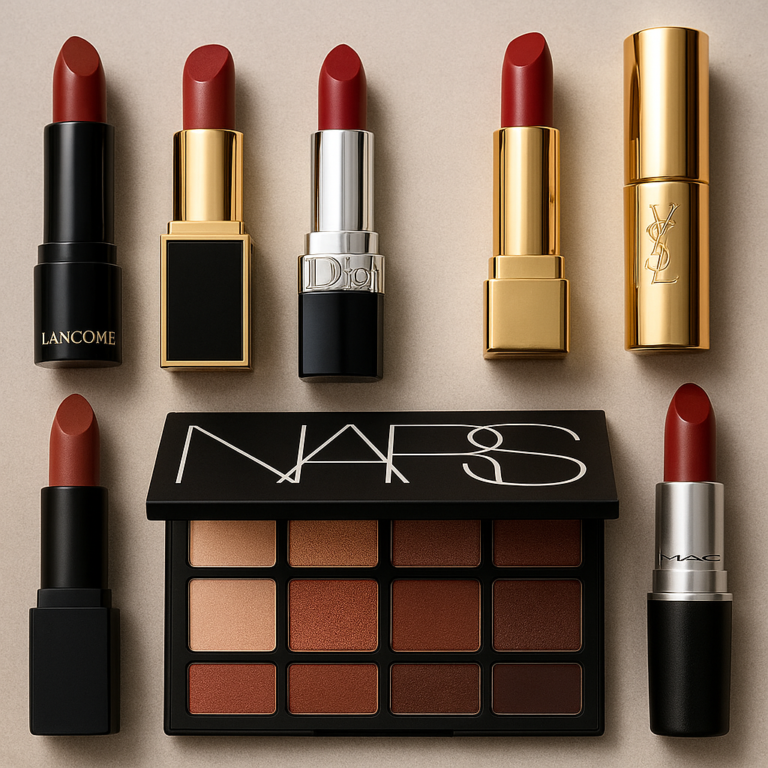
3. NARS Cosmetics
NARS Cosmetics has several complexion products, which gives shoppers options beyond a single foundation format. Check each formula’s shade selector and compare swatches before choosing.
Why we’d try it: a useful brand to consider when you want a particular finish or coverage style as well as a complexion match.
Watch for: a shade that works in one NARS formula may not be an exact match in another. Swatch the product you plan to buy.
4. Estée Lauder
Estée Lauder offers several foundation options, including products with different coverage and finish profiles.
Why we’d try it: useful if you want to compare formulas while shopping for a shade match, particularly with in-person assistance.
Watch for: verify the current shade range and stock for your preferred product; retailer availability can vary.
5. Lancôme
Lancôme provides multiple complexion products and shade-finding tools.
Why we’d try it: a good option to compare if you’re shopping for a particular finish or wear style.
Watch for: online tools are a starting point, not a guarantee. If possible, test the suggested shade on your jawline in daylight.
6. Rare Beauty
Rare Beauty offers complexion products and face color, so you can build a look around the foundation shade you choose.
Why we’d try it: shade descriptions and product information can help you narrow your choices before testing.
Watch for: shade range can differ between foundation, concealer, and tinted products. Check each item separately.
7. Haus Labs by Lady Gaga
Haus Labs by Lady Gaga has complexion options that are worth including in an online or in-store comparison.
Why we’d try it: product-specific descriptions and swatches can support a more informed shade search.
Watch for: screen color is unreliable. Compare brand swatches with your own complexion and, if you can, test a sample.
8. Sephora Collection
Sephora Collection is convenient if you want to browse and test complexion products alongside other brands at Sephora.
Why we’d try it: in-store access can make shade comparisons easier, especially if you’re deciding between two adjacent options.
Watch for: inventory differs by location. Check the shade selector online or call your store before making a trip.
9. Maybelline New York
Maybelline New York offers drugstore foundations in several formulas.
Why we’d try it: widely distributed products can be convenient to compare, and some retailers provide testers or shade displays.
Watch for: drugstore stock may be uneven. If your exact shade isn’t on the shelf, check the brand or retailer site rather than settling for a poor match.
10. L’Oréal Paris
L’Oréal Paris offers a variety of complexion products for different preferences.
Why we’d try it: a useful brand to include when comparing accessible options and formula types.
Watch for: shade labels aren’t always consistent across product lines. Match by swatch and undertone rather than assuming a shade name transfers.
11. NYX Professional Makeup
NYX Professional Makeup offers complexion products across different finishes and makeup styles.
Why we’d try it: the assortment can be handy if you want to pair foundation with concealer or other face products from the same brand.
Watch for: check the shade range in the specific formula; one product line may cover depths differently from another.
12. ILIA Beauty
ILIA Beauty offers complexion products in several formats, including options for shoppers who prefer a more skin-like look.
Why we’d try it: compare it if you’re interested in a lighter-feling complexion product or a natural finish.
Watch for: some formulas may have a narrower selection than full-coverage foundations from other brands. Confirm the range before purchasing.
13. Danessa Myricks Beauty
Danessa Myricks Beauty offers complexion and color products for both everyday makeup and more creative looks.
Why we’d try it: useful for shoppers who want to explore versatile products and techniques as well as shade matching.
Watch for: product textures and application methods differ. Follow the brand’s instructions and test compatibility with your usual skincare.
14. Pat McGrath Labs
Pat McGrath Labs offers complexion products in multiple formats.
Why we’d try it: a worthwhile comparison if you’re shopping for a particular texture, finish, or coverage level.
Watch for: do not assume a shade in a powder product will match the same name or depth in a liquid formula.
15. Fashion Fair
Fashion Fair is a heritage beauty brand especially relevant to shoppers looking for complexion makeup developed with deeper skin tones in mind.
Why we’d try it: its brand focus makes it a useful stop when comparing shade options and complexion formulas.
Watch for: check the current product selection and availability, since stock and shade offerings can change.
💄 Beyond Foundation: Inclusive Concealer, Powder, Blush, and More
Foundation gets most of the shade-range attention, but a flattering base also needs the right concealer, setting powder, blush, bronzer, and color products. A foundation match can be excellent and still look off if a pale powder leaves a cast or a concealer is too bright.
Concealer and color corrector shades
Concealer is often used for two different jobs:
- Spot concealing: match the foundation or skin tone closely to cover blemishes without drawing attention.
- Brightening: choose a shade slightly lighter than your complexion if you want more lift under the eyes. A little goes a long way.
For discoloration, color correctors may help neutralize specific tones before concealer. Use a small amount and blend it out; applying too much can create a new color problem rather than solving the first one.
✅ Try a concealer in the same depth as your foundation for targeted coverage.
❌ Don’t automatically choose a very light under-eye shade. On some skin tones, it can look gray or stark.
Setting powders that won’t leave a cast
Powder can set makeup, reduce shine, or add light coverage, but an unsuitable shade may look pale or chalky. Test powder on the area where you plan to use it, especially if you’re using a translucent formula on deeper skin.
| Powder type | What it does | Shade-match tip |
|---|---|---|
| Translucent | Sets makeup with little intended color | Check that it doesn’t leave a pale cast on your skin. |
| Tinted | Adds subtle color while setting | Match it to your complexion or foundation. |
| Brightening | Lightens selected areas | Apply sparingly and check in daylight and flash photography. |
| Pressed powder foundation | Adds more coverage | Match depth and undertone as carefully as you would with liquid foundation. |
The FDA’s cosmetics guidance explains how cosmetics are regulated in the United States; for specific product claims, read the brand’s label and instructions.
Blush, bronzer, contour, and highlighter for every complexion
Color makeup should show up in a flattering way without turning ashy, muddy, or too subtle. A richer berry or brick blush, for example, may read beautifully on deeper skin, while a pale pastel can disappear unless it has enough pigment or is layered strategically.
- Blush: choose shades based on the effect you want, then build in thin layers.
- Bronzer: look for a hue that adds warmth without turning orange.
- Contour: choose a shadow-like tone rather than a noticeably warm bronzer.
- Highlighter: test for visible sheen and texture, not just the pan color.
For cream products, warm the formula between your fingers or use a brush, then tap it onto the skin. Build slowly. We’ve seen a tiny amount of strongly pigmented blush do more than three enthusiastic swipes ever could.
Inclusive shades in lip and eye makeup
Lipsticks, liners, eyeshadows, and brow products don’t need to match your skin tone, but the color should be visible and harmonious. Consider how the product’s pigmentation and finish appear against your complexion.
- Check lip color on your lips where possible; natural lip pigmentation changes how a shade reads.
- For eyeshadow, look at swatches on a skin tone similar to yours.
- Choose brow products based on hair and brow color, not only complexion.
- If a shade looks too pale or sheer, layer it over a compatible base rather than dismissing it immediately.
🧴 Formulas, Coverage, and Finishes for Different Skin Needs
Shade is only one part of the match. Formula, coverage, finish, and skin type all affect how a foundation looks and feels after application.
Liquid, cream, powder, stick, and serum formulas
| Formula | Often useful for | Potential drawback |
|---|---|---|
| Liquid | Flexible coverage and a wide choice of finishes | Can separate or transfer if poorly layered with skincare. |
| Cream | Buildable coverage and a more emollient feel | May feel rich on oily skin or in humid weather. |
| Powder | Quick application and shine control | Can emphasize dryness or texture if overaplied. |
| Stick | Portable, targeted application, and easy touch-ups | Dense application may look heavy if not blended well. |
| Serum or skin tint | Lightweight, skin-like coverage | May offer less coverage and fewer shade choices than foundation. |
As Merle Norman puts it, “Foundation is for everyone,” and its guidance describes its foundation selection as intended for a “wide variety of skin tones.” That’s a useful philosophy, but the cited page does not provide a numerical shade count or specific undertone breakdown. Its foundation page also describes cream, powder, and liquid options, with finish and formula guidance. We’d treat those general recommendations as a starting point, then test the formula on your own skin.
Sher to full coverage: choosing your preferred finish
- Sher: lets freckles and natural skin variation show through.
- Light to medium: evens the complexion while retaining a skin-like look.
- Full: offers more visible coverage, but usually requires careful blending to avoid a mask-like effect.
You don’t need full coverage to get an even-looking base. Start with a thin layer in the center of the face, then add coverage only where you want it. This often looks more natural and uses less product.
Mate, natural, radiant, and dewy finishes
| Finish | Typical look | Consider if you… |
|---|---|---|
| Matte | Less visible shine | Prefer a more shine-controlled appearance. |
| Satin or natural | Balanced, skin-like effect | Want a middle ground between matte and glow. |
| Radiant or dewy | More visible luminosity | Like a fresh-looking finish and don’t mind some shine. |
Finish names are not perfectly standardized. One brand’s “natural” may look more radiant than another’s “satin,” so check swatches and reviews. Merle Norman similarly describes matte, satin, and dewy choices; those descriptions explain the finish, not which shade will match you.
Shade range and formula considerations for different skin types
- Dry skin: try flexible, hydrating textures and avoid applying excessive powder over flaky areas.
- Oily skin: consider longer-wear formulas or targeted powder application, especially through the center of the face.
- Combination skin: apply different amounts of powder or primer by area rather than forcing one strategy onto your whole face.
- Sensitive skin: review ingredients and patch test before wearing a new product for a full day.
These are starting points, not rules. A person with oily skin may prefer a dewy foundation, and a person with dry skin may enjoy a matte formula. Your comfort and the way the makeup wears are the final test.
☀️ SPF Makeup and Sunscreen for Every Skin Tone
Some complexion products contain SPF, including bareMinerals Original Loose Powder Foundation SPF 15. The brand currently lists 30 shades and describes options across very fair through very deep depths, with undertone and hue notes such as cool, neutral, warm, pink, peach, yellow, rosy, red, or golden.
Avoiding white cast on deeper complexions
Sunscreens and powders can leave a visible cast depending on ingredients, formula, application, and skin tone. Test face products in daylight; if you wear makeup in photos, also check how the product appears under flash.
The Skin Cancer Foundation explains how to select and apply sunscreen. Look for a sunscreen that feels comfortable enough for you to apply adequately, then choose a makeup base that layers well over it.
Why makeup with SPF may not replace sunscreen
The American Academy of Dermatology recommends broad-spectrum, water-resistant SPF 30 or higher. Makeup is generally applied more lightly and less evenly than sunscreen, so don’t depend on foundation or powder alone for sun protection.
Our practical order:
- Apply a dedicated sunscreen as directed on its label.
- Allow it to settle before makeup.
- Apply foundation or powder without treating it as your only sun-protection step.
- Reapply sunscreen as directed, using a method that works with your makeup and outdoor plans.
🔎 How to Find Your Foundation Shade and Undertone
A shade match is a small investigation: compare depth, undertone, and how the formula wears once it settles. If you’re choosing between two neighboring shades, the one that disappears into your jawline is often a better starting point than the one that looks prettiest on your hand.
The featured video offers a helpful artist’s perspective: Sephora Beauty Director David demonstrates testing foundation on the jawline and blending down toward the neck. He also explains warm, cool, and neutral undertones and shows Makeup by Mario SurealSkin Liquid Foundation with labels such as N, W, and C. His point is useful: undertones can sit between categories, so don’t force yourself into a label if your skin reads “slightly warm” or “slightly cool.”
Warm, cool, neutral, olive, and golden undertones
| Undertone label | What it may suggest | A caution |
|---|---|---|
| Cool | Pink, rosy, or red-leaning hues | The right shade still needs to match your depth. |
| Warm | Yellow, golden, or peach-leaning hues | “Warm” varies across brands and formulas. |
| Neutral | A balance of warm and cool qualities | Neutral isn’t one exact color shared by every brand. |
| Olive | A muted green or golden quality | Some brands offer few shades explicitly labeled olive. |
| Golden | A more pronounced yellow or golden quality | Golden can overlap with warm, but labels differ. |
Jewelry tests can be a playful clue, not a verdict. If gold jewelry seems especially harmonious, you may lean warm; if silver does, you may lean cool; if both work, you may lean neutral. Use the test to form a shortlist, then trust a skin swatch more than a jewelry box.
How to swatch foundation in-store
- Start with clean skin. If possible, arrive without foundation on the area you plan to test.
- Choose two or three close options. Compare adjacent depths and undertones rather than testing a random armful.
- Apply a narrow stripe along your jawline. Avoid choosing a shade based only on the back of your hand.
- Blend each stripe down toward your neck.
- Step into natural light. Store lighting can make a close match look dramatically different.
- Wait a few minutes. Let the product settle before deciding; some formulas change appearance as they dry.
- Check the rest of your face. Consider redness, pigmentation, and the difference between your face and neck.
A Sephora artist in the featured video stresses the jawline test and blending toward the neck. That method is more reliable than swatching a stripe on your wrist, which may have a different depth and undertone from your face.
Matching your face, neck, and chest
Your face can be reder, darker, or more uneven than your neck or chest. We usually recommend comparing the jaw and neck first, then checking whether the finished base looks harmonious with the exposed skin around it.
If your face and neck vary, aim for a balanced match rather than trying to erase every natural difference with a much lighter or darker foundation. A thin layer of foundation, followed by spot concealing where needed, often looks more seamless.
Online shade finders, virtual try-on, and shade-matching tools
Online tools are handy for narrowing the field, especially when a retailer lets you compare shades or upload a photo. But phone cameras, lighting, screen settings, and image processing can all affect the result.
For a stronger online match:
- Use the brand’s official shade descriptions and swatches.
- Look for product photos on people with similar depth and undertone.
- Check whether the suggested shade is available in the exact formula you want.
- Read recent user reviews for repeated comments about oxidation, undertone, or depth.
- Buy from a retailer with a clear return or exchange policy if you’re uncertain.
Treat virtual try-on as a shortlist generator, not a promise. The final check is still how the makeup looks on your skin.
What to do when you’re between shades
If two shades both look close, compare them in daylight and consider which is easier to adjust:
- A slightly light shade may be balanced with bronzer, depending on the formula.
- A slightly deep shade can sometimes be softened by mixing, but avoid altering a product if the result compromises wear or skin comfort.
- For seasonal changes, some people keep two shades and mix them as needed.
- If one shade has the right depth but wrong undertone, mixing it with another shade from the same line may help—test the combination before relying on it.
Don’t make a big purchase based on a guess if sampling is possible. A tiny test can save you from a bottle that spends the rest of its life in the makeup drawer.
🛍️ Where to Shop for Inclusive Makeup in the USA
You can shop for complexion products through brand websites, beauty retailers, department stores, drugstores, and selected online retailers. For more brand guides, visit our Beauty Brands category.
Beauty retailers, department stores, drugstores, and brand websites
| Where to shop | Best for | Check before buying |
|---|---|---|
| Brand websites | Full product details and official shade descriptions | Shipping, samples, and return terms |
| Sephora and Ulta Beauty | Comparing several brands and possible in-store testing | Local shade availability and tester access |
| Department stores | Artist assistance and some in-person testing | Whether your preferred product and shade are stocked |
| Drugstores | Convenient browsing and widely distributed brands | Tester availability and uneven shelf inventory |
| Online retailers | Comparing reviews and checking broader stock | Seller reliability, authenticity, and return rules |
Shop from the brand or an authorized retailer when possible. For more on ethical beauty options, explore our Cruelty-Free Brands coverage, and verify claims directly with the company because policies can differ by brand and product.
Samples, returns, and exchange policies
Before buying, check the retailer’s current policy for opened complexion products. Policies vary, and a sample or in-store test can be a safer way to confirm a match.
Keep the receipt and packaging until you’re confident in the shade. If you’re shopping online, save the product page and note the exact shade name, formula, and seller. A shade name from one product line may not identify the same color in another.
How to assess shade availability and stock
A range only helps if your shade is available where you shop. Check:
- The full shade selector on the brand’s product page.
- Whether your shade is listed as available or temporarily out of stock.
- Stock at your nearest retailer, not just the brand’s general assortment.
- Whether the brand offers the same shade across the formula you want.
- Whether the product’s swatches and descriptions are current.
💸 Affordable, Mid-Range, and Luxury Inclusive Makeup
A useful shade match can come from a drugstore shelf or a prestige counter. Price tier alone does not determine shade inclusivity, formula quality, or how well a foundation suits your skin. Compare the actual shade range, return policy, formula, and access to testing.
Finding drugstore makeup with diverse shades
Maybelline New York, L’Oréal Paris, and NYX Professional Makeup are examples to investigate when you want drugstore complexion options.
Benefits: convenient availability, multiple formula types, and the possibility of finding a good everyday match.
Drawbacks: tester access and shade stock can be inconsistent, and some products may be easier to find online than in a local store.
Our advice: check the official shade selector first, then confirm that your chosen shade is available through a retailer you trust.
When prestige makeup may be worth trying
Prestige brands such as Fenty Beauty, NARS, and Estée Lauder may be worth testing if you want a particular formula, finish, or in-person shade consultation.
The advantage is not automatically a better match; it’s the chance to compare the product’s shade options, formula, and support. If a product looks good but no shade matches your undertone, it’s not the right choice just because it sits on a prestige shelf.
✅ How to Evaluate a Brand’s Commitment to Shade Inclusivity
A brand’s shade range is best judged product by product. Look beyond campaign language and ask whether the shades are useful, well-described, and available.
Shade range, undertone options, and product consistency
Look for:
- A spread of shades from very fair through very deep.
- Multiple options within depth groups rather than abrupt jumps.
- Undertone descriptions that are specific enough to help you compare.
- Consistent options across the product’s advertised shade range.
- Shade descriptions that explain more than a number or vague color name.
The bareMinerals Original Loose Powder Foundation SPF 15 page is one example of a product page that gives shade descriptions with depth and undertone information. That helps shoppers assess options more clearly, though no written description can replace a real-life test.
Representation in shade charts and campaign imagery
Look for swatches and product photography across a range of skin depths. Images are more useful when the lighting and application appear consistent; otherwise, a shade can look lighter or warmer simply because of the photo.
A shade chart should help you compare the product on different complexions, not just show the same studio swatch in a row. Reviews from people with a similar skin tone can add practical context, but treat individual reports as experiences—not a guarantee that you’ll get the same result.
Checking availability across the full range
Check whether the brand’s full range is:
- Available online and in stores.
- Stocked in the formula you want.
- Offered in the shade depths shown in campaign images.
- Replenished when shades sell out.
- Supported by a workable sampling or exchange option.
A shade that appears in a campaign but is routinely unavailable may not be practical for shoppers. Availability is part of inclusivity, not a footnote.
🧪 Ingredient, Sensitivity, and Wear Considerations
A good color match should also feel comfortable on your skin. Read the ingredient list and use the product as directed, especially if you have sensitive or reactive skin.
Fragrance, acne-prone skin, and sensitive skin
- Review the product’s ingredient list rather than relying only on “clean,” “natural,” or “sensitive skin” labels.
- If fragrance is a concern for you, check whether it appears in the ingredient list.
- Patch test a new product before applying it across your face.
- If you have a diagnosed skin condition or frequent reactions, ask a dermatologist for personalized advice.
The American Academy of Dermatology’s guidance on patch testing focuses on skin-care products, but its cautious approach is useful when trying a new topical product. For regulatory information on cosmetics, consult the FDA’s cosmetics pages.
Oxidation, transfer, flashback, and wear time
- Oxidation: a shade may look different after it dries or wears. Test it for a while before choosing.
- Transfer: some products move onto clothing or masks more readily than others. Set makeup only where needed and follow the product’s instructions.
- Flashback: a product may photograph differently under strong flash. Test your full makeup look before an event.
- Wear time: skin type, weather, skincare, and application all influence how long a foundation lasts.
User reviews can help flag patterns—such as a formula running warm or separating on oily skin—but one person’s experience doesn’t predict everyone’s result. Prioritize recent reviews on the exact product and shade, then test on your own skin when possible.
Patch testing and makeup hygiene
- Apply a small amount to a discreet area.
- Follow the product label and give your skin time to respond.
- Stop using it if you develop irritation or discomfort.
- Avoid sharing makeup, especially products used near the eyes or lips.
- Keep applicators clean and follow the brand’s storage instructions.
If a reaction is severe or persistent, discontinue the product and seek medical advice.
🎨 Tips for Mixing, Layering, and Customizing Your Shade
Sometimes a brand gets close but not quite there. You may between seasonal shades, or the depth may be right while the undertone needs a small adjustment.
- Mix only compatible products. Combining formulas with very different textures can affect wear or cause pilling.
- Test the blend on your jawline. Check the result in daylight before applying it all over.
- Adjust with concealer or bronzer sparingly. Use them to refine a look rather than covering a major mismatch.
- Apply in thin layers. More product does not always mean a better match.
- Keep a record. Note the product, shade, formula, and season so you can recreate the result later.
One of our artists once helped a client who was convinced her foundation was too dark. The real culprit was an overly pink undertone. Testing a warmer option at the same depth made the base look more natural without changing the shade category. That’s why we ask you to check both depth and undertone before rejecting a product.
🚫 Common Shade-Matching Mistakes to Avoid
- Choosing by shade count alone: a big lineup can still have gaps in your depth or undertone.
- Testing only on your hand: hands often differ from the face and neck.
- Buying based only on a screen: lighting and display settings alter color.
- Assuming undertone labels are universal: brand shade systems differ.
- Ignoring formula: a shade can look different in a powder, liquid, or tint.
- Applying too much too quickly: heavy layers can make even a good match look unnatural.
- Skipping daylight: store lighting can flatter a mismatch.
- Confusing sunscreen and makeup SPF: use a dedicated sunscreen as directed.
- Settling for “close enough” without checking returns or samples: your face deserves a proper audition, not a blind date.