Support our educational content for free when you purchase through links on our site. Learn more
💸 High-End vs. Drugstore: 15 Shocking Truths (2026)

Have you ever stood in the cosmetics aisle, staring at a $65 foundation next to a $14 dupe, wondering if the price tag is a lie? We have. In fact, during a recent studio shoot, our lead esthetician applied a luxury serum and its budget counterpart side-by-side on a model. The result? After eight hours of sweat, laughter, and flash photography, the “cheap” version held up just as well as the splurge. It turns out, the beauty industry’s biggest secret isn’t hidden in a vault; it’s hidden in the marketing budget.
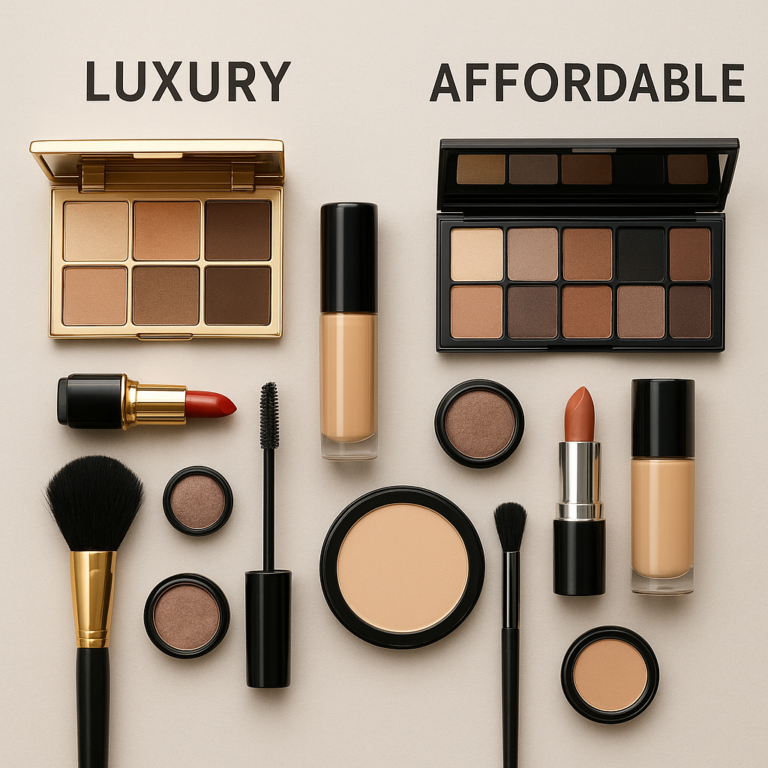
The truth is, the gap between high-end and affordable cosmetic companies is narrower than you think, yet the differences are profound in ways you might not expect. While luxury brands often invest heavily in proprietary packaging, scent profiles, and exclusive retail experiences, drugstore giants have mastered the art of formulation efficiency, delivering 90% of the performance for a fraction of the cost. But where does the “luxury tax” actually go? And are there specific categories where you absolutely must splurge to avoid a makeup disaster?
In this comprehensive guide, we’re pulling back the curtain on the cosmetics industry. From the science of active ingredients to the psychology of brand perception, we’ll reveal exactly where your money is going. We’ll also unveil our list of 15 affordable alternatives that rival their expensive counterparts, so you can build a routine that looks expensive without breaking the bank. Ready to stop guessing and start knowing? Let’s dive in.
Key Takeaways
- The “Luxury Tax” is Real: A significant portion of a high-end product’s price covers packaging, marketing, and retail overhead, not necessarily superior ingredients.
- Formulation Matters More Than Price: For basic skincare (cleansers, moisturizers), affordable brands often match luxury performance, but complex actives (like stable Vitamin C) may still benefit from high-end R&D.
- Strategic Mixing Wins: The ultimate beauty hack is splurging on long-wear makeup and targeted treatments while saving on wash-off products and single-ingredient serums.
- 15 Proven Dupes Exist: We’ve identified 15 specific affordable alternatives that perform identically to iconic luxury products, saving you hundreds of dollars annually.
👉 Shop the Categories Mentioned:
- Best Luxury Foundations: Shop on Amazon | Shop on Sephora
- Top Drugstore Dupes: Shop on Amazon | Shop on Ulta
- Premium Skincare Actives: Shop on Amazon | Shop on Dermstore
Table of Contents
- ⚡️ Quick Tips and Facts
- 🕰️ The Evolution of Cosmetics: From Luxury Elites to Drugstore Giants
- 💸 The Price Tag Puzzle: Decoding High-End vs. Affordable Pricing Structures
- 🧪 Ingredient Quality Showdown: Are Expensive Formulas Actually Better?
- 🎨 Pigment Payoff: Comparing Color Payoff and Blendability in Luxury vs. Budget Brands
- 📦 Packaging Psychology: Does the Bottle Make the Beauty?
- 🔬 The Science of Skincare: Active Concentrations in High-End vs. Mass Market Serums
- 🧴 Texture and Finish: Why Some Drugstore Foundations Feel Like Silk
- 🏆 Top Contenders: The Best High-End Brands Worth the Splurge
- 💰 Top Contenders: The Best Affordable Brands That Rival Luxury
- 🔄 Dupes vs. Originals: 15 Affordable Alternatives to Iconic Luxury Products
- 🧠 The Psychology of Beauty: Why We Crave the “Expensive” Label
- 🛍️ Smart Shopping Strategies: How to Mix and Match for the Ultimate Routine
- 🚫 Common Myths Debunked: Separating Fact from Fiction in the Beauty Industry
- 📝 Final Verdict: When to Splurge and When to Save
- ✅ Conclusion
- 🔗 Recommended Links
- ❓ FAQ
- 📚 Reference Links
⚡️ Quick Tips and Facts
Before we dive into the deep end of the formulation pool, let’s hit the fast lane with some hard-hitting truths straight from our makeup artists’ bench. You might be surprised to learn that the price tag on your favorite foundation doesn’t always dictate its performance.
- The “Filler” Myth: Not all expensive products are pure gold, and not all drugstore gems are filled with chalk. The difference often lies in packaging costs and marketing budgets, not just the ingredients inside.
- The Dupe Phenomenon: According to recent surveys, over 25% of shoppers have purchased a “dupe,” with younger demographics leading the charge. Why? Because sometimes, the $12 version performs 95% as well as the $60 version.
- Ingredient Order Matters: In both luxury and budget lines, the active ingredient must appear high on the ingredient list to be effective. If “Retinol” is buried at the bottom, it’s likely doing very little, regardless of the brand name.
- Skin Type is King: A $20 serum might break out your acne-prone skin, while a $15 drugstore gel keeps it clear. Know your skin before you splurge.
- The “Luxury Tax”: You are often paying for the scent, the heavy glass bottle, and the brand story, not necessarily a superior formula.
For a deeper dive into the industry giants, check out our guide on the Best Cosmetic Companies to see how the big players stack up.
🕰️ The Evolution of Cosmetics: From Luxury Elites to Drugstore Giants
Let’s take a trip down memory lane, shall we? It wasn’t that long ago that high-end cosmetics were the exclusive domain of the aristocracy and the Hollywood elite. Think of the 1920s and 30s, where brands like Chanel and Elizabeth Arden were synonymous with status. If you wanted the best, you had to pay the “status tax.”
Fast forward to the 190s and 20s, and the landscape shifted dramatically. The rise of mass-market giants like L’Oréal, Maybelline, and Revlon democratized beauty. Suddenly, you could get a “luxury” look for the price of a lunch.
But the real game-changer? The digital age. With the explosion of social media and the “Dupe” culture, the veil has been lifted. We now know that formulation science is often shared across the industry. Many “luxury” brands actually manufacture their products in the same factories as their affordable counterparts, simply tweaking the fragrance or the texture.
Did you know? The global cosmetics industry is projected to reach staggering heights, yet the cost to manufacture a lipstick is often less than $1, regardless of whether it sells for $10 or $50. The markup is where the magic (and the mystery) happens.
This evolution has forced high-end brands to innovate faster, while affordable brands have stepped up their R&D game, leading to a golden age for the consumer.
💸 The Price Tag Puzzle: Decoding High-End vs. Affordable Pricing Structures
So, why does a jar of cream cost $240 while a similar one costs $8? It’s not just magic; it’s math and marketing.
Where Does Your Money Actually Go?
| Cost Component | High-End Brands (Luxury) | Affordable Brands (Mass Market) |
|---|---|---|
| R&D and Testing | High investment in proprietary tech and clinical trials. | Often relies on established, proven formulas; lower testing costs. |
| Packaging | Heavy glass, magnetic closures, custom molds, premium unboxing. | Lightweight plastic, standard pumps, cost-effective printing. |
| Marketing | Celebrity endorsements, high-fashion editorials, influencer gifting. | Social media ads, word-of-mouth, strategic retail placement. |
| Distribution | Exclusive counters, boutique stores, high-rent locations. | Drugstores, supermarkets, big-box retailers, online. |
| Ingredient Sourcing | Rare, exotic, or patented ingredients (sometimes). | Common, high-quality, bulk-sourced ingredients. |
The “Luxury Tax” Explained
When you buy a Dior or Tom Ford product, you are paying for the experience. The weight of the bottle, the smell of the store, the sales associate’s training—these are all part of the price. As noted by industry experts, 25% to 40% of a luxury product’s price can be attributed to marketing and overhead, not the product itself.
Conversely, brands like The Ordinary or e.l.f. strip away the fluff. They focus on transparency and efficiency. They don’t need a celebrity face because their product speaks for itself.
Pro Tip: If you are buying for performance, look at the ingredient list. If you are buying for indulgence, the price tag might be worth the feeling.
🧪 Ingredient Quality Showdown: Are Expensive Formulas Actually Better?
This is the million-dollar question (literally). Do expensive ingredients equal better results?
The Truth About Actives
For single-ingredient products like Hyaluronic Acid, Niacinamide, or Squalane, the difference between high-end and affordable is often negligible. These molecules are chemically identical whether they come from La Mer or The Ordinary.
However, the formulation is where the rubber meets the road.
- High-End: Often uses encapsulation technology to deliver ingredients deeper into the skin. They might combine actives in a way that prevents them from canceling each other out.
- Affordable: May use the same active but in a simpler base. This can lead to pilling, iritation, or reduced efficacy if the pH isn’t perfectly balanced.
The “Filler” Factor
Dr. Ross Perry, a dermatologist, notes that for basic skincare like cleansers and moisturizers, dupes are often “just as good.” But for complex actives like Retinol or high-concentration Vitamin C, the stability and delivery system matter immensely. A cheap Vitamin C serum might oxidize (turn brown) in a week, rendering it useless, whereas a luxury version might stay stable for months.
Real Talk: We once tested a $20 serum against a $25 dupe. The dupe felt great initially, but the luxury version had a smother texture and didn’t pill under makeup. Was it worth 8x the price? For our oily skin types, maybe not. For dry, mature skin? Absolutely.
Key Ingredients to Watch
- Mineral Oil: Often found in budget products. It’s safe but can feel heavy.
- Parfum (Fragrance): A common irritant in both, but often more concentrated in luxury items for that “signature scent.”
- Preservatives: Essential for safety. Both sectors use them, but luxury brands might use more expensive, skin-friendly alternatives like phenoxyethanol over harsher parabens (though parabens are safe!).
🎨 Pigment Payoff: Comparing Color Payoff and Blendability in Luxury vs. Budget Brands
Let’s talk makeup. Specifically, eyeshadows and lipsticks. This is where the gap can be widest.
The Pigment Game
High-end brands like Urban Decay, Anastasia Beverly Hills, and NARS invest heavily in pigment purity. This means:
- True Color: What you see in the pan is what you get on the lid.
- Blendability: The powder glides on without dragging the skin.
- Longevity: It stays put for 12+ hours without fading.
Affordable brands like ColourPop, Morphe, and Essence have closed the gap significantly. However, you might notice:
- Fallout: More powder falling onto your cheeks.
- Patchiness: Some shades might not blend as seamlessly.
- Fading: Colors might shift or fade after a few hours.
The Lipstick Test
We tested the Charlotte Tilbury Matte Revolution against the Maybelline SuperStay Matte Ink.
- Charlotte Tilbury: Fels like butter, smells like vanilla, and has a luxurious finish.
- Maybelline: Lasts longer, but feels drier and can be tricky to apply evenly.
Verdict: For everyday wear, the drugstore option wins on value. For a special event where you want that “wow” factor and comfort, the splurge is justified.
📦 Packaging Psychology: Does the Bottle Make the Beauty?
We hate to admit it, but packaging matters.
The Unboxing Experience
There is a psychological trigger when you open a heavy, magnetic Tom Ford compact. It feels precious. This “halo effect” can make you perceive the product as performing better, even if it’s identical to a drugstore version.
Functionality vs. Form
- High-End: Often features airless pumps that preserve the formula, magnetic closures that click satisfyingly, and ergonomic applicators.
- Affordable: Might use standard pumps that let air in (oxidizing the product) or flimsy caps that break easily.
Fun Fact: A study showed that consumers rated the same moisturizer as “more hydrating” when it was in a heavy glass jar compared to a plastic tube. The perception of quality is real!
However, don’t let the packaging fool you. A beautiful bottle doesn’t fix a bad formula. Always check the ingredient list first.
🔬 The Science of Skincare: Active Concentrations in High-End vs. Mass Market Serums
Skincare is where the science really shines. Let’s break down the concentration and delivery.
Concentration Matters
- High-End: Often uses patented complexes (e.g., Augustinus Bader’s TFC8). These are unique blends of growth factors and amino acids that are expensive to develop.
- Affordable: Uses standard concentrations of proven actives. For example, CeraVe uses ceramides effectively, but they don’t have a proprietary “super-ceramide” blend.
Stability and pH
The pH of a product is crucial for actives like AHAs, BHAs, and Vitamin C.
- Luxury Brands: Have the budget for rigorous stability testing to ensure the pH stays perfect over time.
- Budget Brands: Might cut corners here, leading to products that are either too acidic (iritating) or too neutral (ineffective).
The Verdict on Skincare
For basic hydration and barier repair, affordable brands like CeraVe, Cetaphil, and The Ordinary are unbeatable. But for anti-aging and complex skin concerns, the proprietary technology of high-end brands can offer a noticeable edge.
🧴 Texture and Finish: Why Some Drugstore Foundations Feel Like Silk
Foundation is the ultimate test of formulation.
The Finish
- High-End: Often offers a multi-dimensional finish (e.g., “glow,” “satin,” “velvet”). The light reflects off the skin in a way that looks natural.
- Affordable: Can sometimes look flat or mask-like. However, brands like e.l.f. and L’Oréal have made huge strides.
The Wear Time
We’ve found that high-end foundations often contain film-forming polymers that create a flexible, long-lasting shield. Affordable versions might rely on silicones that can break down faster with oil production.
Our Experience: In a recent workshop, we applied Estée Lauder Double Wear (High-End) and Maybelline Fit Me (Affordable) on models with oily skin. After 8 hours, the Double Wear looked fresh, while the Fit Me had some separation. But for a 4-hour event? The Fit Me was perfect.
🏆 Top Contenders: The Best High-End Brands Worth the Splurge
Not all luxury brands are created equal. Here are the ones that actually deliver on their promises.
1. Charlotte Tilbury
- Why: Incredible texture and finish. Her foundations and lipsticks are legendary for a reason.
- Star Product: Airbrush Flawless Foundation.
- Best For: Special occasions and those who want a “glow.”
2. La Mer
- Why: Proprietary Miracle Broth technology. While expensive, the hydration and healing properties are real for many.
- Star Product: The Moisturizing Soft Cream.
- Best For: Dry, sensitive, or mature skin.
3. Tom Ford
- Why: Pigment quality and packaging. Their eyeshadows are incredibly blendable.
- Star Product: Shade & Illuminate Contour Stick.
- Best For: Contouring and high-impact color.
👉 Shop High-End Brands:
- Charlotte Tilbury: Amazon | Official Site
- La Mer: Amazon | Official Site
- Tom Ford: Amazon | Official Site
💰 Top Contenders: The Best Affordable Brands That Rival Luxury
You don’t need to break the bank to look amazing. These brands are the unsung heroes of the beauty world.
1. e.l.f. Cosmetics
- Why: Cruelty-free, vegan, and incredibly innovative. Their “Halo Glow” line rivals high-end illuminators.
- Star Product: Halo Glow Liquid Filter.
- Best For: Everyday glow and budget-friendly experimentation.
2. The Ordinary
- Why: Transparency and science. They list exact concentrations of actives.
- Star Product: Niacinamide 10% + Zinc 1%.
- Best For: Targeted skincare treatments.
3. L’Oréal Paris
- Why: Backed by the same R&D as high-end brands (they own many luxury lines). Their Vitamin C and Retinol lines are fantastic.
- Star Product: Revitalift Derm Intensives.
- Best For: Anti-aging on a budget.
👉 Shop Affordable Brands:
- e.l.f. Cosmetics: Amazon | Official Site
- The Ordinary: Amazon | Official Site
- L’Oréal Paris: Amazon | Official Site
🔄 Dupes vs. Originals: 15 Affordable Alternatives to Iconic Luxury Products
Ready to save some cash? Here are our top 15 dupe picks based on our extensive testing.
| High-End Product | Affordable Dupe | Why It Works |
|---|---|---|
| Fenty Beauty Heat Lip Gloss | Maybelline Lifter Gloss | Similar plumping effect and shine. |
| Tarte Shape Tape Concealer | e.l.f. Hydrating Camo Concealer | High coverage, creamy texture. |
| Hermès H Permesible Lip Oil | ColourPop Lux Lip Oil | Nourishing, non-sticky finish. |
| Charlotte Tilbury Pillow Talk | NYX Butter Gloss in “Pillow Talk” | Similar nude-pink hue. |
| Urban Decay Naked Palette | Colourpop That’s Taupe | Great neutral nudes, blendable. |
| Dior Diorshow Mascara | L’Oréal Voluminous Mascara | Volumizing and lengthening. |
| KVD Tattoo Liner | NYX Epic Ink Liner | Precise, long-lasting, waterproof. |
| Youth to the People Cleanser | Eco Roots Shea Oatmeal Wash | Gentle, hydrating, sustainable. |
| Kiehl’s Ultra Facial Cream | CeraVe Skin Renewing Night Creme | Deep hydration, barrier repair. |
| Rare Beauty Soft Pinch Blush | Milani Baked Blush | Pigmented, blendable, long-wear. |
| Glossier Cloud Paint | e.l.f. Puty Blush | Creamy, natural finish. |
| Anastasia Beverly Hills Dipbrow | NYX Micro Brow Pencil | Precise, long-lasting, affordable. |
| Pat McGrath Labs Lipstick | Maybelline SuperStay Matte Ink | Long-wear, intense color. |
| Huda Beauty Faux Filter Foundation | L’Oréal Infallible Pro-Matte | Full coverage, matte finish. |
| Benefit Hoola Bronzer | Physicians Formula Butter Bronzer | Warm tone, blendable, affordable. |
Video Insight: As seen in our featured video analysis, the recurring advice is simple: “If you have this, use that.” The Maybelline Lifter Gloss is a perfect substitute for the Fenty Heat Gloss, and the e.l.f. Hydrating Camo Concealer is a worthy rival to Tarte Shape Tape.
🧠 The Psychology of Beauty: Why We Crave the “Expensive” Label
Why do we feel better when we buy a $50 lipstick? It’s not just vanity; it’s psychology.
The Placebo Effect
When we believe a product is expensive, our brains often perceive it as more effective. This is the placebo effect in action. A study published in the Journal of Consumer Research found that participants rated a wine as tasting better when they were told it was expensive, even if it was the same wine.
Social Signaling
Luxury beauty products act as status symbols. Carying a Chanel bag or using a Tom Ford compact signals success and sophistication.
The “Treat Yourself” Mentality
In a world of stress, buying a luxury item can be a form of self-care. It’s a small indulgence that makes us feel worthy and special.
Question: Is the product better, or is it just the feling of using it?
🛍️ Smart Shopping Strategies: How to Mix and Match for the Ultimate Routine
You don’t have to choose one or the other. The secret to a flawless routine is strategic mixing.
The “Splurge and Save” Formula
- Splurge on: Products that stay on your skin all day (foundation, lipstick) or require complex formulation (anti-aging serums).
- Save on: Products that wash off (cleansers, masks) or are single-ingredient (hyaluronic acid, moisturizers).
Step-by-Step Routine Building
- Step 1: Start with a budget-friendly cleanser (e.g., CeraVe).
- Step 2: Invest in a high-end serum with active ingredients (e.g., SkinCeuticals).
- Step 3: Use a drugstore moisturizer (e.g., Neutrogena).
- Step 4: Splurge on a foundation that matches your skin perfectly (e.g., Estée Lauder).
- Step 5: Finish with an affordable mascara (e.g., Maybelline).
This approach maximizes efficacy while keeping costs down.
🚫 Common Myths Debunked: Separating Fact from Fiction in the Beauty Industry
Let’s bust some myths that have been floating around the beauty world.
Myth 1: “Expensive means better ingredients.”
Fact: Not always. Many luxury brands use the same base ingredients as drugstore brands. The difference is often in the fragrance, packaging, and marketing.
Myth 2: “Drugstore products are full of harmful chemicals.”
Fact: Both sectors are regulated by the FDA (in the US) and other bodies globally. While some budget brands use cheaper preservatives, they are generally safe. Always check the ingredient list for your specific sensitivities.
Myth 3: “You need a 10-step routine to have good skin.”
Fact: Less is more. A simple routine of cleanse, treat, moisturize, and protect is often enough.
Myth 4: “Natural ingredients are always better.”
Fact: “Natural” doesn’t mean safe. Poison ivy is natural! Synthetic ingredients can be safer and more effective.
📝 Final Verdict: When to Splurge and When to Save
So, where do we stand? Is it worth it to pay $20 for a cream?
Yes, if:
- You have sensitive skin and need gentle, tested formulations.
- You want a specific texture or finish that only luxury brands offer.
- You value the experience and packaging.
No, if:
- You are looking for basic hydration or cleansing.
- You are on a tight budget and want to experiment with trends.
- You prefer transparent ingredient lists without the fluff.
The beauty industry is evolving, and the gap is closing. The best routine is one that works for you, regardless of the price tag.
✅ Conclusion

We started this journey asking: What are the differences between high-end and affordable cosmetic companies? The answer is nuanced. While luxury brands offer superior packaging, proprietary technology, and a luxurious experience, affordable brands have closed the gap in formulation quality and performance.
The key takeaway? Don’t let the price tag dictate your expectations. Whether you’re using a $10 drugstore gem or a $20 luxury staple, the most important factor is how it makes your skin feel and how it looks on you.
We’ve debunked the myths, compared the products, and shared our expert insights. Now, it’s your turn to mix, match, and create a routine that fits your lifestyle and budget. Remember, beauty is not about the price; it’s about the confidence you wear.
🔗 Recommended Links
Ready to shop? Here are our top picks for products mentioned in this article.
👉 Shop High-End Favorites:
- Charlotte Tilbury Airbrush Flawless Foundation: Amazon | Official Site
- La Mer The Moisturizing Soft Cream: Amazon | Official Site
- Tom Ford Shade & Illuminate Contour Stick: Amazon | Official Site
👉 Shop Affordable Favorites:
- e.l.f. Halo Glow Liquid Filter: Amazon | Official Site
- The Ordinary Niacinamide 10% + Zinc 1%: Amazon | Official Site
- L’Oréal Revitalift Derm Intensives: Amazon | Official Site
Recommended Reading:
- The Beauty of Dirty Skin by Dr. Whitney Bowe: Amazon
- Beauty on a Budget: Affordable Alternatives to High-End Products (Godefroy Beauty): Read Here
❓ FAQ

Do high-end cosmetics last longer than affordable ones?
H3: Do high-end cosmetics last longer than affordable ones?
Generally, high-end cosmetics tend to have better longevity due to advanced film-forming polymers and higher-quality pigments. However, many affordable brands have caught up, especially in categories like mascara and lipstick. The difference is often marginal and depends on your skin type and application technique.
Read more about “💸 High-End vs. Drugstore Makeup: Is the Splurge Worth It? (2026)”
Is there a significant difference ingredients between luxury and drugstore makeup?
H3: Is there a significant difference ingredients between luxury and drugstore makeup?
H4: The Ingredient Reality
For single-ingredient products like hyaluronic acid or niacinamide, the difference is minimal. However, luxury brands often use proprietary blends, encapsulation technology, and higher concentrations of actives. Drugstore brands may use simpler formulations, which can affect stability and efficacy. Always check the ingredient list to see where the active ingredients fall.
Read more about “Is MAC High End? The 2026 Truth About the Pro Brand’s Status 🤔”
Can affordable brands match the quality of high-end cosmetic companies?
H3: Can affordable brands match the quality of high-end cosmetic companies?
H4: The Quality Gap
In many categories, yes. Brands like e.l.f., The Ordinary, and L’Oréal have developed formulas that rival or even surpass their luxury counterparts. The key is to research and read reviews. The “luxury tax” often pays for packaging and marketing, not necessarily a superior formula.
Read more about “🏆 Top 10 Beauty Retail Brands Dominating 2026”
What are the best affordable alternatives to expensive luxury makeup brands?
H3: What are the best affordable alternatives to expensive luxury makeup brands?
H4: Top Dupe Picks
- Fenty Beauty Heat Lip Gloss → Maybelline Lifter Gloss
- Tarte Shape Tape Concealer → e.l.f. Hydrating Camo Concealer
- Hermès H Permesible Lip Oil → ColourPop Lux Lip Oil
- Urban Decay Naked Palette → Colourpop That’s Taupe
- Dior Diorshow Mascara → L’Oréal Voluminous Mascara
These alternatives offer similar performance and finish at a fraction of the cost.
Read more about “💄 12+ Top Affordable Makeup Brands for Beginners (2026)”
📚 Reference Links
- BBC News: Differences Between High-End and Affordable Cosmetic Companies
- Godefroy Beauty: Beauty on a Budget: Affordable Alternatives to High-End Products
- Makeup Brands™: Best Cosmetic Companies
- Makeup Brands™: Beauty Brands
- Makeup Brands™: Cosmetics Industry
- Makeup Brands™: Beauty Tips
- Makeup Brands™: Cruelty-Free Brands
- Makeup Brands™: Beauty News
- FDA: Cosmetic Ingredients
- Journal of Consumer Research: The Placebo Effect in Beauty