Support our educational content for free when you purchase through links on our site. Learn more
12 American Cosmetics Market Trends to Watch in 2026 💄

The biggest American cosmetics market trends for 2026 point to beauty that feels more personal, practical, and performance-driven: skin-first makeup, inclusive shade options, creator-led discovery, and sharper demand for value. For brands and shoppers alike, the smartest move is to look beyond the viral launch and ask whether a product delivers, suits real routines, and earns a repeat purchase.
One number offers a sense of the market’s scale: Grand View Research estimates the U.S. cosmetics market reached $20.31 billion in 2023, with growth projected through 2030. But “cosmetics” can include very different product categories across reports, so a market forecast only makes sense when you check exactly what it counts. Grand View Research
We’ve seen a familiar scene at the makeup counter: a customer arrives after spotting a foundation on social media, then swatches three shades in store before choosing none of them. That moment captures the market’s balancing act: online buzz sparks interest, but shade match, comfort, trustworthy information, and real-world performance close the deal.
Key Takeaways
- Skin-first and hybrid products are reshaping makeup, from skin tints to multipurpose lip and cheek formulas.
- Inclusive shades and genuine accessibility mean more than a high shade count; undertones, stock availability, and useful swatches matter.
- Social media accelerates discovery, but transparent reviews and in-person testing still help shoppers decide.
- Value is about performance, not just low cost. Consumers weigh versatility, comfort, and whether a product earns a repurchase.
- Market-size estimates depend on scope. Check whether a report covers makeup alone or also skincare, hair care, and fragrance.
- Regulation and sustainability claims deserve a closer look. The FDA’s cosmetics guidance and the FTC’s Green Guides are useful starting points.
Table of Contents
- ⚡️ Quick Tips and Facts: American Cosmetics Market at a Glance
- 📈 U.S. Cosmetics Market Size, Growth Drivers, and Forecast
- What Counts as the Cosmetics Market?
- Market Value, Growth Rates, and Forecast Caveats
- 🕰️ How the American Beauty Industry Evolved
- From Department-Store Counters to Beauty E-Commerce
- How Social Media Changed Beauty Discovery
- 🔎 12 American Cosmetics Market Trends Shaping Beauty
- 1. Skinification of Makeup
- 2. Hybrid Makeup and Skincare Formulas
- 3. Inclusive Shades and More Representative Marketing
- 4. Clean Beauty, Ingredient Transparency, and Safety
- 5. Clinical Claims and Science-Led Skincare
- 6. Sustainability, Refillable Packaging, and Lower-Waste Beauty
- 7. Creator-Led Discovery and Social Commerce
- 8. AI, Virtual Try-On, and Beauty Personalization
- 9. Prestige Beauty’s Resilience and the Premiumization Shift
- 10. Affordable Beauty, Value Shopping, and Dupe Culture
- 11. Fragrance, Body Care, and Beauty Beyond the Face
- 12. Men’s Grooming and Expanding Beauty Audiences
- 🧭 Market Concentration and Competitive Characteristics
- Mass, Mastige, Prestige, and Indie Beauty
- Private Labels, Beauty Conglomerates, and Independent Brands
- What Makes the U.S. Cosmetics Market Distinctive?
- 👥 Consumer and End-User Insights
- Beauty Buying Habits by Generation
- How Skin Tone, Age, Identity, and Lifestyle Shape Demand
- What U.S. Beauty Shoppers Value Most
- 🛍️ Distribution Channels: Where Americans Buy Cosmetics
- Beauty Specialty Retailers and Department Stores
- Drugstores, Mass Merchants, and Supermarkets
- Brand Websites, Marketplaces, and Social Commerce
- Omnichannel Shopping and In-Store Experiences
- 💄 Product Insights: Makeup, Skincare, Hair Care, and Fragrance
- Color Cosmetics and Complexion Products
- Skincare and Sun Protection
- Hair Care, Styling, and Scalp Care
- Fragrance, Body Care, and Personal Care
- 🏢 Leading U.S. Cosmetics Companies and Beauty Brands
- Global Beauty Groups and Major Manufacturers
- Fast-Growing Indie and Founder-Led Brands
- Retailers Shaping the Competitive Landscape
- ⚖️ Regulation, Ingredients, and Cosmetics Safety in the United States
- FDA Oversight and the Modernization of Cosmetics Regulation Act
- Labeling, Claims, and Product Testing
- State-Level Rules and Ingredient Restrictions
- 🌿 Sustainability and the Environmental Footprint of Beauty
- Packaging, Recycling, and Refill Systems
- Ethical Sourcing, Animal Testing, and Green Claims
- 🚧 Challenges and Risks Facing the Cosmetics Industry
- Inflation, Costs, and Price-Sensitive Shoppers
- Supply Chains, Counterfeits, and Product Recalls
- Trend Saturation, Brand Fatigue, and Consumer Trust
- 🔮 What’s Next for the American Cosmetics Market?
- Emerging Beauty Categories to Watch
- Signals Brands and Retailers Should Track
- 📊 U.S. Cosmetics Market Report Scope and Segmentation
- Market Scope, Definitions, and Geographic Coverage
- Segmentation by Product, Consumer, Price Tier, and Channel
- How to Compare Market Research Forecasts
- ✅ How to Use Cosmetics Market Trends for Better Decisions
- A Practical Checklist for Beauty Brands
- A Shopper’s Guide to Reading Beauty Trend Claims
- 🏁 Conclusion
- 🔗 Recommended Links
- ❓ FAQ
- How large is the American cosmetics market?
- What are the biggest cosmetics trends in the United States?
- Which product categories are growing fastest?
- Where do Americans buy cosmetics?
- Who are the leading U.S. cosmetics companies?
- How is the U.S. cosmetics industry regulated?
- What is the difference between cosmetics and beauty products?
- 📚 Reference Links
Quick Tips and Facts: American Cosmetics Market at a Glance
If you’re exploring the U.S. beauty landscape, start with our guide to the top 10 makeup brands in the USA, then keep this market cheat sheet handy. 💄
| Quick fact | What it means |
|---|---|
| Grand View Research estimates the U.S. cosmetics market generated $20.31 billion in 2023 and projects $28.36 billion by 2030, a forecast 4.8% CAGR for 2024–2030. | A useful directional estimate, but only when compared with studies using the same category definitions. Grand View Research |
| “Cosmetics” can mean different things across reports. | Some studies focus on color cosmetics; broader studies include skincare, hair care, fragrance, and other beauty products. |
| Hybrid products are a major innovation theme. | Think tinted moisturizers, skin tints, lip oils, and makeup with skincare-inspired ingredients. |
| Online discovery and physical retail now work as a team. | Shoppers may see a product on TikTok, research reviews online, and swatch it at Sephora or Ulta Beauty. |
| Value means more than a low price. | Consumers look for performance, comfort, versatility, and a reason to repurchase. |
| Regulation is evolving. | The FDA’s Modernization of Cosmetics Regulation Act of 202 (MoCRA) expanded federal cosmetics oversight. |
Our expert shortcut: Track the specific category you care about—makeup, skincare, fragrance, or hair care—rather than treating “beauty” as one giant lipstick-shaped bucket. A rising skincare figure does not automatically mean foundation sales are rising too.
U.S. Cosmetics Market Size, Growth Drivers, and Forecast
What Counts as the Cosmetics Market?
In everyday conversation, “cosmetics” often means makeup. In market research, the term may describe a broader beauty portfolio, including skincare, hair care, fragrance, makeup, and other personal-care products. Grand View Research’s U.S. report covers several of these product groups and splits sales by online and offline distribution. See its market scope.
That difference matters. A report measuring color cosmetics will not have the same market value as one that includes moisturizer, shampoo, and fragrance. The numbers can both be valid while answering different questions.
| Market lens | Commonly included products | Best used to understand |
|---|---|---|
| Color cosmetics | Foundation, concealer, blush, mascara, lipstick, eye products | Makeup demand, category performance, and brand competition |
| Cosmetics and beauty | Color cosmetics plus some skincare, hair care, or fragrance | A broader beauty-business picture |
| Personal care | Beauty products plus items such as deodorant, oral care, or bath products, depending on the study | Household and daily-care spending |
| Prestige beauty | Premium products sold through department stores and specialty beauty retailers | Luxury and premium channel trends |
Market Value, Growth Rates, and Forecast Caveats
Grand View Research estimates the U.S. cosmetics market at $20.31 billion in 2023, with a projected $28.36 billion by 2030. Its forecast highlights “increasing consumer spending on personal care products” and “growing demand for multifunctional cosmetics.” Grand View Research’s estimate and methodology.
But another report may produce a different number. Forecasts vary because firms choose different product boundaries, base years, sales channels, currencies, and calculation methods. A 2025–2032 report from Fortune Business Insights is another reference point, but its market estimate should not be compared directly with a color-cosmetics-only study unless the scope matches.
| Why estimates differ | What to check before comparing |
|---|---|
| Product coverage | Does “cosmetics” include skincare, fragrance, hair care, or only makeup? |
| Sales basis | Is the number retail sales, manufacturer revenue, or another measure? |
| Geography | Does the report mean the United States only or North America? |
| Forecast period | Are the years and base year the same? |
| Research method | Is the figure based on reported sales, consumer surveys, modeling, or a mix? |
What should you trust? Trust the source that clearly explains its scope and method—and use one report consistently when following a trend over time. Treat estimates from different firms as separate measurement systems, not as contestants in a market-size beauty pageant. For more industry coverage, browse our Cosmetics Industry articles.
How the American Beauty Industry Evolved
From Department-Store Counters to Beauty E-Commerce
U.S. cosmetics retail has shifted from a counter-led model—where artists demonstrated products and customers relied on in-person advice—to a blended system of specialty stores, drugstores, brand websites, online marketplaces, and social platforms.
The in-store consultation still matters. A foundation match is easier when you can see it in natural light, and a lipstick shade can look quite different on your own skin than it does in a product photo. But e-commerce has made comparison, tutorials, ingredient research, and repeat purchasing much easier. The FDA provides consumer guidance on cosmetics labeling and ingredients, while retailers such as Sephora and Ulta Beauty combine digital shopping with physical stores.
Artist’s note: We’ve watched a client find a new blush through a creator’s quick tutorial, then come to a store to swatch it before buying. That is not old-school retail losing to social commerce; it is the two learning to share a makeup bag.
How Social Media Changed Beauty Discovery
Short-form video compresses discovery into a few seconds: a texture close-up, a side-by-side wear test, and a creator’s reaction. It also encourages fast trend cycles. A product can become highly visible before shoppers know whether it suits their skin type, undertone, routine, or budget.
Mintel’s U.S. color cosmetics report describes social platforms as both inspiration and validation tools. Its summary recommends that brands make performance easy to demonstrate and balance reach with creator credibility.
A video perspective included with this article describes younger consumers, celebrity-led brands such as Rhode and Rare Beauty, retail partnerships, and nostalgia collaborations as signs that the beauty playing field has changed. That’s a useful snapshot of culture and marketing—not a substitute for a market forecast or audited sales data. Jump to the featured video.
12 American Cosmetics Market Trends Shaping Beauty
1. Skinification of Makeup
“Skinification” means borrowing ideas from skincare—such as hydration, barrier comfort, and lightweight feel—and applying them to makeup. Tinted bases, serum-like foundations, and creamy blushes reflect a consumer preference for complexion products that feel comfortable rather than mask-like.
Our take: Skin-first makeup works best when it supports—not replaces—your skincare routine. A foundation marketed with skincare ingredients still needs to perform as foundation, and SPF in makeup should not automatically replace a dedicated sunscreen layer. The American Academy of Dermatology recommends choosing broad-spectrum sunscreen and applying it adequately.
- Benefit: Lighter, more comfortable formulas can suit pared-back routines.
- Trade-off: “Skin-loving” language is not proof that a product treats a skin condition.
- Try: Compare the finish, coverage, wear, and how the formula behaves over your moisturizer.
2. Hybrid Makeup and Skincare Formulas
A hybrid product promises more than one job: coverage plus hydration, color plus conditioning, or a blush that can also be worn on lips. Grand View Research identifies multifunctional cosmetics as a growth driver; Mintel similarly describes consumer interest in efficient, flexible formats. Grand View Research · Mintel
| Hybrid format | Why shoppers like it | What to check |
|---|---|---|
| Skin tint or tinted moisturizer | Light coverage and a streamlined routine | Coverage, shade range, wear, and separate sunscreen needs |
| Lip oil or tinted balm | Comfort with a wash of color | How long color lasts and whether it feels slippery |
| Cream blush stick | Quick application and easy blending | Whether the formula moves foundation underneath |
| Brow gel with conditioning claims | Color and hold in one step | Hold strength, residue, and brush size |
Cosmetologist’s perspective: Multifunctionality is genuinely useful for travel or a quick morning routine. But one product rarely outperforms a specialist product at every job. “Three-in-one” can mean clever efficiency—or three compromises wearing a trench coat.
3. Inclusive Shades and More Representative Marketing
Shade range is not a decorative extra. It affects whether a customer can actually use a complexion product. Brands such as Fenty Beauty, Maybelline New York, and L’Oréal Paris offer complexion ranges across multiple depths, though shade availability and undertone variety differ by product.
Look beyond the headline shade count:
- Are undertones represented, not just light-to-dep shades?
- Are shades consistently stocked across retailers?
- Do swatches appear on people with different skin tones?
- Does the formula remain consistent across the range?
A wide range on a brand page is a start, not the finish. Real accessibility means customers can find, test, and repurchase their match.
4. Clean Beauty, Ingredient Transparency, and Safety
“Clean beauty” is widely used in marketing, but it does not have one universal federal definition for cosmetics. The FDA explains that cosmetics generally do not require premarket approval, except for color additives and certain other requirements; companies remain responsible for product safety and proper labeling. FDA: Cosmetics laws and regulations.
Our estheticians recommend reading ingredient labels without turning them into a fear list. A botanical ingredient is not automatically safer, and a synthetic ingredient is not automatically harmful. Concentration, formulation, exposure, and individual sensitivity all matter.
- ✅ Look for clear ingredient lists, directions, and responsible claims.
- ✅ Patch-test new products if you have a history of sensitivity.
- ❌ Don’t assume “natural,” “chemical-free,” or “non-toxic” is a standardized safety certification.
- ❌ Don’t treat a viral ingredient warning as medical advice.
For a wider look at brand ethics, see our Cruelty-Free Brands guide.
5. Clinical Claims and Science-Led Skincare
Consumers increasingly want evidence behind claims such as “dermatologist tested,” “non-comedogenic,” or “clinically proven.” These phrases do not all mean the same thing, and they are not a replacement for reading the study design or product directions.
The FDA distinguishes cosmetics from drugs based partly on intended use and claims. A product promoted to treat or prevent disease may face different regulatory requirements from one marketed to improve appearance. FDA: Is it a cosmetic, a drug, or both?.
Practical check: Ask what was tested, on whom, for how long, and against what comparison. “Clinically tested” tells you a test occurred; it does not tell you the result was impressive.
6. Sustainability, Refillable Packaging, and Lower-Waste Beauty
Refillable packaging and recyclable materials are attracting attention, but the environmental benefit depends on the product’s full life cycle: packaging weight, refill availability, transportation, actual reuse, and local recycling infrastructure.
Brands such as Kjaer Weis offer refillable formats in some product lines. Refill systems can reduce packaging when customers reuse the original component repeatedly, but they are not automatically lower-impact in every case.
| Sustainability feature | Potential upside | Useful question |
|---|---|---|
| Refillable compact | Less repeated outer packaging | Can you buy the refill easily and reuse the case? |
| Recycled plastic | Uses some recovered material | What percentage is recycled content? |
| Recyclable packaging | May support material recovery | Is the package accepted in your local program? |
| Concentrated or solid format | May reduce water or packaging | Does it work well enough for you to finish it? |
For context on packaging and recycling, consult the U.S. Environmental Protection Agency.
7. Creator-Led Discovery and Social Commerce
Creators can make a product understandable quickly: who it suits, how it applies, and what it looks like in motion. They can also make a trend feel urgent. Mintel’s summary emphasizes creator ecosystems that combine reach with credibility and recommends making social proof visible throughout the purchase journey. Mintel’s U.S. color cosmetics report.
When watching a review, check:
- Is the creator showing the product in ordinary lighting?
- Is the review sponsored or affiliate-linked?
- Do they show wear after several hours?
- Are they discussing their skin type, tone, or preferences?
- Do independent customer reviews agree?
For consumer protection guidance on endorsements and disclosures, see the Federal Trade Commission’s endorsement guides.
8. AI, Virtual Try-On, and Beauty Personalization
Virtual try-on tools and shade finders can narrow a search, especially online. They are helpful as recommendation tools, not infallible shade-matching authorities. Camera settings, lighting, screen calibration, and the algorithm’s training data can affect what you see.
Makeup artist’s tip: Use a virtual try-on to shortlist two or three shades, then check return policies and, when possible, swatch in person. For foundation, test the shade along the jaw and let it settle before deciding. Our Beauty Tips collection has more practical application advice.
9. Prestige Beauty’s Resilience and the Premiumization Shift
Premium beauty sells more than formula: it may offer expert service, packaging, brand identity, or the pleasure of a special purchase. That does not mean prestige shoppers ignore value. They still expect texture, performance, and experience to justify the choice.
The video perspective linked earlier points to celebrity brands, sports partnerships, and fandom collaborations as ways companies seek cultural relevance. Mintel’s summary adds a useful counterweight: higher-income consumers may trade up, while value-conscious shoppers increasingly want multifunctionality and visible performance. The two behaviors coexist.
10. Affordable Beauty, Value Shopping, and Dupe Culture
“Dupe” culture is the search for a lower-cost product with a similar look or performance. It can help shoppers discover accessible alternatives, but matching a shade or finish does not prove that formulas are identical.
Brands frequently discussed in the affordable beauty conversation include e.l.f. Cosmetics, NYX Professional Makeup, and ColourPop. Mintel’s summary highlights e.l.f. and NYX as notable performers in selected facial and lip cosmetics segments; this is category-specific commentary, not a claim that every product or segment leads the market. Mintel.
Smart-value test: Compare the formula’s performance, shade match, comfort, and how often you’ll use it—not just packaging or a viral side-by-side.
11. Fragrance, Body Care, and Beauty Beyond the Face
The broader beauty market includes fragrance and body care, not only makeup and skincare. Scent discovery often blends storytelling, sampling, creator reviews, and in-store testing. Body care also benefits from skincare-style language, with shoppers paying closer attention to texture, scent, and routine.
Because market reports group these products differently, fragrance growth should not be read as a direct proxy for lipstick or foundation demand. Always check the category definition before drawing a trend line.
12. Men’s Grooming and Expanding Beauty Audiences
Beauty marketing has broadened beyond traditional gendered categories. Men’s grooming, skincare, hair styling, and cosmetics are increasingly discussed as routine choices rather than rigid identity markers.
For brands, the opportunity is not simply to repaint packaging in black. It is to offer useful products, clear directions, relevant shade ranges, and respectful representation. For shoppers, buy what works for your needs; the label on the aisle is not the boss of your face.
Market Concentration and Competitive Characteristics
Mass, Mastige, Prestige, and Indie Beauty
The U.S. cosmetics market spans everyday drugstore products, “mastige” brands with prestige-style positioning, luxury beauty, and independent labels. Each tier competes differently.
| Segment | Typical strength | Common pressure |
|---|---|---|
| Mass | Broad reach and convenience | High competition and value expectations |
| Mastige | Accessible premium design and branding | Must prove the premium is worthwhile |
| Prestige | Service, artistry, product experience | Consumers scrutinize performance and loyalty |
| Indie | Distinctive identity and speed | Scaling production and distribution |
Private Labels, Beauty Conglomerates, and Independent Brands
Large beauty groups can support research, manufacturing, marketing, and distribution across multiple brands. Independent brands can respond quickly to cultural shifts and build a focused community. Retailer-owned or private-label products compete through convenience and value.
Mintel’s summary notes consolidation through exits, acquisitions, closures, and portfolio cuts. That suggests a more selective environment: clear differentiation and repeat purchase matter more than simply launching another nearly identical product. Mintel report summary.
What Makes the U.S. Cosmetics Market Distinctive?
Several forces shape the U.S. market:
- A large, diverse consumer base with varied skin tones, routines, and climates.
- A mix of specialty beauty, mass retail, department stores, salons, and e-commerce.
- Rapid social-media discovery alongside established brand loyalty.
- Federal and state regulatory requirements that affect formulation, claims, labeling, and packaging.
- Strong competition between legacy companies, celebrity brands, retailer brands, and indie labels.
For current brand coverage, browse our Beauty Brands and Beauty News sections.
Consumer and End-User Insights
Beauty Buying Habits by Generation
Generational labels can help describe broad patterns, but they are not personality tests. A younger shopper may favor a classic red lip; an older shopper may be first to try a new serum foundation.
The included video summary describes younger consumers as influential in skincare and social discovery. Treat its spending and category comparisons as video-reported figures, not a substitute for a clearly defined market study. Age, income, product scope, and survey method can change the result.
How Skin Tone, Age, Identity, and Lifestyle Shape Demand
Consumers may prioritize:
- Shade match: Depth and undertone, especially in complexion products.
- Comfort: Lightweight textures, fragrance preferences, and wearability.
- Time: Products that simplify a routine without sacrificing the finish they want.
- Accessibility: Packaging that is easy to open and use.
- Identity and expression: Makeup as artistry, confidence, or mood rather than correction.
- Skin needs: Sensitivity, dryness, oiliness, and changes over time.
A professional artist sees the same product differently from a casual shopper. An artist may value blend time and camera performance; a commuter may want fast application and dependable wear. Neither is wrong. The product has to meet the use case.
What U.S. Beauty Shoppers Value Most
Mintel’s summary describes “smart value” as performance-led: price can invite shoppers to try a product, but visible results help determine whether it feels worth keeping. It also notes a split between shoppers seeking efficiency and those trading up for artistry or experience. Mintel.
Our recommendation: Before buying, decide what “good value” means for you:
- Does it work with your routine?
- Can you find a usable shade?
- Will you finish it before it expires?
- Does it perform consistently?
- Would you repurchase it?
Distribution Channels: Where Americans Buy Cosmetics
Beauty Specialty Retailers and Department Stores
Specialty retailers such as Sephora and Ulta Beauty offer product discovery, testers, brand variety, and beauty services. Department stores remain relevant for prestige brands and assisted shopping.
Best for: Shade matching, comparing textures, and getting recommendations.
Watch for: Store lighting and tester hygiene. FDA guidance advises consumers to use cosmetics as directed and avoid sharing products that may spread contamination. FDA cosmetics safety.
Drugstores, Mass Merchants, and Supermarkets
Mass retail offers broad access to brands such as Maybelline, CoverGirl, and e.l.f. Cosmetics, often alongside everyday personal-care products.
Best for: Convenience, familiar products, and routine replenishment.
Watch for: Limited tester availability and stock variation by location.
Brand Websites, Marketplaces, and Social Commerce
Brand websites provide product details, shade information, and official launches; marketplaces offer broad selection and customer reviews; social commerce combines discovery with direct purchase.
| Channel | Advantage | Shopper check |
|---|---|---|
| Official brand site | Direct product information and launch details | Review return and shipping policies |
| Major retailer | Easier comparison and in-store support | Confirm the seller is authorized |
| Marketplace | Broad assortment and review volume | Check seller identity and packaging |
| Social commerce | Fast discovery and creator demonstrations | Verify claims, disclosures, and product source |
Omnichannel Shopping and In-Store Experiences
Many shoppers now move between channels: discover online, test in store, then purchase through whichever option feels easiest. Retailers are responding with app-based shade tools, loyalty programs, pickup, and creator-led content.
Step-by-step: How to shop a complexion product across channels
- Shortlist shades online using a brand tool or reliable swatches.
- Check multiple lighting conditions in videos and customer reviews.
- Test in store when possible, preferably along the jaw.
- Wait for the formula to settle before judging the match.
- Confirm the seller and return policy before checkout.
- Record the shade name and formula if it works, so repurchasing is easier.
Product Insights: Makeup, Skincare, Hair Care, and Fragrance
Color Cosmetics and Complexion Products
Color cosmetics include products for the face, eyes, and lips. Mintel’s report summary describes a shift toward simplified routines, skin-first hybrids, flexible textures, and lip as a growth driver in its U.S. color cosmetics outlook. The supplied summary does not provide market-size figures, so treat those as qualitative trend findings rather than a numeric forecast. Mintel report.
Products reflecting these preferences include:
- Tinted bases instead of multiple complexion layers.
- Buildable blush and bronzer.
- Lip stains, oils, and comfortable balms.
- Softer, lower-impact eye looks alongside occasion makeup.
- Multipurpose creams and sticks.
Skincare and Sun Protection
Skincare’s influence on makeup is visible in texture and positioning, but cosmetics and skincare should not be confused. A product’s legal classification can depend on its intended use and claims. The FDA explains the distinction between cosmetics and drugs.
Our estheticians suggest keeping routines practical:
- Introduce new active skincare products gradually.
- Follow the product label.
- Use a dedicated sunscreen as directed; check AAD sunscreen guidance.
- If irritation persists, stop use and seek advice from a qualified health professional.
Hair Care, Styling, and Scalp Care
Hair care appears within broader cosmetics-market coverage, although not every study includes the same products. Current consumer interest includes scalp care, textured-hair solutions, heat styling, hair color, and products designed for specific routines.
Cosmetologist’s perspective: A trend is useful only if the product suits hair texture, styling habits, and maintenance preferences. “One routine for everyone” is as convincing as one comb for every hairstyle.
Fragrance, Body Care, and Personal Care
Fragrance and body products broaden beauty beyond the face. Sampling is especially helpful for scent because fragrance changes as it develops on skin. Body care also benefits from clear ingredient and use information.
When comparing market data, check whether body lotions, deodorants, bath products, and fragrance are included. Category boundaries can dramatically alter the apparent size and growth of the market.
Leading U.S. Cosmetics Companies and Beauty Brands
Global Beauty Groups and Major Manufacturers
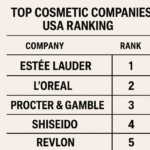
The U.S. market includes global groups with portfolios spanning mass, prestige, professional, and skincare products. Examples include L’Oréal USA, The Estée Lauder Companies, Procter & Gamble, and Coty.
Their scale can support research, logistics, and broad retail relationships. Their challenge is keeping portfolios fresh and distinct while responding to changing consumer expectations.
Fast-Growing Indie and Founder-Led Brands
Founder-led and independent brands often build around a clear point of view, community, or signature product. Examples include Rare Beauty, Rhode, Fenty Beauty, and ColourPop.
Social attention can speed discovery, but it does not guarantee lasting demand. Repeat use, reliable supply, product quality, and clear differentiation determine whether the initial buzz becomes a durable business.
Retailers Shaping the Competitive Landscape
Sephora, Ulta Beauty, drugstores, department stores, and online marketplaces influence which brands customers encounter and how they test products. Retail partnerships can provide visibility, but distribution alone does not create loyalty.
Mintel’s supplied summary specifically notes L’Oréal USA’s strength in eye cosmetics and highlights NYX and e.l.f. in selected facial and lip segments. Those observations are segment-specific and tied to the report’s scope; they should not be generalized to every beauty category. Mintel.
Regulation, Ingredients, and Cosmetics Safety in the United States
FDA Oversight and the Modernization of Cosmetics Regulation Act
The Modernization of Cosmetics Regulation Act of 202 expanded FDA authority and introduced requirements involving facility registration, product listing, adverse-event records, safety substantiation, and other obligations, subject to applicable rules and exemptions.
The FDA’s cosmetics page explains that companies are responsible for ensuring their products are safe and properly labeled. Most cosmetics do not receive FDA premarket approval, although color additives are subject to specific rules. FDA cosmetics laws and regulations.
Labeling, Claims, and Product Testing
Labels help consumers identify ingredients, directions, warnings, and responsible parties. Marketing claims also matter: claims can affect how a product is regulated, particularly when they imply treatment or prevention of disease.
For shoppers: Check the full label, follow use directions, and report a serious reaction through the appropriate channels. The FDA provides information on cosmetics safety and adverse events.
State-Level Rules and Ingredient Restrictions
Federal rules are not the only requirements. State laws may affect ingredients, packaging, or sales claims. Brands selling across the country need to monitor changing federal and state requirements rather than treating “U.S. compliant” as one static checklist.
For current details, consult official federal and state sources; do not rely solely on a brand’s social post or a viral ingredient graphic.
Sustainability and the Environmental Footprint of Beauty
Packaging, Recycling, and Refill Systems
Beauty packaging can combine glass, plastic, pumps, mirrors, and mixed materials that are difficult to separate. A recycling symbol does not guarantee acceptance by every local program. The EPA’s recycling guidance can help explain how recycling systems vary.
At-home steps:
- Check local recycling rules before placing packaging in a bin.
- Separate components when the package instructions allow it.
- Consider refillable products you will realistically reuse.
- Finish products safely rather than discarding them just because a new trend arrived.
Ethical Sourcing, Animal Testing, and Green Claims
Ethical sourcing and cruelty-free claims are important to many shoppers, but labels and legal rules vary by claim and market. Look for a brand’s published policy, certification details, and clear explanation of what the claim covers.
The FTC’s guidance on environmental marketing helps explain why broad claims such as “green” or “eco-friendly” can be misleading without specific support. FTC Green Guides.
Challenges and Risks Facing the Cosmetics Industry
Inflation, Costs, and Price-Sensitive Shoppers
Consumers may trade down, wait for promotions, or expect more from each purchase when household budgets feel pressured. At the same time, premium products can retain appeal when shoppers believe the formula, artistry, service, or experience justifies the choice.
Mintel’s summary captures this split: value-conscious shoppers want efficient performance; higher-income consumers may still trade up. Brands must explain value clearly rather than assuming either “cheap” or “luxury” tells the whole story.
Supply Chains, Counterfeits, and Product Recalls
Beauty products depend on ingredients, packaging, manufacturing, and distribution networks. Disruptions can affect availability; counterfeit goods can raise authenticity and safety concerns.
- Buy from the brand or an authorized retailer when authenticity matters.
- Be cautious of packaging that looks altered or inconsistent.
- Check official recall notices and FDA safety information.
- Keep product details and batch codes when reporting a problem.
Trend Saturation, Brand Fatigue, and Consumer Trust
When every launch claims to be viral, clean, skin-loving, clinically tested, and universally flattering, shoppers can become skeptical. Mintel’s summary describes consolidation and portfolio cuts as signs that the market is moving away from over-proliferation.
The brands most likely to earn trust are specific: they explain who a product suits, demonstrate what it does, disclose relevant information, and avoid presenting marketing language as scientific proof.
What’s Next for the American Cosmetics Market?
Emerging Beauty Categories to Watch
The next phase is likely to reward products that combine clear performance with cultural fluency. Trends worth watching include:
- Skin-first complexion products with flexible coverage.
- Lip oils, stains, and comfortable long-wear formats.
- Personalized shade recommendations and virtual try-on.
- Refillable packaging that customers can actually access and reuse.
- Creator content that demonstrates wear, not just first impressions.
- Beauty collaborations rooted in sports, entertainment, fandom, or nostalgia.
- Inclusive, accessible product design and representation.
The video perspective on celebrity launches, retail partnerships, and nostalgia offers a lively view of how brands compete for attention. The more durable question is whether those campaigns lead to repeat purchase and genuine product satisfaction.
Signals Brands and Retailers Should Track
| Signal | Why it matters |
|---|---|
| Repeat purchase and product reviews | Helps distinguish lasting demand from a launch spike |
| Shade availability and returns | Reveals whether products work for the intended audience |
| Search and social engagement quality | Separates useful discovery from short-lived visibility |
| Retail sell-through and stock-outs | Indicates demand and supply performance together |
| Customer complaints and adverse-event reports | Supports safety monitoring and trust |
| Refill participation | Shows whether sustainability design is used in practice |
| Category definitions in market reports | Prevents misleading comparisons |
A useful strategy: Pair sales data with qualitative feedback. Numbers show what happened; artists, estheticians, retail staff, and consumers often help explain why.
U.S. Cosmetics Market Report Scope and Segmentation
Market Scope, Definitions, and Geographic Coverage
Before using a market report, check whether it covers the U.S. alone, the wider North American region, or a global market. Confirm whether sales are measured at retail or manufacturer level and whether the study covers makeup alone or the wider beauty sector.
For example, Grand View Research includes multiple beauty product categories in its U.S. cosmetics scope, while Mintel’s cited report focuses on U.S. color cosmetics. These reports answer different questions. Grand View Research · Mintel.
Segmentation by Product, Consumer, Price Tier, and Channel
A practical segmentation framework includes:
- Product: Makeup, skincare, hair care, fragrance, body care, and other products.
- Consumer: Age group, gender, skin tone, hair type, lifestyle, and purchasing behavior.
- Price tier: Mass, mastige, prestige, luxury, and indie.
- Channel: Specialty beauty, department store, drugstore, mass merchant, brand e-commerce, marketplace, and social commerce.
- Use case: Everyday wear, professional artistry, occasion makeup, skincare routines, and gifting.
How to Compare Market Research Forecasts
Use this checklist before citing a number:
- Read the definition of the market and product categories.
- Check the base year and forecast period.
- Identify the geography and sales basis.
- Review the methodology and assumptions.
- Separate reported facts from projections.
- Compare like with like rather than averaging unrelated estimates.
- Use multiple sources when possible, including government data and company disclosures.
Forecasts are estimates, not promises. A confident-looking decimal point does not turn a projection into a fact.
How to Use Cosmetics Market Trends for Better Decisions
A Practical Checklist for Beauty Brands
For product teams, retailers, and beauty founders:
- Choose a clear audience and use case before selecting a trend.
- Make performance visible through honest demonstrations.
- Build shade, texture, and packaging accessibility into development.
- Support claims with appropriate evidence.
- Use creators for credibility and context, not only reach.
- Monitor repeat purchases, returns, and customer feedback.
- Check federal and state requirements before launch.
- Explain sustainability claims specifically.
- Review market reports for scope before making business decisions.
The best product concept is not necessarily the one with the loudest launch. It is the one a customer understands, can use, and chooses again.
A Shopper’s Guide to Reading Beauty Trend Claims
When a product claims to be “viral,” “clean,” “clinical,” or “universally flattering,” ask:
- What does the claim mean in this specific context?
- Is there evidence, or only a testimonial?
- Does the product suit my skin, tone, hair, or routine?
- Can I verify the seller and ingredient information?
- Would I still want it if I hadn’t seen the trend online?
That last question can save both money and drawer space. 💅