Support our educational content for free when you purchase through links on our site. Learn more
12 Best Makeup Brands for Acne-Prone Skin (2026) ✨

Clinique, bareMinerals, Almay, Neutrogena, Tower 28, and Fenty Beauty are among the top-rated makeup brands to explore for acne-prone skin in the USA. The best choice depends on your skin’s sensitivities and preferred coverage; look formulas labeled oil-free or noncomedogenic, check the full ingredient list, and test one new product at a time.
“What are the top-rated makeup brands for acne-prone skin in the USA?” is a deceptively personal question. At a Makeup Brands™ appointment, one client’s beloved full-coverage foundation made another’s dry patches stand out, so we built this guide around different skin needs—not one magical bottle.
A useful starting point: the American Academy of Dermatology recommends choosing makeup labeled oil-free or noncomedogenic and removing it before bed. Those labels can help narrow your search, but they aren’t a guarantee that every formula will suit every face.
Key Takeaways
- Start with formulas that fit your skin, not just a brand’s reputation. Clinique, bareMinerals, Almay, Neutrogena, Tower 28, and Fenty Beauty are brands worth comparing.
- Noncomedogenic isn’t a personal guarantee. Check current ingredient lists, especially if you know you’re sensitive to particular ingredients.
- Build coverage in thin layers. Apply foundation lightly, then use concealer to target blemishes or post-acne marks.
- Keep tools clean and remove makeup at night. Gentle habits matter as much as your foundation choice.
- For painful, persistent, or scarring acne, consult a dermatologist. Makeup can camouflage blemishes, but it doesn’t treat their cause.
👉 Shop featured brands and complexion products:
- Clinique complexion makeup: Amazon | Clinique Official
- bareMinerals foundation: Amazon | bareMinerals Official
- Almay face makeup: Amazon | Almay Official
- Neutrogena makeup: Amazon | Neutrogena Official
- Tower 28 SunnyDays: Amazon | Tower 28 Official
- Fenty Beauty foundation: Amazon | Fenty Beauty Official
Table of Contents
- ⚡️ Quick Tips and Facts
- 🧴 Why Acne-Prone Skin Needs a Different Makeup Game
- 🔎 How We Chose the Top-Rated Makeup Brands for Acne-Prone Skin in the USA
- What “Noncomedogenic” Really Means
- Ingredients to Look For—and Ingredients to Approach Carefully
- 🏆 12 Top-Rated Makeup Brands for Acne-Prone Skin in the USA
- 1. Clinique: Allergy-Tested Makeup for Sensitive, Blemish-Prone Skin
- 2. bareMinerals: Breathable Mineral Makeup and Powder Foundations
- 3. Almay: Drugstore Makeup for Sensitive Skin
- 4. Neutrogena: Skin-Focused Foundation and Concealer
- 5. Tower 28 Beauty: Makeup for Sensitive, Reactive Skin
- 6. Jane Iredale: Mineral Makeup with Buildable Coverage
- 7. Oxygenetix: Breathable Foundation for Blemish-Prone Skin
- 8. Cover FX: Customizable Complexion Makeup
- 9. Tarte: Full-Coverage Options for Acne Marks and Redness
- 10. Laura Mercier: Complexion Products for a Soft-Matte Finish
- 11. Kosas: Skin-Like Makeup with Flexible Coverage
- 12. Fenty Beauty: Inclusive Shades and Long-Wear Complexion Products
- 💄 Best Makeup Products for Acne-Prone Skin, by Category
- Primer for Oily, Acne-Prone Skin
- BB Cream, CC Cream, and Tinted Moisturizer
- Liquid Foundation for Acne-Prone Skin
- Cream Stick Foundation
- Concealer for Pimples, Dark Spots, and Acne Scars
- Pressed Powder Foundation
- Loose Powder Foundation
- Finishing and Setting Powder
- Blush and Bronzer
- Highlighter and Contour
- Contour Palettes
- Setting Spray for Acne-Prone Skin
- 🎯 How to Choose Makeup for Your Acne Type and Skin Tone
- Oily, Dry, Combination, and Sensitive Acne-Prone Skin
- Active Breakouts, Cystic Acne, and Post-Acne Marks
- Shade Matching and Undertones
- 🧼 How to Apply Makeup Without Irritating Breakouts
- Prep Acne-Prone Skin Before Makeup
- Clean Brushes, Sponges, and Makeup Tools
- Layer Products for Natural-Looking Coverage
- 🌙 How to Remove Makeup Without Triggering Acne
- 🚫 Makeup Mistakes That Can Worsen Breakouts
- 🛍️ Where to Buy Acne-Friendly Makeup in the USA
- ✅ Quick Tips for Building an Acne-Friendly Makeup Kit
- 🎭 Makeup and Acne: What the Evidence Says
- Conclusion
- Recommended Links
- FAQ
- What is the best makeup brand for acne-prone skin?
- Is noncomedogenic makeup guaranteed not to cause acne?
- Is mineral makeup better for acne-prone skin?
- Can I wear foundation while treating acne?
- Does makeup cause acne or clogged pores?
- How often should I wash makeup brushes and sponges?
- What makeup ingredients should acne-prone skin avoid?
- What is the best foundation for oily, acne-prone skin?
- Reference Links
Quick Tips and Facts
- “Noncomedogenic” is a useful clue, not a guarantee. The U.S. Food and Drug Administration does not define the term as a standardized certification, and people can react differently to the same formula. Check the full ingredient list and test new products cautiously. (FDA guidance on cosmetic labeling)
- Makeup does not automatically cause acne. Some products may contribute to clogged pores or irritation, while others work comfortably for acne-prone skin. The American Academy of Dermatology (AAD) recommends choosing products labeled oil-free or noncomedogenic and removing makeup before bed. (AAD: Acne and makeup)
- Start with skin comfort, not maximum coverage. A thin layer of foundation plus pinpoint concealer often looks more natural on active blemishes than a heavy, all-over mask.
- Mineral makeup isn’t automatically acne-safe. Formulas vary, and the complete ingredient list matters more than the word “mineral.”
- Clean tools regularly. The AD advises washing makeup brushes every 7 to 10 days to help reduce the buildup of oil, dead skin cells, and microorganisms. (AAD: How to clean makeup brushes)
- Treat acne as a skin concern, not a makeup failure. Makeup can camouflage discoloration, but it does not replace acne treatment. If breakouts are painful, persistent, or scarring, a dermatologist can help. (AAD acne resource)
| Quick decision | A helpful starting point |
|---|---|
| Oily or combination skin | Try a lightweight, oil-free liquid or powder foundation; set only where you get shiny. |
| Dry or irritated skin | Choose a flexible, hydrating base and avoid piling on mattifying products. |
| Sensitive, blemish-prone skin | Favor simple formulas, patch-test, and introduce one new complexion product at a time. |
| Active pimples | Use a clean brush or disposable cotton swab to apply concealer precisely. |
| Acne marks | Look for buildable coverage and color-correcting shades rather than adding thick layers everywhere. |
The shortlist below includes familiar drugstore and prestige names, but the “best” label is personal: the formula your skin tolerates wins. For a wider view of the U.S. beauty landscape, see our guide to top makeup brands in the USA.
Why Acne-Prone Skin Needs a Different Makeup Game
Acne-prone skin can be oily, dry, sensitive, or all three depending on the area of your face and the day of the week. Add acne treatments, weather, hormones, and a long-wear foundation, and your complexion routine can start to feel like a group project nobody agreed to.
Our artists look for makeup that covers without demanding aggressive removal, layers comfortably over skincare, and doesn’t sting or exaggerate flakes. That’s not the same as claiming a product treats acne or will never clog pores.
What “noncomedogenic” really means
“Noncomedogenic” generally signals that a product is intended to avoid cloging pores, but it is not a universal promise that no user will break out. The AD recommends oil-free or noncomedogenic products for acne-prone skin, while individual tolerability still depends on the whole formulation and the person wearing it. (AAD makeup guidance)
| Label or claim | What it may tell you | What it does not prove |
|---|---|---|
| Noncomedogenic | The product is marketed or tested as less likely to clog pores. | That every acne-prone person will tolerate it. |
| Oil-free | The formula does not contain ingredients classified as oils under the brand’s labeling approach. | That the product cannot cause irritation or breakouts. |
| Fragrance-free | No fragrance is intentionally added, according to the product’s labeling. | That the formula is allergen-free or suitable for everyone. |
| Mineral makeup | The formula uses mineral pigments or powders. | That it is automatically gentler or noncomedogenic. |
| “Clean” or “natural” | A brand’s own standards or marketing positioning. | A standardized medical safety rating. |
Ingredients to look for—and ingredients to approach carefully
There is no single ingredient blacklist that predicts acne for everyone. Silicone ingredients such as dimethicone, coconut-derived ingredients, and richer emollients may suit some users and bother others; the final product formula and your skin’s response matter. As the FDA explains, cosmetics are not approved by the agency before they go to market, so consumers should read labels and report serious reactions. (FDA: Cosmetics laws and regulations)
Practical ingredient-reading tips:
- Look for oil-free or noncomedogenic language if you have a history of clogged pores.
- If fragrance tends to irritate your skin, try fragrance-free options and patch-test.
- Don’t assume “natural,” “organic,” or “clean” means acne-safe. Botanical ingredients can irritate some people, too.
- If you already know an ingredient causes a reaction, check the full current ingredient list. Formulas can change.
- If you’re using prescription acne medication, ask your dermatologist or pharmacist about makeup that sits comfortably over your treatment routine.
How We Chose the Top-Rated Makeup Brands for Acne-Prone Skin in the USA
Our team compared brand transparency, product variety, complexion shade options, finish, coverage, availability, and suitability for different skin preferences. We did not treat a brand’s “noncomedogenic” claim as a guarantee, and we did not invent lab testing or clinical ratings.
Consumer reviews are useful for understanding wear and texture, but a reviewer’s experience is not a clinical trial. For example, an independent clean-beauty foundation roundup by Organically Becca says the top spot went to Kosas based on a reader poll; that is a crowd-sourced favorite, not a dermatologist ranking or formal star-score test. The page reports one reader saying the foundation “doesn’t break out my fair and acne-prone skin,” while also noting that some users report reactions. That contrast is exactly why we recommend a cautious trial rather than a universal verdict. (Organically Becca’s foundation roundup)
| What we considered | Why it matters for acne-prone skin |
|---|---|
| Formula and finish | A comfortable base is more likely to be worn in thin layers and removed gently. |
| Coverage range | You may want sheer coverage for everyday wear and more coverage for specific marks. |
| Shade range | A close match helps avoid over-applying or mixing multiple products. |
| Skin-prep compatibility | Foundation should sit well over moisturizer and sunscreen without pilling. |
| User feedback | Reviews can reveal recurring complaints about texture, wear, or irritation—but cannot predict your individual reaction. |
| Product accessibility | A brand is more useful if you can find current ingredient details and suitable shades in the USA. |
What to take from competing reviews
The supplied summary of an Emediane page contains only a tracking-interface message, not verifiable product advice or usable quotes. We therefore do not cite it as evidence. The Organically Becca guide is more informative, but it reflects the author’s standards, audience poll, and personal impressions—not a medical assessment. Its strongest practical takeaway is that ingredient sensitivities vary: one reader may love a formula while another finds it irritating.
The same caution applies to “clean beauty.” The Good Trade page named in the requested background summary does not provide substantive acne-makeup recommendations in the supplied material. We won’t attribute product claims to it. For ingredient safety and acne guidance, dermatology and government sources are more appropriate starting points.
12 Top-Rated Makeup Brands for Acne-Prone Skin in the USA
These are brands worth comparing, not a one-size-fits-all prescription. Ratings below are our editorial guide ratings on a 1–10 scale, based on brand range, ease of use, shade availability, and how well the assortment serves different acne-prone-skin preferences. They are not clinical scores, and a high rating does not mean every product from that brand is right for every face.
| Brand | Design | Functionality | Shade choice | Sensitive-skin options | Overall guide rating |
|---|---|---|---|---|---|
| Clinique | 8 | 9 | 8 | 9 | 9/10 |
| bareMinerals | 8 | 8 | 8 | 8 | 8/10 |
| Almay | 7 | 8 | 7 | 8 | 8/10 |
| Neutrogena | 7 | 8 | 8 | 7 | 8/10 |
| Tower 28 Beauty | 8 | 8 | 8 | 9 | 8/10 |
| Jane Iredale | 8 | 8 | 7 | 8 | 8/10 |
| Oxygenetix | 7 | 8 | 7 | 7 | 7/10 |
| Cover FX | 8 | 8 | 8 | 7 | 8/10 |
| Tarte | 8 | 9 | 9 | 6 | 8/10 |
| Laura Mercier | 9 | 9 | 8 | 7 | 8/10 |
| Kosas | 9 | 8 | 8 | 7 | 8/10 |
| Fenty Beauty | 9 | 9 | 10 | 7 | 9/10 |
How to read the ratings: Brand-level scores compare the breadth and practicality of the range; they do not rate every item in the brand’s catalog. If a particular product irritates your skin, a high brand score won’t magically make it behave.
1. Clinique: Allergy-Tested Makeup for Sensitive, Blemish-Prone Skin
Clinique offers a broad complexion range and describes its products as allergy tested and fragrance free. Those claims may appeal if fragrance is a known trigger for you, but “allergy tested” does not mean allergy-proof. Check individual product labels, especially if you have a known sensitivity.
- Good place to start: Clinique Even Better Clinical Serum Foundation or Acne Solutions Liquid Makeup, depending on current availability and your coverage preferences.
- Potential upside: Multiple coverage and finish options; recognizable retail availability.
- Potential drawback: Some acne-focused formulas may be more matte or full coverage than you want for dry, treatment-iritated patches.
- Best approach: Ask for a sample where available and wear it for several days before committing.
Clinique’s foundation and complexion products
2. bareMinerals: Breathable Mineral Makeup and Powder Foundations
bareMinerals is known for mineral complexion products, including powder foundations. Powder can be convenient for oily areas, but application technique matters: buffing vigorously over a tender blemish may make it look angrier, not airbrushed.
- Good place to start: bareMinerals Original Loose Mineral Foundation or Barepro 16-Hour Skin-Perfecting Powder Foundation.
- Potential upside: Easy to build coverage gradually; handy for touch-ups.
- Potential drawback: Loose powder can spill, look dry on flaky areas, or emphasize texture if over-aplied.
- Artist tip: Press or sweep lightly with a clean brush; don’t scrub the powder in.
bareMinerals complexion makeup
3. Almay: Drugstore Makeup for Sensitive Skin
Almay focuses on products marketed for sensitive skin, and its accessible drugstore range can make testing a new base less intimidating. A sensitive-skin claim is a useful signal, not proof that a formula will suit your acne triggers.
- Good place to start: Almay Clear Complexion makeup products, where available.
- Potential upside: Familiar, practical everyday options.
- Potential drawback: Product availability and shade selection can vary by retailer.
- Best for: Shoppers who want a straightforward, widely accessible complexion product and are comfortable checking the current ingredient list.
4. Neutrogena: Skin-Focused Foundation and Concealer
Neutrogena’s makeup assortment has included products positioned for skin benefits and blemish-prone users. Formulas and availability change, so confirm the specific product is still sold and review its current ingredients rather than relying on an old review.
- Good place to start: Neutrogena SkinClearing Oil-Free Makeup, if available in your area.
- Potential upside: Drugstore convenience and products designed with skin concerns in mind.
- Potential drawback: A medicated or acne-oriented makeup formula may not be appropriate for everyone, particularly if you already use several active treatments.
- Expert note: If a product contains an acne medication, avoid stacking it with multiple strong actives unless your clinician says that’s appropriate.
5. Tower 28 Beauty: Makeup for Sensitive, Reactive Skin
Tower 28 positions its makeup and skincare for sensitive skin, with complexion products such as SunnyDays SPF 30 Tinted Sunscreen. It can be a good direction if you prefer lighter coverage, but tinted sunscreen should not be treated as a guaranteed substitute for a full sunscreen application. Follow the label directions and use enough sunscreen.
- Potential upside: Skin-like coverage and a focus on sensitive-skin concerns.
- Potential drawback: A tint may not give enough coverage for pronounced marks or active redness.
- Best for: Minimal base makeup days when comfort matters more than full concealment.
Tower 28 SunnyDays SPF 30 Tinted Sunscreen
6. Jane Iredale: Mineral Makeup with Buildable Coverage
Jane Iredale offers mineral complexion products and foundations with a range of finishes. Mineral pigments can be convenient, but your skin responds to the whole formula, not a mineral label alone.
- Good place to start: Jane Iredale PurePressed Base Mineral Foundation.
- Potential upside: Pressed format is portable and can be easier to control than loose powder.
- Potential drawback: Powder finishes may cling to dry patches, particularly if acne treatments have disrupted your skin barrier.
- Artist tip: Apply moisturizer, allow it to settle, then use a light hand.
7. Oxygenetix: Breathable Foundation for Blemish-Prone Skin
Oxygenetix markets foundation designed to feel breathable and is often discussed in professional makeup settings. The brand’s claims are worth reviewing directly, but don’t assume a specialized or post-procedure positioning guarantees suitability for your specific acne.
- Potential upside: A focused complexion range with buildable coverage.
- Potential drawback: Fewer shades or less convenient retail access than mass-market brands may make shade matching harder.
- Best for: Shoppers who want a professional-style foundation and can sample or shade-match first.
8. Cover FX: Customizable Complexion Makeup
Cover FX has built its reputation around complexion products and shade inclusivity. Check the current assortment and retailer availability, as the range can change.
- Potential upside: Complexion-focused product choices and options for different coverage preferences.
- Potential drawback: A product designed for long wear or fuller coverage may feel heavy if applied everywhere.
- Artist tip: Use a small amount at the center of the face, then blend outward; spot-conceal only where needed.
9. Tarte: Full-Coverage Options for Acne Marks and Redness
Tarte offers complexion products such as Shape Tape concealer and several foundations. These can deliver noticeable coverage, but acne-prone skin often looks more natural when full coverage is used strategically, not as a thick blanket.
- Potential upside: Many coverage and finish options; concealers are popular for targeted correction.
- Potential drawback: Some full-coverage products may emphasize flakes or texture if the skin is dry.
- Best for: Covering localized discoloration when you want more pigment in a small area.
10. Laura Mercier: Complexion Products for a Soft-Matte Finish
Laura Mercier is known for complexion makeup, including setting powders and foundations. Its products can suit shoppers looking for polished, long-wear makeup, though powder-heavy routines can look dry when skin is irritated or peeling.
- Potential upside: Complexion staples and multiple setting options.
- Potential drawback: Too much powder can settle around blemishes and dry patches.
- Artist tip: Set only the areas that crease or get oily; leave comfortable skin alone.
Laura Mercier foundations and complexion products
11. Kosas: Skin-Like Makeup with Flexible Coverage
Kosas offers complexion products including Revealer Skin-Improving Foundation. In Organically Becca’s reader poll, the Kosas foundation ranked first; that reflects audience preference, not a clinical endorsement. The roundup also notes that readers’ experiences varied, with one acne-prone user reporting a good experience and the author hearing about reactions from others. (Organically Becca)
- Potential upside: A natural-looking finish and a broad shade range in the cited review.
- Potential drawback: The same review notes possible sensitivity reports, and a formula that works for one person may not work for another.
- Best for: Shoppers who like a skin-like finish and can patch-test before regular use.
12. Fenty Beauty: Inclusive Shades and Long-Wear Complexion Products
Fenty Beauty offers a broad complexion range, including Pro Filt’r foundations and concealers. Its shade selection is a major practical advantage; you can often find a closer match without mixing several shades.
- Potential upside: Extensive complexion shades and varied coverage options.
- Potential drawback: Matte or long-wear formulas may need more careful skin prep if you have dry or flaky areas.
- Best for: Shoppers prioritizing shade matching and a polished finish.
Best Makeup Products for Acne-Prone Skin, by Category
The same foundation can look smooth on oily cheeks and cling to dry patches around the nose. Think of the following as a shopping map, not a prescription.
| Category | What to prioritize | Common trade-off |
|---|---|---|
| Primer | Light texture and compatibility with moisturizer/SPF | Some primers can pill or feel slippery |
| Tinted moisturizer or skin tint | Flexible, sheer coverage | May not conceal acne marks |
| Liquid foundation | Buildable coverage and comfortable wear | Long-wear formulas can emphasize dryness |
| Stick foundation | Portability and targeted coverage | Creamier textures may feel heavier |
| Concealer | Pigment and precise application | Too much can spotlight texture |
| Powder foundation | Quick touch-ups and oil control | Can look dry or dusty |
| Setting powder | Light application in strategic areas | Over-powdering may emphasize flakes |
| Setting spray | Finish and makeup wear | Sprays can include fragrance or other irritants |
Primer for Oily, Acne-Prone Skin
Primer is optional. If your sunscreen and foundation already sit well, adding another layer can create more opportunities for pilling.
How to choose:
- For shine, test a lightweight mattifying primer only on oily zones.
- For dryness, a hydrating primer may makeup look smoother, but it is not a replacement for moisturizer.
- Avoid applying a thick layer over active pimples; it can make the area look raised.
- Allow skincare and sunscreen to settle before applying primer.
BB Cream, CC Cream, and Tinted Moisturizer
These products can offer quick, lighter coverage. They are useful for redness or uneven tone, but sher coverage may not hide dark acne marks.
- For everyday wear: Try Tower 28 SunnyDays SPF 30 Tinted Sunscreen or a skin tint from a brand whose formula you tolerate.
- For a more even finish: Apply a thin layer, then use concealer only where needed.
- SPF reminder: If the product contains sunscreen, follow its label directions and don’t rely on a small makeup application for full sun protection. The AD recommends broad-spectrum sunscreen with SPF 30 or higher. (AAD sunscreen guidance)
Liquid Foundation for Acne-Prone Skin
Liquid foundation is often the most flexible category: sheer products can even out tone, while buildable formulas can provide more coverage. Look for a finish that suits your skin rather than chasing “mate” as a universal solution.
A five-step artist application:
- Prep gently. Apply your usual moisturizer and sunscreen; let them settle.
- Start with a small amount. Dot foundation around the center of the face.
- Blend outward. Use a clean brush, sponge, or fingertips with light pressure.
- Add coverage selectively. Tap another thin layer only where needed.
- Check in daylight. Indoor lighting can disguise a mismatched shade or excess product.
Products to compare include Clinique Even Better, Fenty Pro Filt’r, and Kosas Revealer. Confirm current formulas and ingredient lists on each brand’s official page before buying.
Cream Stick Foundation
Stick foundation is convenient for travel and targeted coverage, but it may feel richer than a liquid. If you have active breakouts, avoid dragging the stick directly over pimples; apply it to a clean brush or fingertip instead.
- Use short strokes on larger areas and blend gently.
- Clean the surface or applicator after use.
- Avoid layering thickly over flaky patches.
- Consider a small test area first if you are sensitive to richer textures.
Concealer for Pimples, Dark Spots, and Acne Scars
Concealer works best as a precision tool, not a tiny foundation mask.
- Apply a thin base layer first.
- Use a clean, small brush to place concealer on the center of a mark.
- Tap around the edges while leaving the pigment in place.
- Let it sit briefly if the formula is very creamy, then blend gently.
- Set lightly only if it transfers or creases.
Tarte Shape Tape, Clinique concealers, and Fenty concealers are examples to compare for coverage and shade range. Choose the one that blends into your base without irritating your skin.
Pressed Powder Foundation
Pressed powder foundation is portable and can provide quick coverage or shine control. It may be more forgiving for oily areas than dry, flaky ones.
- Use a clean brush or sponge.
- Press gently where you need coverage; avoid vigorous buffing over inflamed acne.
- Try it over a well-set base if you want more coverage.
- If texture looks pronounced, switch to a lighter application rather than adding more powder.
Loose Powder Foundation
Loose powder foundation can be buildable, but it’s also easy to over-apply. Keep the container steady, tap excess product off the brush, and work in light layers.
Skip or minimize loose powder if your skin is peeling from acne treatments or if you find powder makes blemishes look rougher. A powder foundation is not automatically less irritating than liquid makeup.
Finishing and Setting Powder
Setting powder can help reduce transfer and shine. The trick is to apply it where you need it, not everywhere because the jar is on the counter.
| Skin area | Suggested approach |
|---|---|
| Oily T-zone | Light dusting or pressing with a puff |
| Dry cheeks | Skip or use a very small amount |
| Under-eye area | Use sparingly if concealer creases |
| Active blemish | Avoid heavy powder buildup; it can emphasize texture |
| Retouching during the day | Blot oil first, then apply a small amount |
Blush and Bronzer
Powder, cream, and liquid cheek products can all work; choose based on comfort and the way they layer over your base.
- Powder: Often easier over a set foundation; use a clean brush.
- Cream or liquid: Can look fresh, but apply with clean fingers or a washed tool.
- Avoid repeatedly dipping a used applicator into product.
- If you suspect a cheek product is causing irritation, pause it and reintroduce it separately.
Highlighter and Contour
Highlighter and contour are optional—your face doesn’t need a full architectural rendering to leave the house. For textured or inflamed areas, shimmery highlighter can draw attention to bumps, so place it on smoother areas such as the tops of the cheekbones.
- Choose a soft-focus finish if you want a more subtle effect.
- Blend around active blemishes rather than directly over them.
- Keep contour layers thin to avoid a heavy complexion.
Contour Palettes
A contour palette is convenient if you use several shades, but avoid buying one just because it promises a perfect cheekbone in six powders. For acne-prone skin, formula comfort and hygiene matter more than the number of pans.
- Use separate clean brushes for different shades.
- Don’t share cream products or brushes during active breakouts.
- Check that the palette is current and the ingredient list suits you.
Setting Spray for Acne-Prone Skin
Setting spray may help makeup wear, but it isn’t essential. Read the label if fragrance or alcohol-based formulas tend to bother your skin, and avoid spraying onto irritated or broken skin.
Application: Hold the bottle at the distance recommended on the label, close your eyes, and mist lightly. Let it dry without rubbing your face.
How to Choose Makeup for Your Acne Type and Skin Tone
Start with your skin’s current condition, not a permanent label. Acne-prone skin can change with treatment, weather, stress, and hormones.
Oily, Dry, Combination, and Sensitive Acne-Prone Skin
| Skin pattern | Makeup approach | Watch for |
|---|---|---|
| Oily | Lightweight base; set the T-zone selectively | Heavy layers and frequent touch-ups |
| Dry or flaky | Moisturize; choose flexible, less matte finishes | Powder buildup and long-wear formulas that cling |
| Combination | Mix techniques by zone: lighter coverage on dry areas, targeted setting on oily areas | One formula applied identically everywhere |
| Sensitive | Fragrance-free options may be worth trying; patch-test | Introducing several new products at once |
If acne medication leaves your skin dry or stinging, a cosmetologist can help you adjust makeup application, but your dermatologist should guide treatment changes. The AD warns against overdoing acne treatments and recommends following product directions. (AAD acne self-care)
Active Breakouts, Cystic Acne, and Post-Acne Marks
Active, painful acne deserves gentle handling. Makeup can camouflage redness, but pressing and rubbing can increase discomfort.
- Raised pimples: Use a small brush and tap concealer onto the center.
- Post-acne discoloration: A thin layer of foundation may even the area; add concealer only if needed.
- Dry, peeling areas: Reduce powder and avoid scrubbing flakes away.
- Painful or scarring acne: See a dermatologist; makeup is not a substitute for treatment.
For treatment guidance, the AD discusses established acne-care ingredients such as benzoyl peroxide, retinoids, and salicylic acid. Use active ingredients as directed and consult a clinician if your skin is irritated or acne is severe. (AAD acne treatment overview)
Shade Matching and Undertones
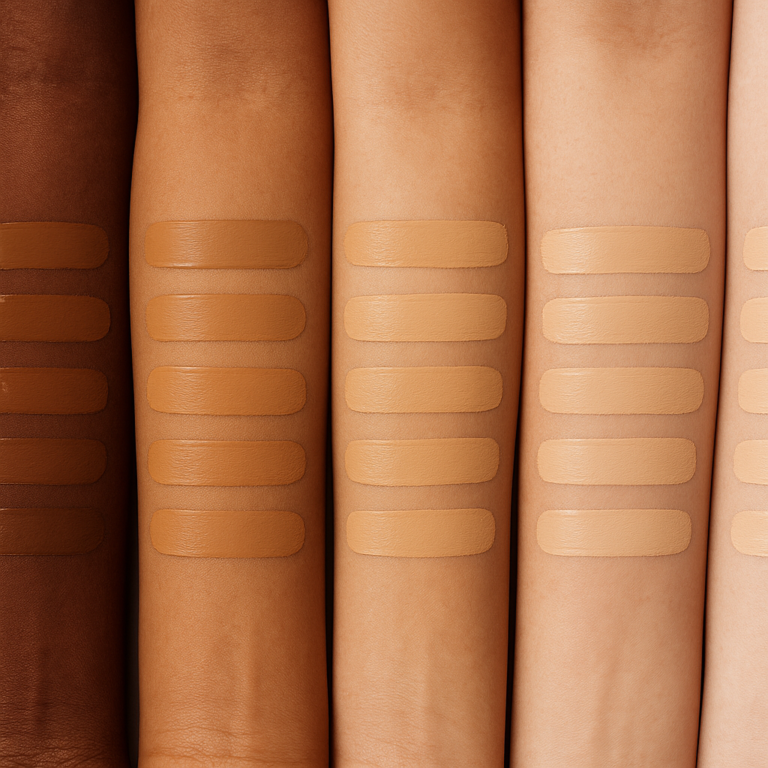
A close match often looks more natural and helps you avoid over-applying. Test foundation along the jawline and check in natural light when possible.
- Cool undertone: Skin may look pink, rosy, or bluish.
- Warm undertone: Skin may look golden, peachy, or yellow.
- Neutral undertone: A balance of warm and cool tones.
- Olive undertone: A muted greenish or golden cast may affect shade matching.
Don’t test only on the back of your hand; it may not match your face or neck. If a brand offers samples, use one before buying a full-size product.
How to Apply Makeup Without Irritating Breakouts
A Makeup Brands™ artist remembers a client who arrived with a new breakout and a makeup bag containing three full-coverage foundations, two primers, and a sponge that had seen better days. We stripped the routine back to moisturizer, sunscreen, one thin layer of base, and pinpoint concealer. The finish looked calmer—not because makeup treated the breakout, but because less rubbing and fewer layers made the texture less obvious.
Prep Acne-Prone Skin Before Makeup
- Cleanse gently. Avoid scrubbing; the AD recommends gentle skin care for acne-prone skin. (AAD skin-care tips)
- Apply acne treatment as directed. Don’t add extra layers just to speed things up.
- Moisturize. Choose a product your skin tolerates.
- Apply sunscreen in the morning. Use broad-spectrum SPF 30 or higher and follow the label directions. (AAD sunscreen guidance)
- Wait for layers to settle. If products pill, reduce the amount or give each layer more time.
- Apply makeup with clean tools.
The first video’s dermatologist-led skincare perspective makes a useful point: acne-prone skin needs a consistent routine, not a quick fix. Its advice to start active ingredients slowly and keep sunscreen in the morning routine is relevant to makeup prep, too. See the featured video. Product recommendations in a video are still individual recommendations—not a replacement for personal medical advice.
Clean Brushes, Sponges, and Makeup Tools
The AD recommends cleaning makeup brushes every 7 to 10 days. (AAD brush-cleaning guidance)
Brush-cleaning steps:
- Wet the bristles with lukewarm water, keeping the handle and ferrule as dry as possible.
- Work in a small amount of gentle cleanser.
- Rinse until the water runs clear.
- Press out excess water with a clean towel.
- Lay the brush flat to dry.
For sponges, rinse thoroughly after use and allow them to dry completely. Replace tools that are damaged, stained with product that will not wash out, or have an unpleasant odor. Don’t share makeup applicators during an active breakout or skin infection.
Layer Products for Natural-Looking Coverage
- Start with the thinnest layer that evens out your skin.
- Let cream products settle before adding powder.
- Conceal individual marks rather than applying extra foundation over your entire face.
- Use a clean tool for touch-ups.
- If makeup looks textured, remove some instead of piling on more.
How to Remove Makeup Without Triggering Acne
Removing makeup is part of the routine, but “scrub until squeaky clean” is not the assignment. The AD recommends removing makeup before bed and using gentle skin care for acne-prone skin. (AAD makeup and acne guidance)
A gentle removal routine:
- Wash your hands.
- Use a cleanser or makeup remover that you already tolerate.
- Dissolve long-wear makeup gently; don’t tug at the eyes or scrub blemishes.
- Rinse as directed and cleanse again only if needed to remove residue.
- Apply your usual moisturizer or prescribed treatment as directed.
- Wash reusable tools, and don’t leave makeup on overnight.
If a product repeatedly stings, causes a rash, or seems to worsen breakouts, stop using it and seek medical advice if symptoms persist. The FDA advises consumers to stop using cosmetics that cause an adverse reaction and report serious problems. (FDA: Reporting cosmetic problems)
Makeup Mistakes That Can Worsen Breakouts
| Mistake | Why it can be a problem | Better move |
|---|---|---|
| Sleeping in makeup | Leaves product on the skin overnight | Remove makeup before bed |
| Using dirty brushes | Tools collect product, oil, and debris | Wash brushes regularly |
| Applying thick layers everywhere | Can look heavy and increase rubbing during removal | Build coverage only where needed |
| Trying several new products at once | Makes it harder to identify a trigger | Introduce one product at a time |
| Assuming “natural” means gentle | Botanical ingredients can irritate some people | Check the full label and patch-test |
| Scrubbing active breakouts | Can irritate already inflamed skin | Tap makeup on with a clean tool |
| Treating tinted SPF as enough sunscreen | Makeup application may be too light to match labeled use | Follow sunscreen directions and reapply as directed |
Where to Buy Acne-Friendly Makeup in the USA
Buy from the brand or authorized retailers when possible, especially if you’re relying on the current shade range, ingredient list, or return policy. Retail availability changes, so verify the listing and formula before ordering.
- Brand websites: Best for official product details and current ingredient lists.
- Major beauty retailers: Useful for shade testing, samples, and returns; check each retailer’s policies.
- Drugstores and mass retailers: Convenient for brands such as Almay and Neutrogena.
- Online marketplaces: Check the seller, packaging, and product condition; avoid listings that appear old, opened, or inconsistent with the brand’s official description.
For broader brand coverage, browse our Beauty Brands and Cosmetics Industry sections. For ingredient and formula developments, see Beauty News.
Quick Tips for Building an Acne-Friendly Makeup Kit
You do not need a 20-product routine. Start with a small kit and add only what solves a real problem.
- One base product: A foundation, skin tint, or powder that feels comfortable.
- One concealer: Match your skin tone for blemishes; consider a corrector only if you need one.
- One setting product: Powder or spray, not necessarily both.
- Clean tools: A brush or sponge you can wash regularly.
- A gentle remover: Something that removes your makeup without rubbing.
- A shade match: Test in natural light before committing when possible.
- A patch-test plan: Try one new item at a time and observe how your skin responds.
Want more practical application ideas? Visit our Beauty Tips section. If shopping cruelty-free is part of your checklist, browse our Cruelty-Free Brands category and verify each brand’s current policy directly.
Makeup and Acne: What the Evidence Says
The most reliable guidance is refreshingly unglamorous: choose products that suit your skin, remove makeup before bed, keep tools clean, and seek professional care for persistent or painful acne.
The AD advises people with acne to use oil-free or noncomedogenic makeup and remove it at night. (AAD: Acne and makeup) That advice does not mean every product carrying those words will work for every person. Cosmetic formulas, personal sensitivities, application habits, and acne treatments all differ.
A dermatologist’s product recommendations can help with acne treatment and skincare, but they are not automatically endorsements of every makeup brand discussed here. Similarly, consumer reviews are valuable for texture and wear impressions, but an individual’s “didn’t break me out” report cannot guarantee the same result for you.
Our confident recommendation: shortlist two or three formulas based on finish and coverage, check the current ingredient list, then test one product at a time. That approach is less exciting than buying a whole new face of makeup in one weekend—but it gives you a much better chance of learning what your skin actually likes.