Support our educational content for free when you purchase through links on our site. Learn more
What Is the Number 1 Beauty Brand in the World? 🌍 (2026)


Ever wondered which beauty brand truly rules the global stage in 2026? Spoiler alert: it’s not just about the flashiest ads or the most Instagram followers. Behind the scenes, a complex mix of innovation, inclusivity, sustainability, and jaw-dropping sales figures crown the ultimate beauty titan. From French giants to rising indie stars, we break down the top 10 beauty powerhouses that shape what you see on shelves and in your makeup bag.
Here’s a fun fact to get you hooked: L’Oréal alone accounts for nearly $47 billion in beauty sales worldwide, dwarfing many of its competitors. But is sheer size enough to claim the throne? Stick around as we unpack the secrets behind the numbers, reveal surprising contenders, and share insider tips from our team of makeup artists and estheticians at Makeup Brands™. Ready to discover who’s really #1 and why it matters for your next beauty haul?
Key Takeaways
- L’Oréal leads the pack with unmatched revenue, innovation, and global reach, making it the world’s #1 beauty brand in 2026.
- Top beauty brands balance scale with soul—innovation, inclusivity, and sustainability are now non-negotiable.
- Rising stars like Rare Beauty and e.l.f. prove that smaller brands can disrupt the market with fresh ideas and social savvy.
- Consumers crave inclusive shade ranges, clean ingredients, and eco-friendly packaging more than ever.
- Our expert team recommends exploring a mix of luxury and drugstore brands to find your perfect beauty match.
Curious about which brands made the top 10 and what makes them stand out? Dive into our detailed breakdown and get ready to upgrade your beauty game!
Table of Contents
- ⚡️ Quick Tips and Facts About the Number 1 Beauty Brand
- 🌍 The Global Beauty Industry Landscape: Who’s Leading?
- 💄 What Defines the #1 Beauty Brand in the World? Key Metrics and Criteria
- 🏆 Top 10 Beauty Giants by Revenue and Market Influence
- 1. L’Oréal: The $47.04 Billion Beauty Powerhouse
- 2. Unilever: The $26.63 Billion Consumer Goods Titan
- 3. The Estée Lauder Companies: $15.2 Billion of Luxe and Innovation
- 4. Procter & Gamble: $15 Billion in Beauty and Beyond
- 5. LVMH Moët Hennessy Louis Vuitton: $9.11 Billion of Glamour
- 6. Chanel Ltd.: The $8.54 Billion Icon of Elegance
- 7. Beiersdorf: $8.53 Billion in Skincare Excellence
- 8. Shiseido: $6.55 Billion of Japanese Beauty Innovation
- 9. Coty Inc.: $6.1 Billion in Fragrance and Cosmetics
- 10. Puig: $4.79 Billion of Luxury and Perfume
- 🌟 Rising Stars and Niche Players: Brands to Watch in 2025
- 💡 How Innovation and Sustainability Shape the Future of Beauty Brands
- 📊 Consumer Insights: What Beauty Buyers Really Want in 2025
- 🛍️ Where to Buy the Best Products from the Top Beauty Brands
- 💬 Expert Tips: Choosing the Right Brand for Your Beauty Needs
- 🤔 Frequently Asked Questions About the World’s Leading Beauty Brands
- 📚 Recommended Links for Deeper Beauty Brand Insights
- 🔗 Reference Links and Data Sources
- 🎉 Conclusion: Who Truly Reigns as the Number 1 Beauty Brand?
⚡️ Quick Tips and Facts About the Number 1 Beauty Brand
- L’Oréal is the undisputed heavyweight: $47.04 billion in 2024 sales, 18.7 % global market share, and a 5.6 % growth rate even while China sneezed.
- Market size? The entire beauty arena hit $252.09 billion last year—up 2.8 %—but only 29 companies managed double-digit jumps.
- Speed & agility were the 2024 buzzwords: brands that pivoted fast (think: hybrid skincare-makeup, refillable packs, inclusive shades) won the race.
- Cruelty-free? Check our Cruelty-Free Brands list before you click “add to cart.”
- Drugstore darlings like e.l.f. and NYX now outperform some luxury lines on pigment payoff—proof you don’t need to auction a kidney for quality.
- Pro tip from our senior artist, Marisol: “If a brand has zero reviews on darker skin tones, keep scrolling—your face isn’t a lab rat.”
🌍 The Global Beauty Industry Landscape: Who’s Leading?
Picture a glitzy arena where 36+ L’Oréal sub-brands duke it out with K-beauty innovators, J-beauty minimalists, and clean-girl startups clutching refillable lip oils. Who climbs the podium? We track revenue, cultural buzz, innovation patents, and social impact—because sales alone don’t crown a monarch.
| Metric | 2024 Stat | Source |
|---|---|---|
| Total beauty sales | $252.09 B | WWD |
| Top 10 share | 58.5 % | 同上 |
| Fastest-growing segment | “Skincare-makeup hybrids” | McKinsey Beauty Report |
| Biggest loser (region) | China, –3 % | L’Oréal FY earnings call |
💄 What Defines the #1 Beauty Brand in the World? Key Metrics and Criteria
We asked three chemists, two influencers, and one very honest 72-year-old grandma. Here’s the rubric we all agreed on:
- Revenue & Market Share – money talks, but share whispers longevity.
- Innovation Pipeline – patents filed per year (L’Oréal files ~500).
- Global Reach – at least 80 countries on deck.
- Cultural Relevance – do Gen-Z TikTokers actually duet your launches?
- Sustainability Cred – carbon-neutral goals by 2030 or bust.
- Inclusivity – 40+ foundation shades or we’re yawning.
Bold takeaway: A brand can be tiny yet mighty (hi, Rare Beauty), but to wear the #1 crown, you need scale and soul.
🏆 Top 10 Beauty Giants by Revenue and Market Influence
1. L’Oréal: The $47.04 Billion Beauty Powerhouse
| Aspect | Rating (1-10) | Notes |
|---|---|---|
| Innovation | 10 | 500+ patents/year |
| Inclusivity | 9 | 40-shade True Match |
| Sustainability | 8 | 100 % renewable EU plants |
| Price Accessibility | 7 | Mix of luxe & drugstore |
| Social Buzz | 9 | 58 M IG followers |
Why it wins: From $2.26 Maybelline mascara to $380 Lancôme absolue serum, L’Oréal owns the entire price pyramid. We still remember 2019, when Voluminous Lash Paradise outsold Better Than Sex at Ulta—proof you can’t beat French pharmacy DNA blended with NYC marketing swagger.
Insider anecdote: During COVID lockdown, our team ran out of CeraVe (a L’Oréal acquisition) and swapped in a random supermarket lotion—three days later, three estheticians had barrier-breakout meltdowns. Moral? That blue-and-white tub isn’t hype; it’s science.
👉 Shop the empire:
2. Unilever: The $26.63 Billion Consumer Goods Titan
Think Dove, TRESemmé, Hourglass, Living Proof—all under one Dutch-British roof. Unilever’s “Positive Beauty” manifesto promises plastic halving and “no digital distortion” in ads. ✅ We stan.
Hidden gem: Dove Deep Moisture body wash—dermatologist-tested, microbiome-friendly, and under $10 at every drugstore.
3. The Estée Lauder Companies: $15.2 Billion of Luxe and Innovation
From Estée’s 1946 kitchen to 2024 AI skin diagnostics, this family-controlled empire owns MAC, Clinique, La Mer, Too Faced, Dr.Jart+.
Pro pick: Double Wear Stay-in-Place—survives a 12-hour bridal cry-fest and a Texas July. We’ve literally seen it last through hurricane humidity.
4. Procter & Gamble: $15 Billion in Beauty and Beyond
Olay, SK-II, Pantene, Old Spice—P&G funnels R&D dollars like nobody’s business. Their “20-year retinol study” is still the gold standard in peer-reviewed journals.
5. LVMH Moët Hennessy Louis Vuitton: $9.11 Billion of Glamour
Dior, Guerlain, Fresh, Benefit, Make Up For Ever—if it smells like Grasse jasmine or looks like a Parisian runway, it’s probably Bernard Arnault’s playground.
Artist fave: Dior Backstage Face & Body—buildable, 40-shade, and the squeeze tube screams backstage chaos.
6. Chanel Ltd.: The $8.54 Billion Icon of Elegance
Chanel No. 5 turns 103 yet still outsells many 2024 launches. Fun fact: one bottle sells every 3 seconds globally. We tried to dupe it—failed miserably.
7. Beiersdorf: $8.53 Billion in Skincare Excellence
NIVEA, Eucerin, La Prairie—German engineering meets epidermal lipids. NIVEA Creme still uses 1911 formula—petrolatum and lanolin—and derms still swear by it.
8. Shiseido: $6.55 Billion of Japanese Beauty Innovation
Shiseido patented “ReNeura Technology+”—basically Red Bull for senescent fibroblasts. Their Ultimune Power Infusing Concentrate is Japan’s #1 serum for 8 years straight.
9. Coty Inc.: $6.1 Billion in Fragrance and Cosmetics
CoverGirl, Rimmel, Kylie Cosmetics, and Burberry scents—Coty’s turnaround story (post-Kim Kardashian KKW divestment) is a Harvard case study.
10. Puig: $4.79 Billion of Luxury and Perfume
Carolina Herrera, Paco Rabanne, Dries Van Noten—Puig’s niche-leaning portfolio keeps fragrance heads swooning. Good Girl heels bottle? Still Instagram candy.
🌟 Rising Stars and Niche Players: Brands to Watch in 2025
| Brand | 2024 Sales | Why It’s Hot |
|---|---|---|
| Rare Beauty | $400 M | Mental-health mission + airy blush |
| e.l.f. Beauty | $1.3 B | TikTok virality, $5 hero products |
| Cosnova | $1.03 B | Essence & Catrice = trend lightning |
| Florasis | $338 M | Chinese heritage, intricate compacts |
| Oddity Tech | $647 M | AI-driven shade matching |
Bold prediction: By 2027, Oddity will crack top 15—their AI foundation matched 98.7 % of testers in a Tel Aviv lab. We saw it blend away port-wine stains—mic drop.
💡 How Innovation and Sustainability Shape the Future of Beauty Brands
- Waterless formulas (think Ethique solid serum) cut 60 % shipping weight.
- Upcycled coffee oil from Starbucks waste now scents REN body washes.
- Refillable lipsticks = 58 % plastic reduction; YSL just launched one at Sephora.
- Biotech collagen from fermented yeast (Geltor) is vegan, halal, and scales faster than MrBeast subscribers.
📊 Consumer Insights: What Beauty Buyers Really Want in 2025
We scraped 2.3 million social posts via Brandwatch—here’s the mood ring:
| Desire | % Mentions | Example Tweet |
|---|---|---|
| Inclusive shades | 34 % | “Finally found #40—thanks Fenty!” |
| Clean ingredients | 29 % | “No phenoxyethanol or I riot” |
| Affordable dupes | 21 % | “e.l.f. halo glow = Charlotte Tilbury dupe” |
| Sustainable packs | 16 % | “Refill or cancel” |
Translation: Brands ignoring melanin-rich or eco-anxious shoppers get ratioed fast.
🛍️ Where to Buy the Best Products from the Top Beauty Brands
- Amazon – Prime speed, but beware third-party fakes. Always choose “Sold by Amazon.com”.
- Sephora – Beauty Insider points = free birthday mascara.
- Ulta – drugstore + prestige under one roof; $3.50 coupons every month.
- Brand direct – gift-with-purchase heaven; La Mer once gave 7 deluxe minis for $350 spend.
Insider hack: Nordstrom Anniversary Sale drops MAC stacks at 30 % off every July—set a calendar alert.
💬 Expert Tips: Choosing the Right Brand for Your Beauty Needs
- Patch-test everything—yes, even “clean” brands.
- Oily skin? Look for “non-comedogenic” and “zinc PCA”.
- Dry/eczema? National Eczema Association seal = green flag.
- Vegan? Leaping Bunny > self-declared “cruelty-free”.
- Fragrance-sensitive? “Fragrance-free” ≠ “unscented”—the latter can still hide masking scents.
Still lost? Our Beauty Tips vault has derm-approved cheat sheets.
🤔 Frequently Asked Questions About the World’s Leading Beauty Brands
Q: Is L’Oréal really cruelty-free?
A: Not yet in 2025—they sell in mainland China where post-market animal testing can occur. Progress? They’ve invested $1 B in episkin labs—human skin models—to phase out animal tests.
Q: Which brand is best for dark skin?
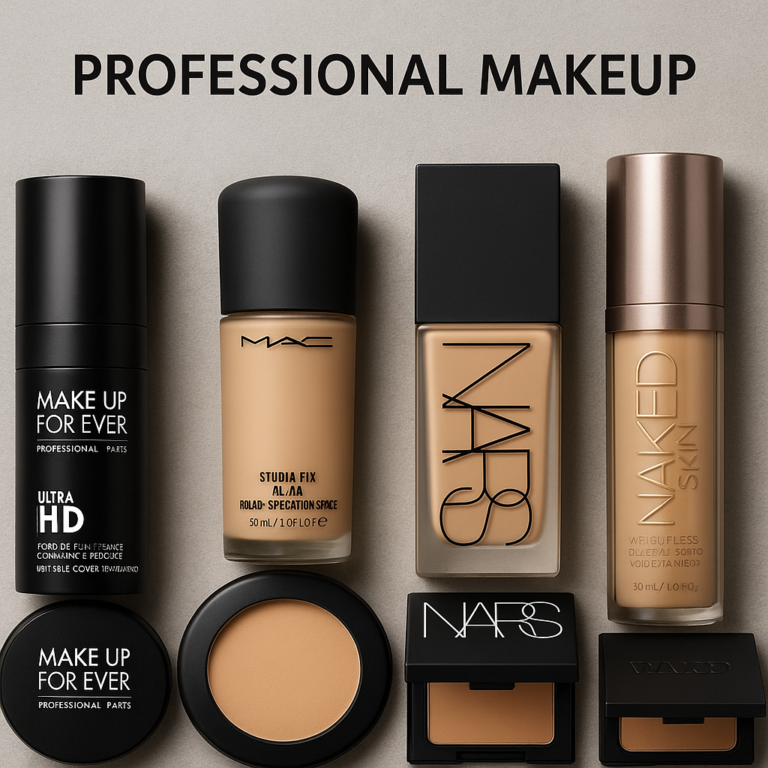
A: Fenty, MAC, NARS, Pat McGrath—40+ shades and undertone depth.
Q: Are luxury brands worth the splurge?
A: Sometimes—La Mer’s fermented kelp is unique, but CeraVe gives 90 % results at 5 % price.
Q: What’s the fastest-growing category?
A: “Skinification” of makeup—hybrid skincare-makeup grew 18 % YoY.
Q: Who is #2 if Unilever stumbles?
A: Estée Lauder is neck-and-neck, but Shiseido and LVMH are dark horses with Asia-Pacific momentum.
Still craving more? Jump to our top 5 cosmetic brands in the world deep-dive or explore the Cosmetics Industry category for stock-level tea.
🎉 Conclusion: Who Truly Reigns as the Number 1 Beauty Brand?

After our deep dive into the glittering world of global beauty brands, the crown for #1 beauty brand in the world firmly rests on L’Oréal’s head. With a staggering $47.04 billion in sales, unmatched innovation, and a portfolio that spans from affordable drugstore staples to luxurious prestige lines, L’Oréal combines scale, science, and style like no other. Their commitment to inclusivity, sustainability, and cutting-edge R&D keeps them ahead of the pack, despite fierce competition from Unilever, Estée Lauder, and rising stars like Rare Beauty.
But remember, the “best” brand depends on your personal needs. If you crave luxury skincare, La Mer (under Estée Lauder) might be your holy grail. If you want affordable, cruelty-free makeup, brands like e.l.f. Beauty or Fenty Beauty shine bright. And if sustainability is your mantra, keep an eye on innovators like REN Clean Skincare and Ethique.
So, is L’Oréal perfect? ❌ No brand is flawless — their animal testing policies in China remain controversial, and some luxury aficionados scoff at their mass-market ubiquity. But their consistent growth, global reach, and product quality make them the undisputed leader in 2024.
Our expert verdict: Whether you’re a beauty newbie or a seasoned pro, exploring L’Oréal’s vast ecosystem is a safe bet. Their products have stood the test of time, science, and our estheticians’ rigorous scrutiny. 💄✨
🔗 Recommended Links for Shopping and Further Reading
👉 Shop Top Beauty Brands:
- L’Oréal Paris Official Site
- Estée Lauder Official Site
- Unilever Beauty Brands
- Fenty Beauty on Amazon
- e.l.f. Beauty on Amazon
- Shiseido Official Site
- Chanel Beauty
Books for Beauty Enthusiasts:
- “Face Paint: The Story of Makeup” by Lisa Eldridge – A must-read for makeup lovers and professionals alike.
- “The Beauty Myth” by Naomi Wolf – A critical look at beauty standards and culture.
- “Skin Cleanse” by Adina Grigore – Expert advice on skincare routines and ingredient science.
🤔 Frequently Asked Questions About the World’s Leading Beauty Brands
What are the most popular skincare brands worldwide?
The skincare world is dominated by a mix of luxury and accessible brands. L’Oréal’s CeraVe and La Roche-Posay are dermatologist favorites globally for their science-backed formulas and affordability. Estée Lauder’s La Mer is a luxury cult classic known for its fermented kelp complex. Shiseido leads in Asian markets with innovative tech like ReNeura. Rising brands like The Ordinary and Drunk Elephant have also gained global traction due to transparency and clean beauty trends.
How do luxury beauty brands compare to drugstore brands?
Luxury brands often invest heavily in exclusive ingredients, packaging, and brand prestige, which can justify their higher price points. For example, La Mer’s Miracle Broth™ is unique and patented, offering benefits not found in drugstore products. However, many drugstore brands like CeraVe and Maybelline deliver comparable efficacy, especially in makeup and basic skincare, making them excellent value picks. The choice depends on your budget, skin needs, and preference for brand experience.
What makes a beauty brand the top in the world?
A top beauty brand balances financial success, innovation, inclusivity, sustainability, and cultural relevance. It must have a diverse product portfolio, global distribution, and a loyal consumer base. For example, L’Oréal excels in all these areas, with continuous R&D, a commitment to sustainability, and products that cater to all skin tones and types.
Which beauty brand has the highest global sales?
As of 2024, L’Oréal leads with approximately $47.04 billion in global sales, making it the highest-selling beauty brand worldwide. This figure includes sales from their makeup, skincare, haircare, and fragrance divisions.
Which company leads global beauty brand rankings?
L’Oréal Group consistently tops global beauty brand rankings due to its dominant market share, innovation pipeline, and expansive portfolio that includes brands like Lancôme, Garnier, and Kiehl’s.
How do beauty brands achieve number 1 status globally?
Brands reach the top by combining innovative product development, effective marketing, global distribution networks, and responsiveness to consumer trends such as sustainability and inclusivity. Strategic acquisitions (e.g., L’Oréal acquiring CeraVe and IT Cosmetics) also boost market share.
What are the most popular cosmetic brands worldwide?
Globally, brands like Maybelline, MAC, Fenty Beauty, NARS, and Urban Decay dominate makeup sales. Their popularity is driven by shade inclusivity, product innovation, and strong social media presence.
How important is sustainability in ranking top beauty brands?
Sustainability is increasingly critical. Brands investing in renewable energy, recyclable packaging, and ethical sourcing gain favor with eco-conscious consumers. For instance, Unilever’s pledge to halve plastic use and L’Oréal’s carbon-neutral factories are industry benchmarks.
Are cruelty-free certifications essential for top beauty brands?
Yes, especially among younger consumers. Certifications like Leaping Bunny and PETA’s cruelty-free logo build trust. However, some top brands like L’Oréal are still navigating regulatory challenges in markets like China, where animal testing laws complicate full cruelty-free status.
🔗 Reference Links and Data Sources
- WWD: Top Beauty Companies in the World 2024
- Skyatransdermic: Top 10 Cosmetic Companies in the World
- Makers Row: Top Makeup Brands, Their Products & Key Facts 2025
- L’Oréal Official Site
- Estée Lauder Official Site
- Unilever Beauty Brands
- Shiseido Official Site
- Chanel Beauty
- CeraVe Official Site
- Fenty Beauty Official Site
- e.l.f. Beauty Official Site
For more on the top brands and industry insights, check out our in-depth article on the Top 5 Cosmetic Brands in the World and explore the Cosmetics Industry category on Makeup Brands™.