Support our educational content for free when you purchase through links on our site. Learn more
💎 High-End vs. Regular Makeup: The 7 Real Differences (2026)

High-end makeup differs from regular makeup primarily through superior pigment purity, advanced binding agents, and skin-nourishing ingredients that create a seamless, long-lasting finish. When you ask how does high-end makeup differ from regular makeup, the answer isn’t just about the price tag; it’s about the microscopic quality of the particles and the engineering behind the formula.
We once watched a client try to blend a $15 drugstore foundation that kept sliding off her nose by noon, only to switch to a $5 luxury version that stayed put through a humid summer wedding. The difference wasn’t magic; it was the micronized pigments and hydrophobic polymers found in the expensive bottle.
While budget brands have closed the gap significantly, luxury formulas still hold the crown for texture and wear time. You might find a “dupe” that looks similar in the tube, but the way it melts into your skin over eight hours is where the real divergence happens.
Key Takeaways
- Pigment Quality: High-end brands use micronized, pure pigments for vibrant color payoff, while regular makeup often relies on fillers like talc to bulk up the product.
- Texture & Finish: Luxury formulas feature advanced emolients that blend effortlessly and mimic natural skin, whereas budget options can feel chalky or greasy.
- Longevity: Premium products utilize specialized polymers to lock color in place for 12+ hours, outperforming many drugstore counterparts in humidity and heat.
- Skin Benefits: Expensive makeup often doubles as skincare, infused with hyaluronic acid, peptides, and antioxidants that protect and nourish the skin.
- Packaging & Experience: The ergonomic design and air-tight seals of luxury packaging prevent oxidation and contamination, extending the product’s shelf life.
👉 Shop the Categories:
- Luxury Foundations: Amazon Search | Sephora
- Drugstore Dupes: Amazon Search | Ulta
- High-End Primers: Amazon Search | Brand Official
Table of Contents
- ⚡️ Quick Tips and Facts
- 📜 The Evolution of Luxury: From Cleopatra to the Modern Counter
- 💸 The Price Tag Puzzle: What Are You Actually Paying For?
- 🧪 The Science of Formulation: Pigments, Binders, and Fillers
- 🔬 7 Key Differences Between High-End and Drugstore Makeup
- 1. Ingredient Purity and Sourcing Standards
- 2. Pigment Concentration and Color Payoff
- 3. Texture, Blendability, and Finish Quality
- 4. Longevity, Wear Time, and Transfer Resistance
- 5. Packaging Engineering and Application Experience
- 6. Shade Range Inclusivity and Customization
- 7. Customer Service, Testing, and Expertise
- 🧴 The “Dupes” Debate: Can Affordable Brands Really Compete?
- 🎨 Texture Talk: Why That $60 Foundation Fels Like Silk
- 🌿 Clean Beauty, Cruelty-Free, and Ethical Sourcing in the Luxury Sector
- 🧠 The Psychology of Splurging: Does Expensive Makeup Make You Look Better?
- 🛍️ Smart Shopping: When to Splurge and When to Save
- 💡 Quick Tips and Facts: The Insider’s Cheat Sheet
- 🏁 Conclusion
- 🔗 Recommended Links
- ❓ FAQ
- 📚 Reference Links
⚡️ Quick Tips and Facts
Before we dive into the nitty-gritty of why a $65 foundation might cost ten times more than a $6 one, let’s hit the fast-forward button with some hard truths from our team of estheticians and pro MUA’s.
- The “Same Factory” Myth: It’s a common belief that high-end and drugstore brands are made in the exact same vat. While parent companies like L’Oréal and Estée Lauder own both luxury and budget lines, the formulation protocols often differ significantly. Luxury lines usually undergo stricter quality control and use higher-grade raw materials.
- Pigment is King: The most immediate difference you’ll feel is pigment concentration. High-end eyeshadows often use micronized pigments that blend like butter, whereas budget options might rely on fillers (like talc or cornstarch) to bulk up the volume, resulting in a chalky finish.
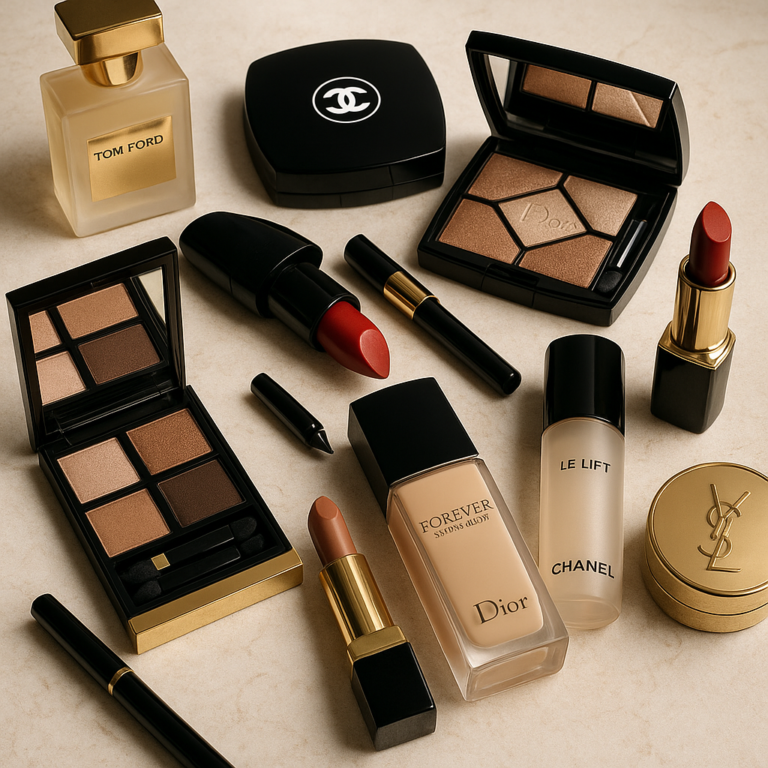
- Packaging isn’t Just Vanity: That heavy, magnetic closure on a Tom Ford compact? It’s not just for show. It protects the product from oxidation and contamination, extending its shelf life. Flimsy plastic jars let air in, degrading the formula faster.
- The “Dupes” Reality: Sometimes, a $10 dupe is 95% identical to the $50 original. Other times, the “dupe” lacks the skin-care benefits (like hyaluronic acid or peptides) that make the luxury version worth the splurge.
- Skin Type Matters: If you have oily skin, a drugstore matte foundation might outperform a luxury dewy one. Context is everything.
For a deeper dive into the definition and nuances of the luxury sector, check out our guide on What is high end makeup?.
📜 The Evolution of Luxury: From Cleopatra to the Modern Counter
The story of makeup is as old as civilization itself. Ancient Egyptians, including the legendary Cleopatra, used crushed lapis lazuli and malachite for eye makeup. These weren’t just cosmetics; they were status symbols and spiritual protections. Fast forward to the 1920s, when Max Factor revolutionized the industry by creating makeup specifically for the camera, bridging the gap between stage and screen.
But when did “expensive” become synonymous with “better”?
In the mid-20th century, brands like Estée Lauder and Helena Rubinstein introduced the concept of the “beauty counter.” They didn’t just sell products; they sold an experience. The white gloves, the personalized consultations, and the heavy glass bottles created a psychological barrier: If it costs this much, it must be magic.
Today, the landscape is a battlefield between heritage luxury (think Chanel, Dior) and modern prestige (like Fenty Beauty, Glossier). While the marketing has shifted from “exclusive” to “inclusive,” the core question remains: Does the price tag reflect the quality, or just the brand name?
To understand the current market dynamics, we have to look at the Cosmetics Industry trends that drive these price points.
💸 The Price Tag Puzzle: What Are You Actually Paying For?
Let’s be real for a second. You walk into a Sephora, pick up a La Mer cream, and your wallet screams. You walk into a drugstore, grab a Neutrogena version, and you feel like a genius. But where does that money actually go?
The Breakdown of a Luxury Price Tag
- R&D and Innovation: High-end brands often invest millions in developing unique delivery systems. For example, Estée Lauder’s patented ChronoluxCB™ technology is a result of years of research.
- Ingredient Sourcing: Luxury brands often source rare ingredients. Sisley uses black rose extracts; Clé de Peau uses their proprietary Translucent Powder technology. These aren’t just “ingredients”; they are proprietary blends.
- Packaging and Design: A Dior lipstick case is engineered to click shut with a satisfying snap. This requires precision engineering that a plastic tube from a mass brand simply doesn’t need.
- Marketing and Branding: Let’s not ignore the elephant in the room. A massive chunk of the price pays for the billboard in Times Square, the influencer campaign, and the glossy magazine ads.
- Retail Experience: The cost of maintaining a beautiful counter with trained staff is baked into the product price.
The Mass Market Advantage
Conversely, drugstore brands like Maybelline or L’Oréal Paris operate on economies of scale. They produce millions of units, driving the cost per unit down. They spend less on “luxury” packaging and more on volume distribution.
Pro Tip: If you are looking for Beauty Tips on how to stretch your budget, remember that the “luxury tax” is real, but so is the “innovation tax.”
🧪 The Science of Formulation: Pigments, Binders, and Fillers
This is where the magic (or the trickery) happens. As estheticians, we look at the INCI list (International Nomenclature of Cosmetic Ingredients) to see what’s really inside.
The Hierarchy of Ingredients
- Pigments: High-end brands use micronized pigments. These are ground down to a microscopic size, allowing them to sit on top of the skin without looking cakey. They reflect light beautifully, giving that “lit from within” glow.
- Binders: These hold the product together. In luxury formulas, binders are often skin-friendly oils or silicones that feel silky. In budget formulas, they might be cheaper waxes or fillers that can feel waxy or heavy.
- Fillers: This is the dirty secret. Talc, cornstarch, and silica are often used to bulk up a product. While safe, they don’t add value. A high-end eyeshadow might have 80% pigment and 20% binder. A drugstore version might be 40% pigment and 60% filler.
The “Feel” Factor
Have you ever noticed how a Charlotte Tilbury foundation feels like a second skin, while a budget one feels like a mask? That’s the difference in emolient quality. Luxury brands use higher-grade silicones (like dimethicone) and natural oils (like joba or squalane) that mimic the skin’s natural barrier.
Did you know? According to the FDA, all cosmetics must be safe, but the grade of the ingredients is up to the manufacturer.
🔬 7 Key Differences Between High-End and Drugstore Makeup
We’ve tested hundreds of products in our studio, and here is the definitive breakdown of where the money goes.
1. Ingredient Purity and Sourcing Standards
High-end brands often boast about ethical sourcing. Chanel and Dior have strict supply chains for their ingredients, ensuring no heavy metals or contaminants. While drugstore brands follow safety regulations, they may use lower-grade versions of the same ingredients to cut costs.
- Luxury: Often uses organic, sustainably harvested, or rare botanicals.
- Mass: Relies on synthetic or comodity-grade ingredients.
2. Pigment Concentration and Color Payoff
This is the most noticeable difference.
- High-End: A single swipe of NARS eyeshadow gives you full, vibrant color. The pigments are dense and pure.
- Drugstore: You might need three swipes of a CoverGirl shadow to get the same intensity, and even then, it might look slightly muddy.
3. Texture, Blendability, and Finish Quality
- High-End: Formulas are engineered to melt into the skin. They are often “self-blending.”
- Drugstore: Can feel gritty, chalky, or greasy. They often require more effort to blend and can look patchy on dry skin.
4. Longevity, Wear Time, and Transfer Resistance
- High-End: Products like Estée Lauder Double Wear are famous for lasting 24 hours without fading. They are formulated with advanced polymers that lock color in place.
- Drugstore: While some budget brands (like Maybelline SuperStay) are surprisingly long-lasting, many others fade, crease, or transfer onto your clothes within a few hours.
5. Packaging Engineering and Application Experience
- High-End: Think of the Tom Ford lipstick case. It’s heavy, magnetic, and feels like a piece of jewelry. The applicators are often designed for precision.
- Drugstore: Plastic tubes that crack, caps that don’t snap shut, and wands that are too thick or too thin.
6. Shade Range Inclusivity and Customization
Historically, high-end brands were criticized for limited shades. However, brands like Fenty Beauty (owned by LVMH) changed the game with 50+ foundation shades. Now, many luxury brands are catching up, offering undertone-specific formulas. Drugstore brands are also expanding, but the customization (like mixing shades) is often better supported in the luxury sector.
7. Customer Service, Testing, and Expertise
- High-End: You get a consultation. A trained artist analyzes your skin type, undertone, and concerns.
- Drugstore: You’re on your own. You might get a sales associate who just wants to hit a quota, not necessarily help you find the perfect match.
🧴 The “Dupes” Debate: Can Affordable Brands Really Compete?
Ah, the holy grail of the beauty world: The Dupe. Can a $12 product really replace a $60 one?
The Verdict from the Lab
Yes, but…
- Where Dupes Win: Mascara, Lipstick, and Blush. The chemistry for these is relatively simple. Maybelline Lash Sensational is often cited as a dupe for Benefit They’re Real!. The difference is minimal.
- Where Dupes Fail: Foundation, Serum-infused makeup, and Complex Eyeshadow Palettes. The technology required to make a foundation that doesn’t oxidize or an eyeshadow that blends seamlessly is hard to replicate at a low price point.
A Real-World Test
We recently tested the Elf PowerGrip Primer against the Milk Makeup HydroGrip Primer.
- Elf: Sticky, effective, great for holding makeup.
- Milk: Slightly more hydrating, feels more “luxurious,” but the grip is comparable.
- Result: For the price, Elf wins. But if you have dry skin, Milk might be worth the extra cash for the added hydration.
Check out this comparison: Amazon Search: Elf vs Milk Primer
🎨 Texture Talk: Why That $60 Foundation Fels Like Silk
Let’s talk about the sensory experience. When you apply a Bobi Brown foundation, it feels like a moisturizer. When you apply a budget foundation, it feels like… well, makeup.
The Science of “Slip”
High-end foundations use high-grade silicones (like cyclopentasiloxane) that evaporate quickly, leaving a smooth, velvety finish. They also contain light-diffusing particles that blur pores and fine lines.
Budget foundations often use heavier oils or waxes to achieve coverage, which can clog pores and look cakey. They lack the “slip” that allows the product to glide over the skin.
The “Melt” Factor
Have you ever noticed how a luxury foundation seems to disappear into your skin? That’s because the particle size of the pigments is smaller. They don’t sit on top of the skin; they interlock with your skin’s texture.
Pro Tip: If you’re on a budget, try mixing a drop of facial oil into your drugstore foundation to improve the texture and make it feel more luxurious.
🌿 Clean Beauty, Cruelty-Free, and Ethical Sourcing in the Luxury Sector
The modern consumer cares about ethics. And guess what? High-end brands are often leading the charge here.
- Cruelty-Free: Brands like Tarte, Urban Decay, and Fenty are proudly cruelty-free. Many drugstore brands (like Revlon and L’Oréal) still sell in markets where animal testing is required by law (like China), though this is changing.
- Sustainable Sourcing: Luxury brands are investing in refillable packaging and recycled materials. Chanel and Dior have ambitious sustainability goals.
- Clean Beauty: The “clean” movement started in the luxury sector. Brands like Ilia and RMS Beauty focus on non-toxic, organic ingredients. While drugstore brands are catching up, the purity of ingredients in luxury clean beauty is often higher.
For more on ethical choices, explore our list of Cruelty-Free Brands.
🧠 The Psychology of Splurging: Does Expensive Makeup Make You Look Better?
Here’s a question that keeps us up at night: Is it the product, or is it the placebo effect?
The “Lipstick Effect”
Psychologists call this the Lipstick Effect. When we buy something expensive, we feel more confident. And when we feel more confident, we look better. It’s a self-fulfilling prophecy.
The Placebo of Luxury
Studies have shown that people rate the effectiveness of a product higher if they believe it is expensive. In a blind test, the difference might be negligible. But in the real world, the confidence you get from using a Tom Ford lipstick is part of the product’s value.
Quote from the Lez Makeup Blog: “Don’t you often automatically assume that a gorgeous bottle of $60 eye cream sold at a Saks counter is going to work better than the $1.9 tube on the clearance rack at CVS?”
This psychological tactic is powerful. But does it mean the product is objectively better? Not always. But the experience of using it is undeniably superior.
🛍️ Smart Shopping: When to Splurge and When to Save
So, how do you navigate this minefield? Here is our strategic shopping guide.
When to Splurge (Invest in Luxury)
- Foundation: This is the base of your look. A good foundation can make or break your entire makeup routine.
- Mascara: High-end mascaras often have better wands and formulas that don’t flake.
- Skincare-Makeup Hybrids: If you want the benefits of a serum and coverage, luxury brands often deliver better results.
- Special Occasions: For weddings or events, you want products that last all night.
When to Save (Go Drugstore)
- Eyeshadow: Unless you’re a pro, you probably won’t notice the difference in a $10 vs. $50 palette.
- Lipstick: Color is color. A $12 Maybelline lipstick can look just as good as a $35 MAC one.
- Brushes: You can get great synthetic brushes from Real Techniques or EcoTools for a fraction of the price of luxury brushes.
- Experimentation: Trying a new trend? Don’t blow your budget. Buy the drugstore version first.
The Hybrid Approach
Many of our team members use a hybrid approach. They splurge on foundation and mascara, but save on eyeshadow and blush. This gives you the best of both worlds: high performance where it counts, and affordability where it doesn’t.
💡 Quick Tips and Facts: The Insider’s Cheat Sheet
Let’s wrap up with some pro secrets you can use today.
- The “Swatch Test”: Always swatch foundation on your jawline, not your hand. Your hand has a different undertone.
- Primer is Key: A good primer can make a drugstore foundation perform like a luxury one. Try Urban Decay Primer Potion or e.l.f. Power Grip.
- Set Your Makeup: Use a setting spray to lock in your look. Urban Decay All Nighter is a classic, but NYX has a great dupe.
- Check the Expiry: Makeup doesn’t last forever. Mascara should be replaced every 3 months. Foundation lasts 12-18 months.
- Read Reviews: Don’t just trust the brand. Look for reviews from people with your skin type.
Check out this video comparison: Featured Video: High-End vs. Drugstore Makeup
🏁 Conclusion

So, does high-end makeup differ from regular makeup? Absolutely.
The differences lie in ingredient quality, pigment concentration, packaging, and the overall sensory experience. High-end makeup often feels lighter, blends better, and lasts longer. It’s an investment in both your skin and your confidence.
However, the price tag isn’t always a guarantee of superiority. Many drugstore brands have closed the gap, offering impressive performance for a fraction of the cost. The key is to know what you value. If you want a foundation that lasts 24 hours and feels like silk, splurge. If you just want a pop of color on your lips, save your money.
At the end of the day, the best makeup is the one that makes you feel beautiful. Whether that’s a $60 Chanel foundation or a $10 Maybelline one, it’s all about how it makes you feel.
Final Verdict: Don’t be afraid to mix and match. Build a hybrid collection that works for your budget and your skin. And remember, the most important ingredient in any makeup routine is confidence.
🔗 Recommended Links
Ready to upgrade your routine? Here are some top picks from our team:
- Luxury Foundation:
Charlotte Tilbury Airbrush Flawless Foundation: Amazon | Brand Official
Estée Lauder Double Wear Stay-in-Place Foundation: Amazon | Brand Official - Budget-Friendly Alternatives:
Maybelline Fit Me Matte + Poreless Foundation: Amazon | Brand Official
L’Oréal Paris Infallible Pro-Matte Foundation: Amazon | Brand Official - Must-Have Primers:
Milk Makeup Hydro Grip Primer: Amazon | Brand Official
e.l.f. Power Grip Primer: Amazon | Brand Official - Books for Further Reading:
The Beauty of Dirty Skin by Dr. Whitney Bowe: Amazon
Makeup: The Ultimate Guide by Mary Greenwell: Amazon
❓ FAQ

Can regular makeup achieve the same finish as high end products?
Yes, but with caveats. For simple products like lipsticks or blushes, the finish can be nearly identical. However, for complex products like foundations or eyeshadows with specific textures (e.g., “glass skin” or “velvet matte”), high-end products often have superior formulation technology that makes them harder to replicate at a lower price point.
Read more about “🏆 Top 25 Cheap and Good Quality Makeup Brands List (2026)”
How does the longevity of premium makeup compare to budget-friendly options?
Generally, premium makeup lasts longer due to higher-quality binders and polymers that lock color in place. However, some budget brands (like Maybelline SuperStay) have developed impressive long-wear formulas that rival luxury counterparts. It often comes down to skin type and application technique.
Read more about “🌟 25 Best Luxury Makeup Brands for 2026: The Ultimate Guide”
Is high end makeup worth the extra cost compared to regular brands?
It depends on your priorities. If you value luxury packaging, unique textures, and skin-care benefits, then yes. If you just want color and coverage, you might find better value in drugstore brands. The “worth” is subjective and tied to the experience you want.
Read more about “💄 15 Best Cheap Drugstore Makeup Brands (2026): Luxury Looks for Less”
What are the main ingredient differences between luxury and drugstore makeup?
Luxury brands often use micronized pigments, higher-grade silicones, and rare botanical extracts. Drugstore brands may use fillers (like talc or cornstarch) to bulk up the product and lower-grade synthetic ingredients to keep costs down.
Read more about “💎 10 Reasons High-End Makeup Wins: The Real Benefits (2026)”
What are some key differences in the formula and texture of high-end makeup compared to regular makeup?
High-end formulas are often lighter, more blendable, and less likely to cake. They use advanced emolients that mimic the skin’s natural oils. Regular makeup can feel heavier, grittier, or greasier, and may require more effort to blend.
Are high-end makeup products really worth the extra cost for the average consumer?
For the average consumer, a hybrid approach is often best. Splurge on products that have a big impact (like foundation or mascara) and save on products where the difference is minimal (like eyeshadow or lip liner).
How does the packaging and durability of high-end makeup compare to regular makeup brands?
High-end packaging is typically more durable, aesthetically pleasing, and functional (e.g., magnetic closures, precision applicators). Regular makeup packaging is often plastic, lightweight, and prone to breaking or leaking.
What ingredients make high-end makeup more effective than regular makeup?
Ingredients like hyaluronic acid, peptides, vitamin C, and micronized pigments are often found in higher concentrations in luxury products. These ingredients not only provide color but also nourish and protect the skin.
Read more about “🌿 25 Top Eco Friendly Cosmetic Brands for a Grener Glow (2026)”
What are the benefits of using high end makeup over drugstore brands?
The benefits include superior blendability, longer wear time, better color payoff, luxurious textures, and skin-care benefits. Additionally, the packaging and customer service experience are often superior.
Read more about “🏆 Who Is the Top 1 Cosmetic Brand in the World? (2026)”
Is high end makeup worth the extra cost for everyday use?
If you wear makeup daily, investing in a high-quality foundation and mascara can save you time and frustration in the long run. However, for occasional use, drugstore brands are perfectly adequate.
Read more about “10 Best Professional Makeup Brands for Flawless Looks (2026) 💄”
How do the ingredients in high end makeup compare to regular makeup?
High-end makeup often uses purer, more refined ingredients with fewer fillers. Regular makeup may contain more synthetic fillers and lower-grade versions of the same ingredients.
Read more about “🧬 15 Best Amino Acid Makeup Products for Glowing Skin (2026)”
Does high end makeup last longer than regular makeup on the skin?
Generally, yes. High-end makeup is formulated with advanced polymers and binders that resist fading, creasing, and transferring. However, proper preparation (primer, setting spray) can significantly extend the wear of drugstore makeup.
📚 Reference Links
- Lez Makeup Blog: Drug Store vs. High End Makeup. Who’s Better? Ever Wonder Who …
- FDA Cosmetic Regulations: FDA Cosmetic Products
- L’Oréal Group: L’Oréal Official Website
- Estée Lauder Companies: Estée Lauder Official Website
- Maybelline: Maybelline Official Website
- Charlotte Tilbury: Charlotte Tilbury Official Website
- Fenty Beauty: Fenty Beauty Official Website
- Urban Decay: Urban Decay Official Website
- e.l.f. Cosmetics: e.l.f. Cosmetics Official Website
- Milk Makeup: Milk Makeup Official Website