Support our educational content for free when you purchase through links on our site. Learn more
🏆 Who Is the Top 1 Cosmetic Brand in the World? (2026)

The answer to What is the top 1 cosmetic brand in the world? depends on how you measure success: by total revenue, the global titan is L’Oréal with nearly $47 billion in sales, but by direct-selling community impact, Mary Kay Inc. reigns supreme as the #1 direct seller for three years running. We cut through the billion-dollar noise to give you the definitive ranking you’ve been searching for.
Did you know the global beauty industry is now worth over $252 billion, yet a single brand like e.l.f. Beauty can go from zero to a billion in just a few years thanks to TikTok? It’s a wild ride where French giants, American entrepreneurs, and Korean innovators battle for your vanity space.
Whether you’re looking for the most innovative R&D or the most personalized service, understanding the landscape is crucial. Let’s dive into the data that separates the legends from the also-rans.
Key Takeaways
-
L’Oréal is the undisputed Top 1 Cosmetic Brand globally by total revenue ($47.04B), dominating both mass and luxury markets.
-
Mary Kay Inc. holds the title of the #1 Direct Selling Brand for skincare and color cosmetics, outperforming competitors in the community-driven sector.
-
e.l.f. Beauty and Rare Beauty are the fastest-growing disruptors, proving that viral marketing can rival traditional advertising budgets.
-
Regional dominance varies significantly, with Amorepacific leading in Asia and Natura & Co. thriving in Latin America.
Table of Contents
- ⚡️ Quick Tips and Facts
- 📜 The Glittering History: How the Global Beauty Empire Was Built
- 🏆 The Crown Jewel: Who Actually Holds the Title of the #1 Cosmetic Brand in the World?
- 📊 The Billion-Dollar Showdown: Ranking the Top 20 Global Beauty Conglomerates
- L’Oréal: The Undisputed Titan of the Industry
- Unilever: The Skincare and Personal Care Giant
- The Estée Lauder Companies: Luxury and Prestige Powerhouse
- Procter & Gamble: The Science of Everyday Beauty
- LVMH Moët Henessy Louis Vuiton: The Pinnacle of High-End Fragrance and Makeup
- Chanel Ltd.: Timeless Elegance and Iconic Red Lipsticks
- Beiersdorf: The Home of Nivea and Advanced Dermatology
- Shiseido: Bridging Eastern Tradition with Western Innovation
- Coty Inc.: The Fragrance and Color Cosmetics Colossus
- Puig: The Spanish Family-Owned Beauty Force
- Mary Kay: The Direct Selling Phenomenon
- Bath & Body Works: Scenting the World One Candle at a Time
- Natura & Co.: The Champion of Sustainable Beauty
- Henkel: Hair Care and Adhesives with a Beauty Twist
- Kenvue: The Consumer Health and Skincare Spin-Off
- Kao Corp.: Japanese Precision in Skincare and Haircare
- Colgate-Palmolive: Oral Care and Beyond
- L’Occitane International S.A.: The Art of French Natural Skincare
- Amorepacific: K-Beauty’s Global Ambassador
- LG H&H: The Rise of Korean Cosmetics Giants
- 🧐 Beyond the Revenue: What Really Makes a Brand “Top”?
- 🌍 Regional Powerhouses: Why the #1 Brand Changes Depending on Where You Live
- 🧪 The Science of Success: R&D, Innovation, and Market Trends
- 💄 Consumer Insights: What Shoppers Actually Prefer in 2024
- 🚀 Future Forecast: The Next Big Disruptors in the Beauty Industry
- ✅ Beauty Brand Showdown: Quick Comparison of Top Contenders
- 💡 Expert Tips: How to Choose the Right Brand for Your Skin Type
- 🔗 Recommended Links
- 📚 Reference Links
- 🏁 Conclusion
⚡️ Quick Tips and Facts
Before we dive into the billion-dollar drama of who actually sits on the throne of the beauty world, let’s get the juicy details out of the way. You might think the answer is as simple as “the one with the most Instagram followers,” but the reality is a bit more complex (and way more fun).
- The Big Two Definitions: When people ask for the “Top 1,” they usually mean either the largest conglomerate by revenue (spoiler: it’s L’Oréal) or the top direct-selling brand (spoiler: it’s Mary Kay). Context is everything! 🕵️ ♀️
- Market Share Matters: The global beauty industry hit a staggering $252.09 billion in 2024. That’s a lot of lipstick, serums, and foundation.
- The “Tale of Two Halves”: Even the giants aren’t immune to global shifts. 2024 was a rollercoaster; strong starts in the first half gave way to slowdowns in Asia and geopolitical tensions later on.
- Viral Sensations: Don’t sleep on the disruptors. Brands like e.l.f. Beauty just crossed the $1 billion mark, and Sheglam (from Shein) is taking over TikTok with blushes that cost less than a coffee. ☕️
- Cruelty-Free is King: Consumers are voting with their wallets. Brands that aren’t cruelty-free or sustainable are seeing their market share dip. Check out our guide on Cruelty-Free Brands to see who’s doing it right.
If you’re wondering how we can possibly pick a single winner when the criteria change based on geography and sales model, stick around. We’re about to break down the numbers, the history, and the secret sauce that makes a brand a global titan.
For a deeper dive into the landscape, check out our comprehensive guide on the 🌍 Top 15 Cosmetic Brands in the World Dominating 2026.
📜 The Glittering History: How the Global Beauty Empire Was Built

You can’t understand who the Top 1 Cosmetic Brand is today without knowing how we got here. It wasn’t always about billion-dollar conglomerates; it started with a guy in a Parisian salon and a woman in a Texas living room.
The French Revolution of Beauty
It all began in 1909 when Eugène Schueller, a young French chemist, invented a safe hair dye formula. He called it Auréale. He didn’t just sell it; he sold it to hairdressers, creating a network of loyalists. This was the birth of L’Oréal. Fast forward today, and that little dye formula has evolved into a global empire that owns everything from Maybelline to Kiehl’s.
“Speed and agility were the buzzwords of 2024,” noted industry analysts at WD. But the foundation was laid over a century ago by Schueller’s obsession with R&D.
The American Dream: Direct Selling
While the French were conquering salons, Mary Kay Ash was changing the game in Dallas, Texas. In 1963, she founded Mary Kay Inc. with a simple idea: empower women to be their own bosses. By focusing on direct selling, Mary Kay bypassed traditional retail shelves and built a community. This model allowed them to dominate specific categories, like facial makeup in Latin America, without ever stepping foot in a department store.
The Rise of the Conglomerates
As the 20th century progressed, the industry saw a massive consolidation. Estée Lauder started in 1946 with a face cream, and Procter & Gamble (founded much earlier) realized that beauty was a goldmine. They began acquiring smaller, trendy brands to create massive portfolios. This is why you see L’Oréal owning YSL Beauty and Guerlain, while Coty holds the rights to Gucci and Burberry fragrances.
The history of the beauty industry is a history of acquisition, innovation, and storytelling. But who is the current king? Let’s look at the numbers.
🏆 The Crown Jewel: Who Actually Holds the Title of the #1 Cosmetic Brand in the World?
Here is the million-dollar question (or rather, the $47 billion question): Who is the Top 1 Cosmetic Brand?
The answer depends entirely on how you define “Top.”
Scenario A: The Revenue Giant
If we are talking about total global sales revenue, the undisputed champion is L’Oréal.
- Total Sales (2024): $47.04 Billion.
- Market Share: They hold a massive 18.7% of the total sales among the top 10 companies.
- Growth: Despite global headwinds, they grew by 5.6%.
According to WD Beauty Inc’s 2024 ranking, L’Oréal is the Top 1 Cosmetic Brand in the world by a significant margin. They are the “tale of two halves” mentioned earlier, but their sheer volume keeps them at the summit.
Scenario B: The Direct Selling Champion
If we narrow the scope to direct selling (selling directly to consumers via representatives rather than retail stores), the crown goes to Mary Kay Inc.
- Ranking: Named the #1 Direct Selling Brand of Skin Care and Color Cosmetics for three years in a row by Euromonitor International.
- Why it matters: In the direct-to-consumer (DTC) space, Mary Kay beats out giants like Avon and Oriflame.
The Conflict: Why do sources differ?
- WD looks at the total corporate revenue of the parent company.
- Euromonitor often categorizes by business model (Direct Selling vs. Retail).
- YouTube Lists (like the one from WELLBORN TV) often mix brand popularity with revenue, leading to lists where Clinique or MAC appear at the top based on brand recognition rather than total corporate sales.
Our Verdict: If you want the biggest company with the most money, it’s L’Oréal. If you are looking for the biggest player in the direct-selling community, it’s Mary Kay.
📊 The Billion-Dollar Showdown: Ranking the Top 20 Global Beauty Conglomerates
Let’s break down the financial heavyweights. We’ve compiled the data from 2024 reports to show you exactly where the money is flowing. Note that these figures represent parent company revenues, not just a single brand name.
The Top 10 Titans
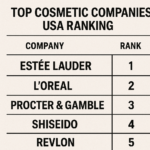
| Rank | Company | Estimated Revenue (2024) | Key Brands | Growth Trend |
|---|---|---|---|---|
| 1 | L’Oréal | $47.04 Billion | L’Oréal Paris, Maybelline, Kiehl’s, YSL | 📈 +5.6% |
| 2 | Unilever | $26.63 Billion | Dove, TRESemmé, Simple | 📈 +1.8% |
| 3 | The Estée Lauder Cos. | $15.2 Billion | Estée Lauder, MAC, Clinique, Jo Malone | ➖ Flat |
| 4 | Procter & Gamble | $15.0 Billion | Olay, SK-II, Pantene | ➖ Flat |
| 5 | LVMH | $9.1 Billion | Dior, Givenchy, Fenty Beauty | 📈 +2.0% |
| 6 | Chanel Ltd. | $8.54 Billion | Chanel Beauty, Coco Mademoiselle | 📈 Stable |
| 7 | Beiersdorf | $8.53 Billion | Nivea, Eucerin, La Prairie | 📈 Stable |
| 8 | Shiseido | $6.5 Billion | Shiseido, Clé de Peau, NARS | 📉 Decline |
| 9 | Coty Inc. | $6.1 Billion | Gucci, Burberry, Rimmel, CoverGirl | 📈 Recovery |
| 10 | Puig | $4.79 Billion | Carolina Herrera, Paco Rabanne | 📈 New Entrant |
The Rising Stars & Disruptors (Ranks 1-20)
The landscape is shifting. While the giants hold the fort, new players are eating into their market share with viral products and agile marketing.
- Mary Kay: $4.6 Billion (Direct Selling Leader)
- Bath & Body Works: $4.58 Billion (Scent dominance)
- Natura & Co.: $4.49 Billion (Sustainability focus)
- Henkel: $4.24 Billion (Schwarzkopf, Dial)
- Kenvue: $4.2 Billion (The new skincare spin-off from J&J)
- Kao Corp.: $4.14 Billion (Japanese precision)
- Colgate-Palmolive: $3.6 Billion (Oral care + Palmolive)
- L’Occitane International S.A.: $3.14 Billion (Boosted by Sol de Janeiro)
- Amorepacific: $3.02 Billion (K-Beauty leader)
- LG H&H: $2.9 Billion (Olive Young powerhouse)
The “Viral” Contenders
Don’t let the revenue numbers fool you. Some brands are growing faster than the giants:
- e.l.f. Beauty: Surpassed $1.3 Billion. Their marketing strategy is pure genius, leveraging TikTok trends to launch products in weeks, not years.
- Rare Beauty: Sales jumped 60% to $40 Million. Selena Gomez’s brand is redefining the “clean girl” aesthetic.
- Proya: The first Chinese brand to crack the Top 30, with online revenue up 40.5%. They are proving that C-Beauty is here to stay.
1. L’Oréal: The Undisputed Titan of the Industry
L’Oréal isn’t just a brand; it’s an ecosystem. With a portfolio that spans from drugstore staples like Maybelline to luxury powerhouses like Lancôme, they cover every demographic imaginable.
Why They Win
- R&D Dominance: L’Oréal spends more on research than almost any other company. They have over 4,0 patents and employ thousands of scientists.
- Global Reach: They operate in nearly every country, adapting products to local skin tones and preferences.
- Digital Agility: They were early adopters of AI skin diagnostics and virtual try-ons.
The Downside:
- China Slowdown: As noted in their 2024 report, the Chinese market was a “weakness” in the second half of the year.
- Brand Dilution: With so many brands, it can be hard for consumers to distinguish between them.
Makeup Artist Insight: “We love L’Oréal because they have a product for everyone. If a client has oily skin, we grab the Infallible Pro-Matte. If they want luxury, we use the Lancôme Teint Idole. It’s the Swiss Army Knife of makeup.”
2. Unilever: The Skincare and Personal Care Giant
While often associated with soap and shampoo, Unilever is a skincare powerhouse. Brands like Dove and Simple dominate the mass market, while TRESemmé rules the hair aisle.
- Strength: Unbelievable brand loyalty in the mass market.
- Weakness: Less presence in the high-end luxury makeup sector compared to L’Oréal.
3. The Estée Lauder Companies: Luxury and Prestige Powerhouse
Estée Lauder is the definition of prestige. They own MAC, Clinique, Bobi Brown, and Tom Ford.
- The “Wild Ride”: 2024 was tough for them. They faced leadership changes, layoffs, and a flat sales year.
- The Silver Lining: Their portfolio is so diverse that even if one brand stumbles, others (like Kilian or Le Labo) keep the ship afloat.
4. Procter & Gamble: The Science of Everyday Beauty
P&G isn’t just about Tide. Olay and SK-II are massive players in the anti-aging game.
- Focus: They excel in dermatologically tested products.
- Strategy: They focus on “science-backed” marketing, which resonates well with skeptical consumers.
5. LVMH Moët Henessy Louis Vuiton: The Pinnacle of High-End Fragrance and Makeup
LVMH is the luxury king. They don’t just sell makeup; they sell a lifestyle. With Dior, Givenchy, and Fenty Beauty (in partnership), they dominate the high-end department store shelves.
- Why They Matter: They set the trends for the rest of the industry. If LVMH launches a new texture, everyone copies it.
6. Chanel Ltd.: Timeless Elegance and Iconic Red Lipsticks
Chanel is the brand that never goes out of style. Rouge Coco and Le Lift are staples in every makeup artist’s kit.
- Exclusivity: They rarely discount, maintaining their premium image.
- Challenge: They are slower to adapt to digital trends compared to L’Oréal.
7. Beiersdorf: The Home of Nivea and Advanced Dermatology
Beiersdorf owns Nivea, the world’s most recognized skincare brand, and La Prairie, the ultra-luxury anti-aging line.
- Strategy: They bridge the gap between affordable care and high-end science.
8. Shiseido: Bridging Eastern Tradition with Western Innovation
Shiseido has been around since 1872. They are masters of blending Japanese tradition with modern science.
- Recent Struggles: They faced a decline in 2024, partly due to the slowdown in the Asian market.
- Future: They are pivoting to focus more on the “clean beauty” and “wellness” sectors.
9. Coty Inc.: The Fragrance and Color Cosmetics Colossus
Coty is the king of fragrance. They own Gucci, Burberry, and Adidas scents. They also own Rimmel and CoverGirl.
- The Turnaround: After some financial turbulence, they are stabilizing by focusing on their strongest fragrance brands.
10. Puig: The Spanish Family-Owned Beauty Force
Puig is the dark horse. They own Carolina Herrera and Paco Rabanne.
- Growth: They entered the Top 10 for the first time, driven by strong fragrance sales.
- Model: As a family-owned business, they can make long-term decisions without worrying about quarterly stock pressure.
1. Mary Kay: The Direct Selling Phenomenon
Mary Kay is unique. They don’t sell in stores; they sell through Independent Beauty Consultants.
- Why They Are #1 in Direct Selling:
Community: The “consultant” model creates a personal connection that retail can’t match.
Product Power: The Oil-Free Eye Makeup Remover sells one unit every 5 minutes globally.
Awards: They garnered 65 beauty awards in 2024 alone.
Makeup Artist Insight: “I’ve used Mary Kay for years. The TimeWise line is incredible for mature skin, and the Oil-Free Eye Makeup Remover is the only thing that gets waterproof mascara off without irritating my eyes. It’s a staple.”
12. Bath & Body Works: Scenting the World One Candle at a Time
While not a traditional “cosmetics” brand, Bath & Body Works dominates the body care and fragrance market.
- Strategy: They rely on seasonal scents and constant product rotation to keep customers coming back.
13. Natura & Co.: The Champion of Sustainable Beauty
Natura (Brazil) owns The Body Shop and Aesop. They are the leaders in sustainability and ethical sourcing.
- Mission: They focus on “bio-economy” and fair trade.
- Challenge: Integrating Aesop’s luxury model with The Body Shop’s mass appeal has been tricky.
14. Henkel: Hair Care and Adhesives with a Beauty Twist
Henkel is famous for Schwarzkopf hair care. They are a giant in the professional hair market.
- Focus: Innovation in hair color and treatment.
15. Kenvue: The Consumer Health and Skincare Spin-Off
Kenvue was spun off from Johnson & Johnson. They own Neutrogena, Aveno, and Listerine.
- Strength: They have a massive distribution network and trusted brand names.
16. Kao Corp.: Japanese Precision in Skincare and Haircare
Kao is a Japanese giant known for Biore and John Frieda.
- Inovation: They are pioneers in sheet masks and gentle skincare.
17. Colgate-Palmolive: Oral Care and Beyond
Colgate is the oral care leader, but they also own Palmolive and Hill’s Pet Nutrition.
- Diversification: Their beauty portfolio is smaller but highly profitable.
18. L’Occitane International S.A.: The Art of French Natural Skincare
L’Occitane is famous for Shea Butter and Lavender. They recently acquired Sol de Janeiro, which became a viral hit.
- Growth: Sol de Janeiro’s Brazilian Bum Cream is a global phenomenon.
19. Amorepacific: K-Beauty’s Global Ambassador
Amorepacific is the face of K-Beauty. They own Sulwhasoo and Laneige.
- Trendsetter: They popularized the “glass skin” look and cushion compacts.
20. LG H&H: The Rise of Korean Cosmetics Giants
LG H&H owns Whoo and The History of Whoo. They are a major player in the luxury K-Beauty market.
- Strategy: Focus on traditional Korean ingredients like ginseng.
🧐 Beyond the Revenue: What Really Makes a Brand “Top”?
Revenue is a great metric, but is it the only one? Absolutely not.
Brand Loyalty vs. Sales Volume
A brand like Rare Beauty might not have the revenue of L’Oréal yet, but their customer loyalty is off the charts. Their products sell out in minutes.
Innovation Speed
e.l.f. Beauty proved that you don’t need a billion-dollar R&D budget to win. You just need to be fast. They can launch a product in response to a TikTok trend in under 30 days.
Sustainability and Ethics
Consumers are increasingly voting with their wallets. Brands that fail to address cruelty-free practices or sustainable packaging are losing market share.
🌍 Regional Powerhouses: Why the #1 Brand Changes Depending on Where You Live
The “Top 1” brand is not the same everywhere.
- North America: L’Oréal and e.l.f. dominate.
- Asia: Shiseido, Amorepacific, and Proya are kings.
- Latin America: Mary Kay and Natura hold the crown.
- Europe: L’Oréal and LVMH rule the rost.
Did you know? In China, Proya and Kans (Chicmax) are beating L’Oréal in online sales. This is a massive shift in the global balance of power.
🧪 The Science of Success: R&D, Innovation, and Market Trends
What separates the winners from the losers? Science.
The R&D Arms Race
- L’Oréal: Invests heavily in AI and biotechnology.
- Estée Lauder: Focuses on anti-aging research.
- Shiseido: Pioners in skin microbiome research.
The Rise of “Clean” and “Green”
Consumers want products that are non-toxic, vegan, and sustainable. Brands that fail to adapt are being left behind.
💄 Consumer Insights: What Shoppers Actually Prefer in 2024
The “Skinification” of Makeup
Makeup is no longer just about color; it’s about skincare benefits. Consumers want foundations with hyaluronic acid and lipsticks with peptides.
The TikTok Effect
TikTok has democratized beauty. A brand doesn’t need a TV ad to go viral; they just need a good video.
The Demand for Inclusivity
Shoppers want shades for everyone. Brands that fail to offer a wide range of shades are facing backlash.
🚀 Future Forecast: The Next Big Disruptors in the Beauty Industry
Who will be the Top 1 in 2030?
- C-Beauty: Chinese brands like Proya and Florasis are expanding globally.
- AI Personalization: Brands that use AI to create custom formulas will win.
- Sustainable Luxury: High-end brands that can prove their sustainability will dominate.
✅ Beauty Brand Showdown: Quick Comparison of Top Contenders
| Feature | L’Oréal | Mary Kay | e.l.f. Beauty | Rare Beauty |
|---|---|---|---|---|
| Primary Model | Retail/DTC | Direct Selling | Retail/DTC | Retail/DTC |
| Price Point | Mass to Luxury | Mid-Range | Budget | Mid-Range |
| Key Strength | R&D & Scale | Community & Service | Speed & Value | Inclusivity & Viral |
| Best For | Everyone | Personalized Service | Budget Shoppers | Gen Z |
💡 Expert Tips: How to Choose the Right Brand for Your Skin Type
As makeup artists, we see it all. Here’s our advice:
- Know Your Skin: Is it oily, dry, or combination? L’Oréal has specific lines for each.
- Check the Ingredients: If you have sensitive skin, look for fragrance-free options like Clinique or CeraVe.
- Test Before You Buy: Don’t be afraid to ask for a sample. Sephora and Ulta are great for this.
- Support Local: If you want unique products, try K-Beauty or C-Beauty brands.
🏁 Conclusion

So, who is the Top 1 Cosmetic Brand in the World?
If you are looking at the bigest company by revenue, the answer is L’Oréal. They are the undisputed titan, with $47.04 billion in sales and a portfolio that spans every category imaginable. They are the WMD (World’s Most Dominant) of the beauty industry.
However, if you are looking for the Top 1 Direct Selling Brand, the crown belongs to Mary Kay Inc.. For three years in a row, they have been named the #1 direct-selling brand of skincare and color cosmetics by Euromonitor International. Their community-driven model and loyal customer base make them a unique powerhouse.
And if you are looking for the most viral, fast-growing brand, keep an eye on e.l.f. Beauty and Rare Beauty. They are redefining what it means to be a “top” brand in the age of social media.
The Verdict: There is no single “Top 1.” It depends on what you value: Revenue, Community, or Inovation. But one thing is certain: the beauty industry is more competitive and exciting than ever.
Final Recommendation:
- For variety and innovation: Go with L’Oréal.
- For personalized service: Try Mary Kay.
- For budget-friendly trends: Check out e.l.f. Beauty.
- For inclusive, viral hits: Grab Rare Beauty.
The beauty world is vast, and the “best” brand is the one that makes you feel confident. So, what’s your favorite? Let us know in the comments!
🔗 Recommended Links
- Shop L’Oréal Paris Products on Amazon
- Shop Mary Kay Products on Amazon
- Shop e.l.f. Beauty Products on Amazon
- Shop Rare Beauty Products on Amazon
- The Beauty of Science: A History of Cosmetics (Book on Amazon)
- K-Beauty Essentials Guide
- Cruelty-Free Brand Directory
📚 Reference Links
- WD Beauty Inc Top 10 Ranking 2024
- Euromonitor International: Mary Kay #1 Direct Selling Brand
- L’Oréal Group Annual Report 2024
- The Estée Lauder Companies Annual Report
- Euromonitor International: Global Beauty and Personal Care 2025 Edition
- WELLBORN TV: Top 10 Best Cosmetic Brands in The World (Video)
FAQ

Which cosmetic brands are known for their high-quality and safe products?
Brands like Clinique, Dove, and CeraVe are renowned for their dermatologist-tested and hypoallergenic formulations. L’Oréal and Shiseido also invest heavily in safety testing and R&D to ensure their products are safe for all skin types.
Read more about “🌍 Top 15 Cosmetic Brands in the World Dominating 2026”
What are the key factors that contribute to a cosmetic brand’s success?
Success in the beauty industry is driven by innovation, brand loyalty, effective marketing, and adaptability. Brands that can quickly respond to trends (like e.l.f.) and maintain high-quality standards (like L’Oréal) tend to thrive.
What are the most popular cosmetic brands globally?
L’Oréal, Maybelline, MAC, Estée Lauder, and Chanel are among the most popular globally. However, popularity varies by region, with Amorepacific dominating in Asia and Mary Kay in Latin America.
Read more about “🏆 12 Best Makeup Products of All Time: The Ultimate 2026 Hall of Fame”
Which beauty product is best in the world?
There is no single “best” product, as it depends on individual needs. However, Mary Kay’s Oil-Free Eye Makeup Remover and Rare Beauty’s Soft Pinch Liquid Blush are frequently cited as top performers by consumers and experts alike.
Which cosmetic brand is ranked number 1 globally by revenue?
L’Oréal is ranked number 1 globally by revenue, with $47.04 billion in sales in 2024.
Read more about “Top 10 Makeup Brands in the World by Revenue (2026) 💰”
What are the top 5 most popular cosmetic brands in the world?
Based on revenue and brand recognition, the top 5 are:
- L’Oréal
- Unilever (Dove, TRESemmé)
- The Estée Lauder Companies (MAC, Clinique)
- Procter & Gamble (Olay)
- LVMH (Dior, Fenty)
Who is the leading luxury cosmetic brand in 2024?
Chanel and Dior (owned by LVMH) are leading the luxury sector. Tom Ford and La Mer (Estée Lauder) are also top contenders in the high-end market.
Read more about “🌍 Top 10 Cosmetic Brands in the World (2026): The Ultimate Ranking”
What factors determine the ranking of the best cosmetic brands?
Rankings are determined by total revenue, market share, brand equity, innovation, and consumer sentiment. Different organizations (like WD vs. Euromonitor) may use different criteria, leading to varying results.
How do direct selling brands compare to retail brands?
Direct selling brands like Mary Kay and Avon rely on a network of independent consultants, offering personalized service and community building. Retail brands like L’Oréal and Sephora focus on mass distribution and in-store experiences. Both models have their strengths, but direct selling brands often excel in customer loyalty and retention.
What is the impact of social media on brand rankings?
Social media has democratized the industry. Brands like e.l.f. Beauty and Rare Beauty have risen to prominence through TikTok and Instagram, proving that a strong digital presence can rival traditional advertising budgets. Viral trends can propel a brand to the top of the charts overnight.
Are sustainable brands gaining market share?
Yes, sustainability is a major driver of growth. Brands like Natura & Co. and L’Occitane are seeing increased demand as consumers prioritize eco-friendly and ethical products. This trend is expected to continue growing in the coming years.
Read more about “Who’s the #1 US Makeup Brand? The Truth Revealed! ✨”